10 Snorkeling Safety Tips for Sarasota Waters
Safety-focused snorkeling tips for Sarasota: gear checks, buddy system, weather, boat awareness, sun protection, and rip-current safety.
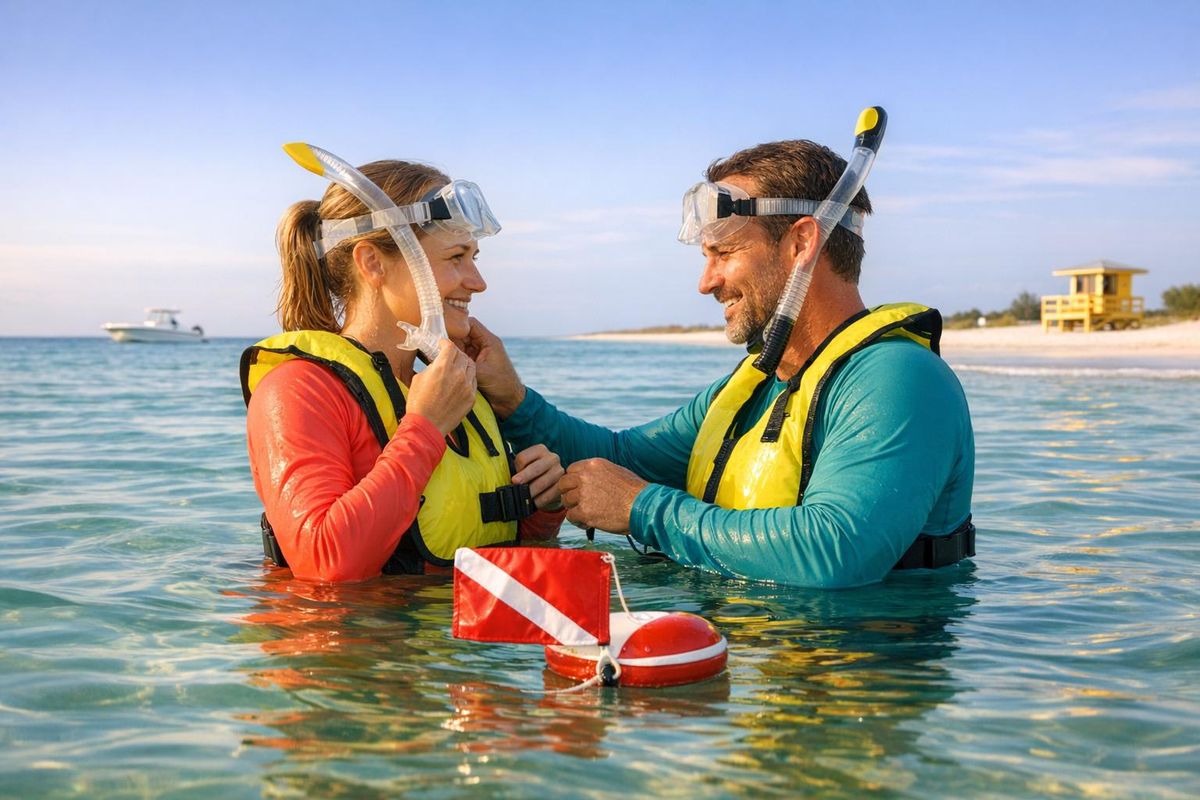
Snorkeling in Sarasota offers a chance to explore stunning underwater landscapes, but safety is key. Whether you're visiting Point of Rocks, Lido Beach Reef, or the USS Regina shipwreck, these tips will help you stay safe and enjoy your time in the water:
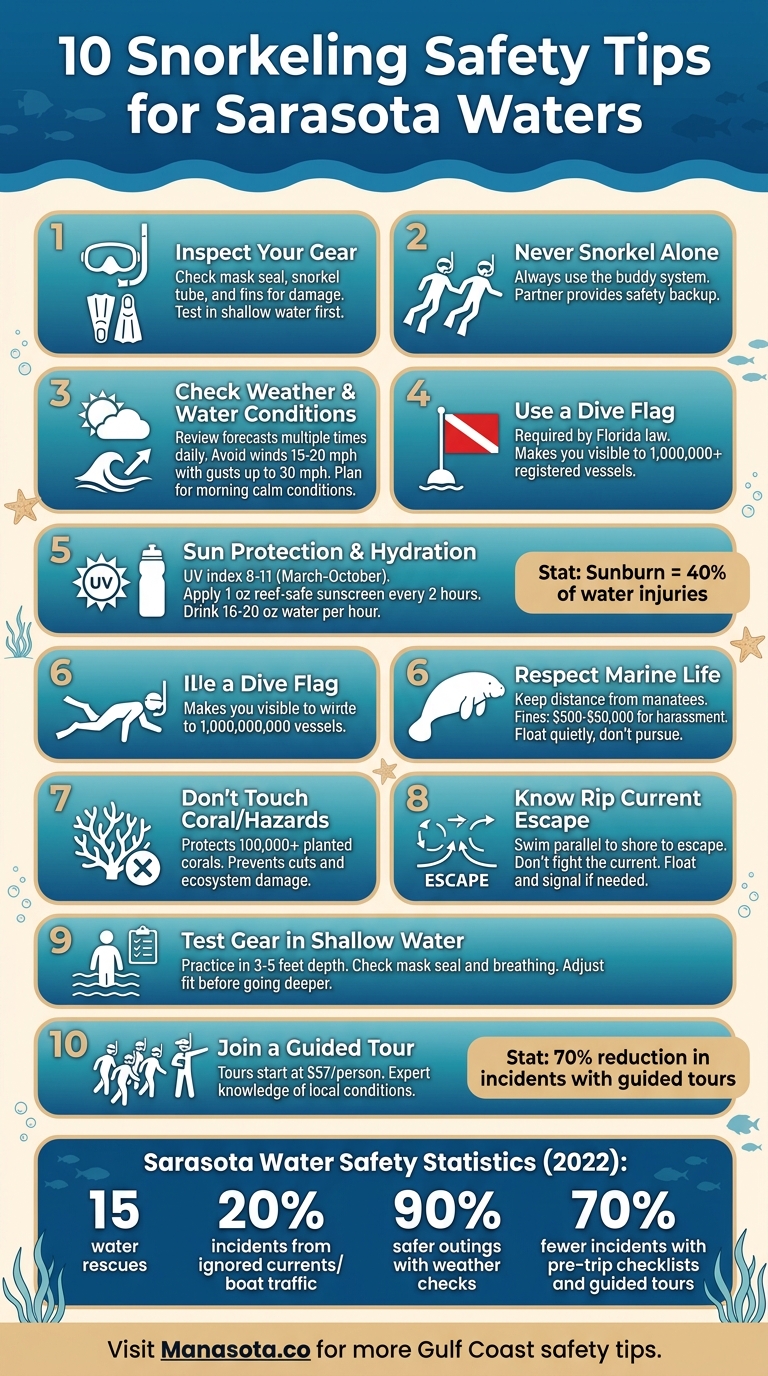
- Inspect Gear: Check your mask, snorkel, and fins for damage before heading out.
- Buddy System: Always snorkel with a partner for added safety.
- Check Conditions: Review weather, tides, and water clarity before your trip.
- Use a Dive Flag: Stay visible to boats and follow Florida's dive flag laws.
- Sun & Hydration: Use reef-safe sunscreen, wear protective clothing, and drink plenty of water.
- Respect Marine Life: Observe animals like manatees from a distance to avoid harm or legal issues.
- Avoid Hazards: Don't touch coral or sharp underwater surfaces to protect yourself and the ecosystem.
- Rip Currents: Learn to identify and safely escape rip currents.
- Test Gear in Shallow Water: Ensure everything works properly before venturing deeper.
- Guided Tours: Consider joining a local tour for expert advice and safer navigation.
Plan ahead, stay aware of your surroundings, and follow these guidelines to enjoy Sarasota’s incredible snorkeling spots safely. For more tips, visit Manasota.co.
10 Essential Snorkeling Safety Tips for Sarasota Waters
Snorkeling Point of Rocks in Siesta Key Sarasota Florida
sbb-itb-354efe9
1. Inspect Your Equipment Before Each Trip
Your snorkeling gear is your lifeline, so it's crucial to give it a thorough check before every outing. Start with your mask - place it on your face without using the strap and inhale through your nose. If it creates a seal and stays in place, you’ve got a good fit. Look closely for cracks in the lens or tears in the silicone skirt, as these can let water in. If your mask is brand new, gently scrub the inside of the lens with toothpaste to remove any residue from manufacturing that might cause fogging.
Next, inspect your snorkel. Check the mouthpiece for cracks and ensure the tube is intact. For your fins, flex them to spot any splits in the rubber or loose straps that could fail while you're in the water.
A small but important tip: apply sunscreen at least 30 minutes before putting on your mask. This prevents the sunscreen from interfering with the mask’s seal. Before heading into deeper waters, test all your gear in shallow water. This gives you a chance to spot and fix any issues while you're still in a safe area where you can stand.
With Sarasota's prime snorkeling season running from November through April, keeping your gear in top shape is key to a safe and enjoyable experience. A quick pre-trip inspection can make all the difference for your underwater adventure.
2. Never Snorkel Alone
Snorkeling with a buddy isn’t just a good idea - it’s a safety must. Sarasota’s waters can be unpredictable, with conditions that may shift quickly. Having someone nearby can make all the difference if you experience cramps, fatigue, or issues with your gear.
Your snorkeling partner is like your safety backup. They can spot signs of overexertion or dehydration that you might overlook. Whether you're exploring the lively shores of Siesta Key or the calmer waters near Lido Beach, having someone by your side ensures you're more visible and can get help if needed.
Pick a partner who stays composed under pressure and has basic snorkeling know-how. According to Kona Snorkel Trips, your buddy should understand proper breathing techniques - like taking slow, deep breaths through the mouth - and be able to perform a "blast clear" to quickly expel water from their snorkel.
A good partner also knows their own limits. They’ll take breaks when necessary and maintain a streamlined position to conserve energy while snorkeling.
Before heading into deeper waters, spend time practicing together in shallower areas. Synchronizing your breathing - such as a three-second inhale followed by a three-second exhale - can help steady your heart rate and improve teamwork. Combine these practices with thorough equipment checks, and you’ll be better prepared for a safe and enjoyable snorkeling adventure in Sarasota’s ever-changing waters.
3. Check Weather and Water Conditions First
Before heading out for a snorkeling adventure, it’s just as important to check the weather and water conditions as it is to inspect your gear. Sarasota’s weather can change quickly, so staying updated is key. The National Weather Service provides local forecasts that refresh multiple times a day, ensuring you’re working with the latest information.
Keep a close eye on wind speeds and wave heights through marine point forecasts. For example, strong northeast winds (15–20 mph, with gusts up to 30 mph) can make the water too dangerous for snorkeling. High waves or a short swell period can also indicate rough conditions, even for experienced swimmers. Planning your trip during calmer morning hours, when conditions are typically more favorable, can make all the difference.
Storm systems pose more than just a risk of rain - they can create hazardous rip currents. If warnings are issued, always snorkel near lifeguards for added safety. Rip currents are often visible as water moving away from the shore, sometimes accompanied by lines of sand being pulled outward.
To maximize safety and enjoyment, review hourly weather forecasts, tide schedules, and real-time radar. Aim for slack tide periods, which often provide the best water clarity. If you encounter Red Flag Warnings, murky water, or strong winds, it’s best to reschedule your trip.
4. Watch for Boats and Use a Dive Flag
Boat traffic is one of the biggest dangers for snorkelers in Sarasota's waters. With more than 1,000,000 registered vessels in Florida alone, the waterways can get busy fast. Snorkelers, often just barely visible above the waterline, can be tough for boat operators to spot.
After checking your gear and setting up your buddy system, staying aware of boat traffic should be a top priority. Many boating accidents happen because operators aren’t paying close enough attention. That’s why Florida law requires snorkelers to use a dive flag - it’s a simple yet effective way to alert boaters to your presence. Make sure you’re familiar with the Florida Fish and Wildlife Conservation Commission (FWC) rules on how to use a dive flag correctly.
5. Use Sun Protection and Drink Plenty of Water
Sarasota's subtropical climate brings intense UV rays (index 8–11 from March to October), which can burn your skin in just 10–15 minutes - even if you're underwater, thanks to reflection. This makes protecting yourself from the sun an absolute must for anyone spending time outdoors or in the water.
Start with a reef-safe sunscreen containing zinc oxide or titanium dioxide. Apply about 1 ounce of sunscreen 15–30 minutes before getting in the water, and make sure to reapply every two hours or immediately after snorkeling. For added protection, wear a UPF 50+ rash guard, board shorts, or leggings, and top it off with a wide-brim hat to shield your face and neck from harmful rays.
But sun protection is only half the battle - staying hydrated is just as critical in Sarasota's heat. With summer temperatures ranging from 85–95°F and humidity levels over 70%, dehydration happens quickly, especially with added saltwater exposure. Symptoms like dry mouth, dizziness, fatigue, headaches, and muscle cramps can creep up on you and impair your judgment, increasing the risk of accidents.
To stay hydrated, aim to drink 16–20 ounces of water per hour before, during, and after your snorkeling adventure. Opt for electrolyte-enhanced water and steer clear of alcohol or caffeine for at least 24 hours before your trip. Sip water every 20 minutes to keep your hydration levels steady.
Here's a startling fact: sunburn accounts for 40% of water-related injuries, while dehydration and heat-related issues make up 25% of marine ER visits. Even more concerning, 15% of local lifeguard rescues are tied to heat exhaustion. The good news? Proper sun protection and hydration reduce these risks by 80%. Just like checking your gear and staying aware of your surroundings, managing sun exposure and hydration is key to a safe and enjoyable underwater experience.
6. Keep Your Distance from Marine Life
Sarasota’s waters are home to an array of marine creatures, including the gentle West Indian manatee. While these animals are fascinating to observe, the only safe and lawful way to enjoy their presence is from a respectful distance. Getting too close not only puts you and the animals at risk but can also lead to legal consequences. Understanding these safety and legal guidelines is crucial.
The Florida Manatee Sanctuary Act of 1978 explicitly states: “It is unlawful for any person, at any time, intentionally or negligently, to annoy, molest, harass, or disturb any manatee”. Violating this law can result in fines of up to $500 and 60 days in state jail, or, for federal violations, fines can climb to $50,000 with a potential one-year sentence. These protections are reinforced by the Marine Mammal Protection Act of 1972 and the Endangered Species Act of 1973, ensuring both human safety and the conservation of marine life.
Manatees may seem docile, but their tails are incredibly strong. If startled, a manatee can easily overturn a swimmer or even a small boat with a single flip of its tail. This danger increases near mating herds, where multiple males may be so focused on pursuing a female that they become unaware of nearby humans.
To safely enjoy these creatures, stick to passive observation. Float quietly at the surface with your snorkel gear, and resist the urge to pursue or touch them. The Florida Fish and Wildlife Conservation Commission advises: “If a manatee responds to your presence, you are too close. Move away to a distance that does not change the animal’s natural behavior”. Polarized sunglasses can help you see underwater more clearly, and keeping noise to a minimum reduces disturbances. If you notice any sign of distress - like a manatee stopping its activity, moving away, or approaching you - it’s time to back off and give the animal the space it needs.
7. Don't Touch Coral or Underwater Hazards
Sarasota's underwater scenery may not boast the dazzling tropical coral reefs of the Caribbean, but it still shelters delicate ecosystems that need your care. Siesta Key's Point of Rocks, for example, features limestone formations teeming with red sponges, sea stars, and sea urchins. Touching these formations can harm these fragile habitats - and it could harm you as well. Florida's Coral Reef emphasizes this point:
"Fin kicks, touching or holding coral, dragging gear, and kneeling or standing on coral have all been shown to directly impact the hardbottom community".
Since 2008, scientists at Sarasota's Mote Marine Laboratory have planted over 100,000 corals to restore Florida's damaged reefs. This highlights how vital it is to protect these environments from further harm. Damaging them not only disrupts ecosystems but can also lead to painful injuries.
Sharp limestone edges and sea urchins can cause cuts, scrapes, or puncture wounds. To stay safe, wear water shoes on rocky surfaces and snorkel during high tide when visibility improves and water depth reduces the risk of accidental contact. Make sure to secure any loose gear - like straps or gauges - to avoid snagging on sensitive underwater structures.
To minimize your impact, focus on controlling your buoyancy and move carefully. If a snorkeling area feels crowded, consider waiting for others to clear out before approaching fragile habitats. By keeping your hands off and being mindful, you help preserve Sarasota's underwater ecosystems. These habitats not only support marine life but also protect coastlines from storm surges and serve as nurseries for local fish populations - ensuring their survival for generations to come.
8. Learn How to Escape Rip Currents
Understanding how to handle rip currents is a key part of staying safe while snorkeling along Sarasota's Gulf Coast beaches.
Rip currents are a serious hazard, even for strong swimmers, as they can pull people offshore with surprising force - especially during stormy conditions. Recognizing the signs of a rip current before entering the water can make all the difference. According to Keily Delerme, a forecaster at the National Weather Service Tampa:
"Rip currents are very easy to spot if you pay attention; it looks like water is moving away and you can see that the sand looks like its being swept out".
Look for areas where the waves seem to break less, the water appears unusually calm, or the sand looks displaced as though it's being carried out to sea.
If you find yourself caught in a rip current, the most important thing is to stay calm. Don’t waste energy trying to swim directly against the current - it’s a losing battle. Instead, as Keily Delerme suggests, swim parallel to the shore until you’re out of the current. Once free, make your way back to the beach at an angle. If swimming isn’t an option, float on your back to conserve energy, face the shore, and signal for help.
For added safety, always check the National Weather Service forecast before heading out and stick to beaches with lifeguards on duty. These precautions can help ensure your snorkeling adventures in Sarasota remain safe and enjoyable.
9. Test Your Gear in Shallow Water First
Before heading into deeper waters, take the time to test your snorkeling gear in shallow, waist-deep water. This step helps you identify fit issues, leaks, or any mechanical problems that might not have been obvious during your pre-trip inspection.
Start by floating face-down in water that's about 3–5 feet deep. Check that your mask creates a watertight seal to keep salt water out - this is crucial for clear vision and avoiding irritation to your eyes. Practice breathing through your snorkel, ensuring steady airflow. If water enters the snorkel tube, use the purge valve or exhale forcefully to clear it. These are essential skills, especially when dealing with surface splashes. Adjust your mask straps and fins until they're snug but not too tight, striking a balance between comfort and security.
Try a few duck dives by bending at the waist and lifting your legs to submerge briefly. This allows you to test how your gear performs underwater, practice equalizing ear pressure, and confirm that your fins provide the support you need to return smoothly to the surface.
If you're a beginner or want extra peace of mind, consider visiting Florida Underwater Sports at 6920 South Tamiami Trl in Sarasota. They have an on-site pool where you can test your equipment in a controlled environment before heading to the Gulf. This is a great opportunity to identify and fix any issues without the added challenge of open water.
Once you're comfortable and confident in your gear's performance in shallow water, you'll be ready to explore deeper areas safely and enjoy your snorkeling adventure.
10. Join a Guided Tour for Expert Help
Once you’ve gotten comfortable with your gear and familiarized yourself with local conditions, taking advantage of expert guidance can make your snorkeling experience even safer and more enjoyable. If you’re new to snorkeling or unsure about Sarasota’s waters, a guided tour is a great way to ensure your safety and make the most of your time. Local guides are experts in the area - they know the best snorkeling spots, understand water currents, point out hazards, provide safety briefings, and ensure you’re properly equipped.
One standout option is Sarasota Kayak Tours & Rentals, a Sarasota County Certified Tour Operator with 14 years of experience and over 3,000 five-star reviews. Their guided tours take you to incredible locations like the Jim Neville Marine Preserve at Lido Key and Midnight Pass at Siesta Key. These spots are famous for their crystal-clear waters and diverse marine life, including manatees, dolphins, sea stars, and a variety of Florida fish. Tours start at $57 per person for a two-hour adventure, and you can book online in advance. Don’t forget to use the discount code QUIZ10 to save 10%.
These guided tours are family-friendly and perfect for snorkelers of all ages. Beyond enhancing safety, they help you discover hidden snorkeling gems and offer fascinating insights into the local ecosystem that makes the Manasota region so special.
Conclusion
Snorkeling along Sarasota's Gulf Coast is a chance to encounter incredible marine life and stunning underwater views, but safety should always be your top priority. In 2022 alone, there were 15 water rescues in the area, with 20% of incidents tied to ignored currents and boat traffic. These numbers highlight just how crucial proper planning and awareness are for a safe experience.
To recap, preparation not only keeps you safe but also enhances your time in the water. According to PADI experts, using pre-trip checklists and opting for guided tours can reduce recreational diving incidents by 70%. Local Sarasota dive masters also stress that checking weather conditions can lead to 90% safer outings, especially in the Gulf's unpredictable waters. Whether you're visiting Point of Rocks or Turtle Beach, these simple precautions ensure a smoother and more enjoyable snorkeling adventure. Staying alert to your surroundings also helps protect the fragile ecosystems that make this area so special.
Ready to dive in? Start by printing a checklist, downloading a reliable weather app, and booking a guided tour. When you're familiar with your gear, aware of boat traffic, and informed about local conditions, you can fully immerse yourself in the experience. Picture yourself spotting manatees grazing in the seagrass, watching dolphins leap in the distance, or marveling at the colorful fish that call Sarasota's waters home. Safe snorkeling means you’ll be able to come back and enjoy these treasures time and time again.
For more tips on Gulf Coast adventures and expert advice from the Manasota region, head over to Manasota.co (https://manasota.co) - your go-to resource for everything this beautiful area has to offer.
FAQs
What should I do if my mask keeps leaking or fogging?
To keep your mask leak-free, make sure it fits snugly with a silicone skirt that forms a proper seal against your face. Check for and remove any debris under the skirt, as even small particles can break the seal. Adjust the straps as needed for a secure fit.
If fogging becomes an issue, try applying an anti-fog solution or rub a tiny amount of baby shampoo on the inside of the lens before heading out. These tricks can help keep your view clear underwater.
After each use, rinse your mask thoroughly with fresh water to preserve its clarity and extend its lifespan.
When are Sarasota snorkeling conditions usually the safest?
The best snorkeling conditions in Sarasota usually occur on calm, sunny days with clear water and minimal currents or wind. To stay safe, make sure to check the weather forecast and water conditions before heading out.
How can I snorkel near manatees without breaking the law?
To snorkel near manatees while staying within the law, it's crucial to observe them calmly and from a safe distance. Never chase, touch, or disturb these gentle creatures, as such behavior can interfere with their natural activities and is classified as harassment under both state and federal regulations. Keep noise and splashing to a minimum to avoid causing them stress. Always respect their habitat and adhere to local rules to ensure a safe and respectful encounter.