Moving to Florida? Here’s What You Should Know About Hurricane Season
Moving to Florida means preparing for hurricane season: learn dates, buy flood insurance early, secure your home, and plan evacuations.
If you’re planning to move to Florida, understanding hurricane season is crucial. Hurricane season runs from June 1 to November 30, with peak activity between mid-August and mid-October. Here’s what you need to know:
- Storm risks: Wind, storm surge, and flooding are the biggest dangers, with flooding responsible for nearly 90% of tropical cyclone deaths in the U.S.
- Preparation timeline: Start early - before June 1. Essentials sell out fast once a storm is named.
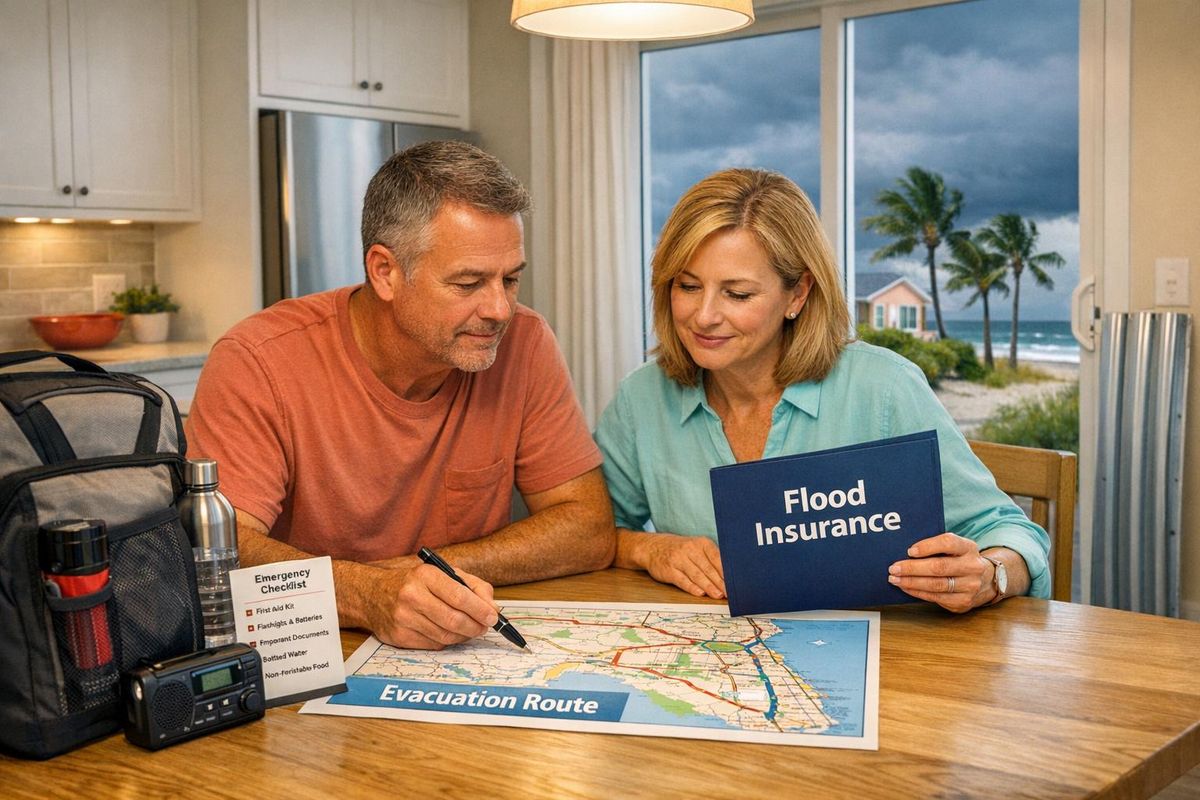
- Insurance: Standard homeowners insurance doesn’t cover flooding. Purchase flood insurance early as there’s a 30-day waiting period.
- Home readiness: Secure your roof, windows, and garage. Clear your yard of potential debris.
- Emergency supplies: Stock a kit with enough water, food, and essentials to last 7–14 days.
- Evacuation planning: Know your evacuation zone and route. Mobile home residents must evacuate during Level A alerts.
Florida’s Gulf Coast, including areas like Manatee and Sarasota Counties, is especially vulnerable. By preparing your home, gathering supplies, and planning evacuation routes, you can stay safe during hurricane season.
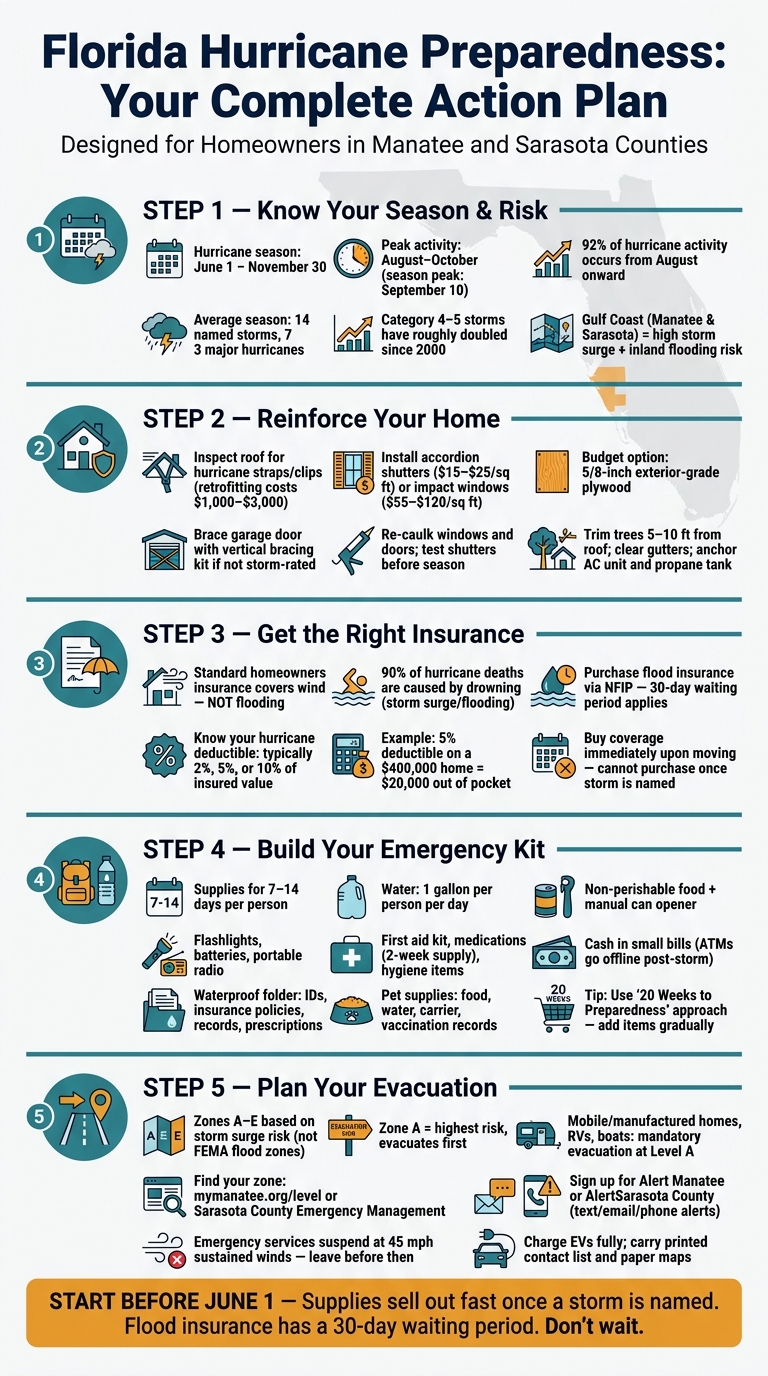
Florida Hurricane Preparedness Checklist: 5 Steps to Stay Safe
Hurricane Season in the Manasota Area: An Overview
When Is Hurricane Season and What Should You Expect?
The Atlantic hurricane season runs from June 1 to November 30, with activity ramping up as summer progresses. The most intense part of the season typically falls between late August and October, with September 10 marking the peak. In fact, nearly 92% of hurricane activity happens from August onward.
On average, a season brings 14 named storms, 7 hurricanes, and 3 major hurricanes. However, there’s been a concerning trend: the number of annual Category 4 and 5 hurricanes has roughly doubled since 2000. Adding to this, storms are forming earlier in the year, prompting the National Hurricane Center to start issuing tropical weather outlooks as early as May 15 - two weeks before the official season begins. For anyone in Manasota, this means preparation should start well before June.
| Season Milestone | Typical Timing |
|---|---|
| First Named Storm | Mid to late June |
| First Hurricane | Early to mid-August |
| First Major Hurricane | Late August or early September |
| Season Peak | September 10 |
| Season End | November 30 |
These patterns emphasize the importance of early and thorough preparation in the Manasota area.
Why Manatee and Sarasota Counties Are at Risk
Manasota's location along the Gulf of Mexico coastline makes it especially vulnerable during hurricane season. The Gulf often serves as a breeding ground for storms that intensify before hitting land. Combine this with the area’s low-lying, flat terrain, and you have a recipe for significant storm surge and winds that can travel far inland.
Recent hurricanes highlight these risks. In October 2024, Hurricane Milton made landfall as a Category 3 storm at Siesta Key in Sarasota County, leaving widespread destruction. Just weeks earlier, Hurricane Helene (Category 4) struck Florida’s Big Bend region, yet its storm surge and winds impacted the entire west coast, including Manasota. And in September 2022, Hurricane Ian made landfall south of the area as a Category 4 storm, proving that even indirect hits can cause serious damage.
Beyond the immediate effects of wind and surge, hurricanes in this region often bring tornadoes and heavy rains, leading to inland flooding. For residents of Manatee and Sarasota Counties, the message is clear: hurricane season demands vigilance, no matter how far from the coastline you might live.
sbb-itb-354efe9
Hurricane season warning: Florida officials urge residents to prepare now
How to Prepare Your Manasota Home Before Hurricane Season
Get your home ready before June 1 to avoid the last-minute scramble. Once a storm is named, essentials disappear from shelves quickly. The work you do now, during the calm months, can make all the difference when a hurricane strikes.
Inspecting and Reinforcing Your Home
Start with your roof. If your home was built before 2002, it might not meet current Florida Building Code standards. For instance, it could lack hurricane straps or clips - metal connectors that secure your roof to the walls. Without these, strong winds could rip your roof off. Retrofitting your roof with these straps usually costs between $1,000 and $3,000, but it could lower your insurance premiums enough to offset the cost over time.
Next, focus on your windows, doors, and garage. These are the most vulnerable areas of your home. Accordion shutters cost around $15–$25 per square foot, while impact-resistant windows range from $55–$120 per square foot, depending on the materials. If these upgrades are out of reach, consider 5/8-inch exterior-grade plywood as a budget-friendly alternative. Just make sure to purchase it before hurricane season begins. Don’t overlook your garage door - it’s the largest opening in most homes. If it fails under pressure, it could cause catastrophic damage to your roof and walls. If your garage door isn’t storm-rated, a vertical bracing kit is an affordable solution.
Check the caulking around your windows and doors. Cracked or old caulking allows wind-driven rain to seep in, even if the structure holds. Walk around your home and re-seal any gaps you find. Also, test your shutters at the start of the season to ensure the tracks are clear and the hardware is in good shape. You don’t want to discover rusted bolts when a storm is on its way.
Once your home is secure, turn your attention to your yard and outdoor spaces.
Clearing Your Yard and Outdoor Areas
Your yard can become a danger zone during a hurricane. Items like lawn furniture, potted plants, garden tools, and decorations can turn into flying debris in high winds. Plan ahead and move these items indoors well before a storm arrives, as you may have as little as 36 hours once a warning is issued.
Trim trees so branches are at least 5–10 feet away from your roof and siding. Weak or overhanging limbs are a leading cause of roof damage during storms. Clear your gutters and downspouts, too - clogged drainage can force water into your home’s structure during heavy rainfall. As Alexis Smith-Frady wisely noted:
"Wait until the last minute to ready yourself and your property for an approaching weather event, and you could face empty shelves at grocery and hardware stores."
For larger items that can’t be moved - like your AC unit or propane tank - make sure they’re securely anchored to a concrete pad. If you own a boat, now is the time to figure out your storage plan, not when a hurricane watch is issued.
With your home and yard prepared, it’s time to review your insurance coverage.
Getting the Right Hurricane Insurance
Florida’s insurance landscape can be tricky, but understanding your coverage is critical. One key point: standard homeowners insurance covers wind damage but not flooding. In flood-prone areas like Manatee and Sarasota Counties, this gap can be devastating. It’s worth noting that 90% of hurricane-related deaths worldwide are caused by drowning, either from storm surge or rainfall flooding - not wind.
Flood insurance is a separate policy, usually offered through the National Flood Insurance Program (NFIP). Here’s the catch: there’s a 30-day waiting period before the policy takes effect. If you’re new to the Manasota area, secure this coverage as soon as you move in. You won’t be able to purchase it once a storm is named.
Also, take a close look at your hurricane deductible. Unlike the flat deductibles of $500 or $1,000 on most policies, Florida hurricane deductibles are typically a percentage of your home’s insured value - often 2%, 5%, or even 10%. For a $400,000 home, a 5% deductible means you’ll need to pay $20,000 out of pocket before your insurance kicks in. Make sure you know this number ahead of time.
Building a Hurricane Emergency Kit
Once your home is secure and your insurance is in order, the next step is creating an emergency kit that can sustain your household during a hurricane. According to Manatee County Emergency Management, it's wise to prepare a kit with enough supplies to last 7 to 14 days.
What to Pack in Your Emergency Kit
Water is a top priority. Plan for one gallon of water per person per day, stored in sealed containers for 7–14 days. Additionally, keep a separate supply for emergencies like "boil water" orders if the local water system is affected. Non-perishable food is another must, along with a manual can opener to access it.
Here’s a breakdown of what to include:
| Category | Items to Include |
|---|---|
| Basic Survival | Water (1 gallon/day/person for 7–14 days), non-perishable food, manual can opener, flashlights, extra batteries, portable radio |
| Medical & Hygiene | First aid kit, moist towelettes, toilet paper, sunscreen, mosquito repellent, garbage bags |
| Tools & Safety | Whistle, plastic tarp, basic tool kit, ABC-type fire extinguisher, waterproof matches or a lighter |
| Documents & Cash | Cash in small bills, copies of insurance policies, ID, medical records |
Tailor your kit to fit your household’s specific needs. To make this process easier on your budget, try the "20 Weeks to Preparedness" approach by adding a few items to your kit with each grocery trip.
"Creating a complete disaster kit does not have to be a hit to your wallet all at once." - Manatee County Emergency Management
Don’t forget to rotate your supplies every six months to keep food and water fresh. Also, update medications and replace any outdated documents as needed.
Adjusting Your Kit for Your Household's Needs
While a standard kit covers the basics, your household may have unique requirements that need extra attention. For example:
- Prescription Medications: If someone in your home relies on prescriptions, aim to have a two-week supply on hand. Florida State Statute 252.358 allows health insurers to waive refill restrictions during a declared state of emergency, so you can request an early refill. Keep a printed record of all current prescriptions in your waterproof document folder.
- Pet Supplies: For households with pets, pack at least two weeks’ worth of food, water, and medications. Don’t forget essentials like a sturdy carrier, leash, immunization records, a current photo, and waste bags for sanitation.
- Infants and Seniors: If you have an infant, stock up on formula, sterile water, diapers, and bottles. For seniors or anyone using medical equipment like a nebulizer or oxygen concentrator, include extra batteries or a small generator to keep the equipment functional.
If anyone in your household has special medical or transportation needs, register with Manatee County Emergency Management at mymanatee.org/needs. This ensures local agencies are aware of your situation and can provide additional support during an evacuation or extended power outage.
Planning for Evacuation and Staying in Contact During a Storm
With your home secured and your emergency supplies ready, the next step is making sure you have a solid evacuation plan. Being prepared to leave quickly and safely can make all the difference when a storm is approaching.
Finding Your Evacuation Zone and Planning Your Route
In Manatee and Sarasota counties, evacuation zones are classified using a letter system (A through E) based on storm surge risk - not rainfall or freshwater flooding. Zone A faces the highest risk and is the first to receive evacuation orders. Keep in mind, these zones are different from FEMA flood zones, so don’t assume they’re interchangeable.
To figure out your zone, Manatee County residents can use tools like the "Learn Your Level" interactive map or the Resident Information Tool at mymanatee.org/level. Sarasota County residents can find their zone with the "Know Your Evacuation Level" tool on the Sarasota County Emergency Management website. It’s a good idea to check your zone every year since updates to coastline data can change your designation.
If you live in a mobile home, manufactured home, RV, or boat, you’re required to evacuate during a Level A alert. Don’t wait - evacuate as soon as the order is issued. Decide on your evacuation destination ahead of time, whether it’s a public shelter, hotel, or a friend’s home. Manatee County residents can call 311 for up-to-date information on shelter availability. For those driving electric vehicles, make sure to fully charge your car before the storm and unplug it to protect against potential power surges.
By planning your route and destination in advance, you’ll be better equipped to act quickly and keep your family safe when the time comes. Just like securing your home and gathering supplies, evacuation planning is a key part of hurricane preparedness.
Where to Get Reliable Weather Updates and Emergency Alerts
Staying informed during a storm is crucial. Sign up for Alert Manatee or AlertSarasota County to receive emergency notifications via phone, text, or email. These services will keep you updated on evacuation orders and shelter availability. Additionally, Sarasota County posts updates on social media platforms like X and Instagram for real-time information.
If the internet goes down, local radio and TV stations are reliable backups for storm updates. Keep in mind that in Sarasota County, emergency services suspend operations once sustained winds reach 45 mph. That’s your last chance to leave or secure your shelter - after that, you’ll need to wait out the storm until conditions improve.
Organizing Important Documents and Valuables Before You Go
Prepare a grab-and-go binder with all your essential documents. Store original copies in waterproof bags or a sealed portable container. For insurance purposes, take a video walkthrough of your home to document your belongings.
| Document Category | What to Include |
|---|---|
| Personal ID | Driver’s licenses, passports, birth/marriage certificates |
| Legal & Financial | Wills, power of attorney, insurance policies, property inventories, cash |
| Medical | Prescription lists, medical records, pharmacy and doctor contacts |
| Digital & Media | Computer file backups, home A/V recordings, digital photo copies |
| Pet Records | Vaccination history, microchip info, current ID photos |
"Important papers and irreplaceable keepsakes (driver's license, special medical information, insurance policies, property inventories, photographs, etc.)" - Manatee County Emergency Management
Carry cash in small bills and quarters, as ATMs and card readers often go offline during and after storms, and banks may remain closed for several days. Also, keep a printed contact list of important phone numbers. If your phone dies or cell service fails, having a paper backup can be a lifesaver.
Conclusion: Steps to Take Now to Stay Safe During Hurricane Season
Hurricane season runs from June 1 to November 30, so it’s crucial to prepare well before any storm is on the radar. As the Naples Daily News puts it:
"Preparation is key. ... The best time to get ready is before a storm is approaching."
If you’ve recently moved to Manasota, there are a few things you should prioritize right away. Start by identifying your evacuation zone, checking your insurance coverage, and assembling an emergency kit. Thanks to Florida's permanent sales tax exemption on disaster preparedness supplies, you can stock up on essentials without breaking the bank at any time of the year. These steps are a great starting point for staying ready.
Additionally, if someone in your household relies on electricity for medical equipment, be sure to register them with the Florida Special Needs Registry. And if you have pets, now’s the time to find shelters that accommodate animals, as not all do.
When evacuation orders are issued, time is critical.
"If you're told to go, go." - Weather.com
FAQs
How do I find my evacuation zone?
To determine your evacuation zone in Florida, take advantage of Manatee County's interactive resources like the 'Learn Your Level' map or the Resident Information Tool. These tools can help you identify your property's evacuation zone (ranging from A to E) and locate nearby shelters. They also offer essential information on evacuation procedures, ensuring you're ready when hurricane season arrives.
Do I need flood insurance if I have homeowners insurance?
Flood insurance is highly recommended, even if you already have homeowners insurance. Why? Because most standard homeowners policies don’t cover damage caused by flooding - a common issue during Florida's hurricane season. Without flood insurance, you could face hefty out-of-pocket expenses to repair or replace your property after a flood. It’s a smart way to safeguard your home and finances when hurricanes strike.
What should I do if the power goes out for days?
If a hurricane knocks out the power, having an emergency kit ready can make all the difference. Stock up on essentials like bottled water, non-perishable food, and batteries for flashlights. Another smart tip? Fill your bathtub with water ahead of time - this can be a lifesaver for flushing toilets and handling basic hygiene needs.
Stay informed by keeping an eye on reliable weather alerts. These updates will help you track power restoration timelines and provide crucial safety or evacuation instructions if needed.