10 Best Snorkeling Spots in Manasota
Guide to Manasota’s top 10 snorkeling spots — beach and boat access, diverse marine life, water clarity, fossil hunting, and best times to go.
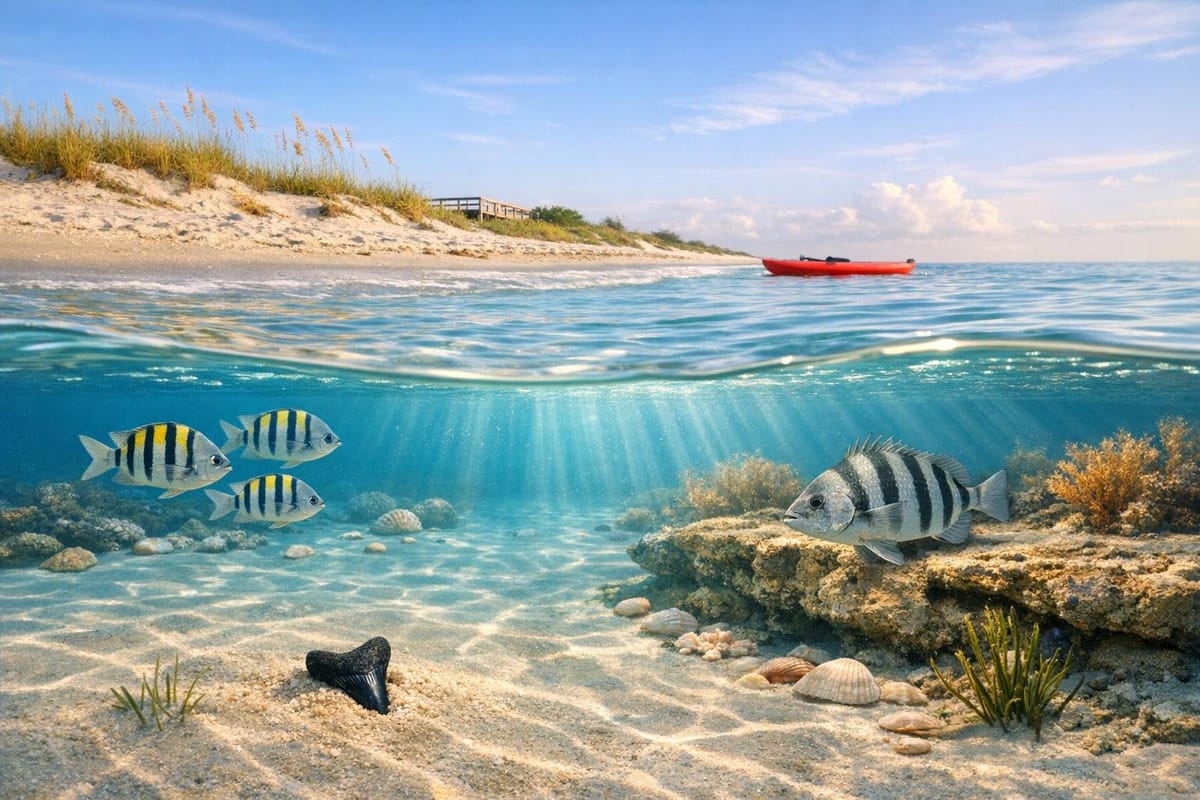
The Manasota region, spanning Florida's Manatee and Sarasota counties, offers some of the finest snorkeling experiences on the Gulf Coast. From limestone rock formations to historic underwater ruins, the area is packed with diverse marine life, crystal-clear waters, and unique underwater landscapes. Whether you're a beginner or an experienced snorkeler, there's a spot for everyone.
Key Highlights:
- Marine Life: See manatees, dolphins, sea turtles, stingrays, and over 90 fish species.
- Unique Features: Fossilized shark teeth at Venice Beach, historic ruins at Egmont Key, and the largest Gulf Coast rock formation at Point of Rocks.
- Water Clarity: Visibility can reach up to 100 feet on calm days.
- Accessibility: Many spots are beach-accessible, while some require a boat or guided tour.
- Best Times: Early mornings in spring and fall offer calm waters and ideal conditions.
Top Snorkeling Spots:
- Point of Rocks (Siesta Key): Largest limestone formation with tropical fish and coral.
- Longboat Key: Quiet bays, seagrass beds, and artificial reefs.
- South Lido Beach: Easy access with mangrove tunnels and diverse marine life.
- North Venice Jetty (Casey Key): Rocky reefs with manatees and dolphins nearby.
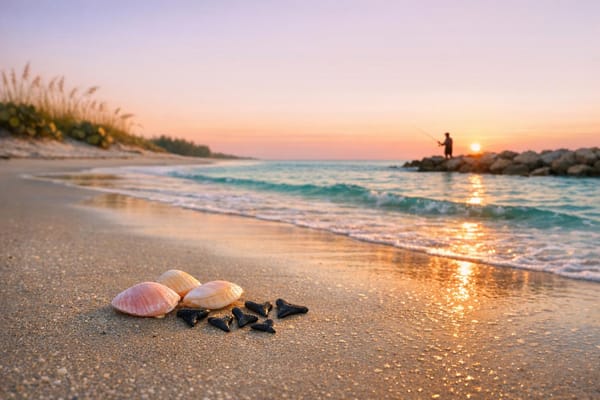
- Manasota Key: Tranquil beaches with shark teeth and calm waters.
- Bird Key Park: Bayside snorkeling with tropical fish and occasional dolphins.
- Anna Maria Island: Shallow seagrass meadows with manatees and turtles.
- Crescent Beach (Siesta Key): White quartz sand and the vibrant Point of Rocks reef.
- Egmont Key State Park: Historic underwater ruins teeming with marine life.
- Venice Beach: Famous for fossilized shark teeth and diverse fish species.
Quick Comparison
| Snorkeling Spot | Marine Life Highlights | Accessibility | Special Feature |
|---|---|---|---|
| Point of Rocks | Tropical fish, coral | Beach access | Largest limestone formation |
| Longboat Key | Sea turtles, dolphins | Best by boat | Secluded beaches, artificial reef |
| South Lido Beach | Seahorses, rays | Easy beach access | Mangrove tunnels |
| North Venice Jetty | Manatees, dolphins | Public parking | Rocky reefs |
| Manasota Key | Shark teeth, turtles | Multiple beach points | Fossil hunting |
| Bird Key Park | Tropical fish, dolphins | Near downtown | Bayside snorkeling |
| Anna Maria Island | Manatees, turtles | Public access points | Seagrass meadows |
| Crescent Beach | Tropical fish, coral | Limited parking | White quartz sand |
| Egmont Key State Park | Rays, historic ruins | Boat/ferry required | Submerged fort ruins |
| Venice Beach | Shark teeth, rays | Free parking | Fossilized shark teeth capital |
Pro Tips:
- Arrive early for parking and calm waters.
- Use a dive flag when snorkeling near jetties or boat traffic.
- Spring and fall offer the best visibility and temperatures (63–88°F).
Manasota's snorkeling spots blend natural beauty with underwater exploration, making it a must-visit for ocean lovers.
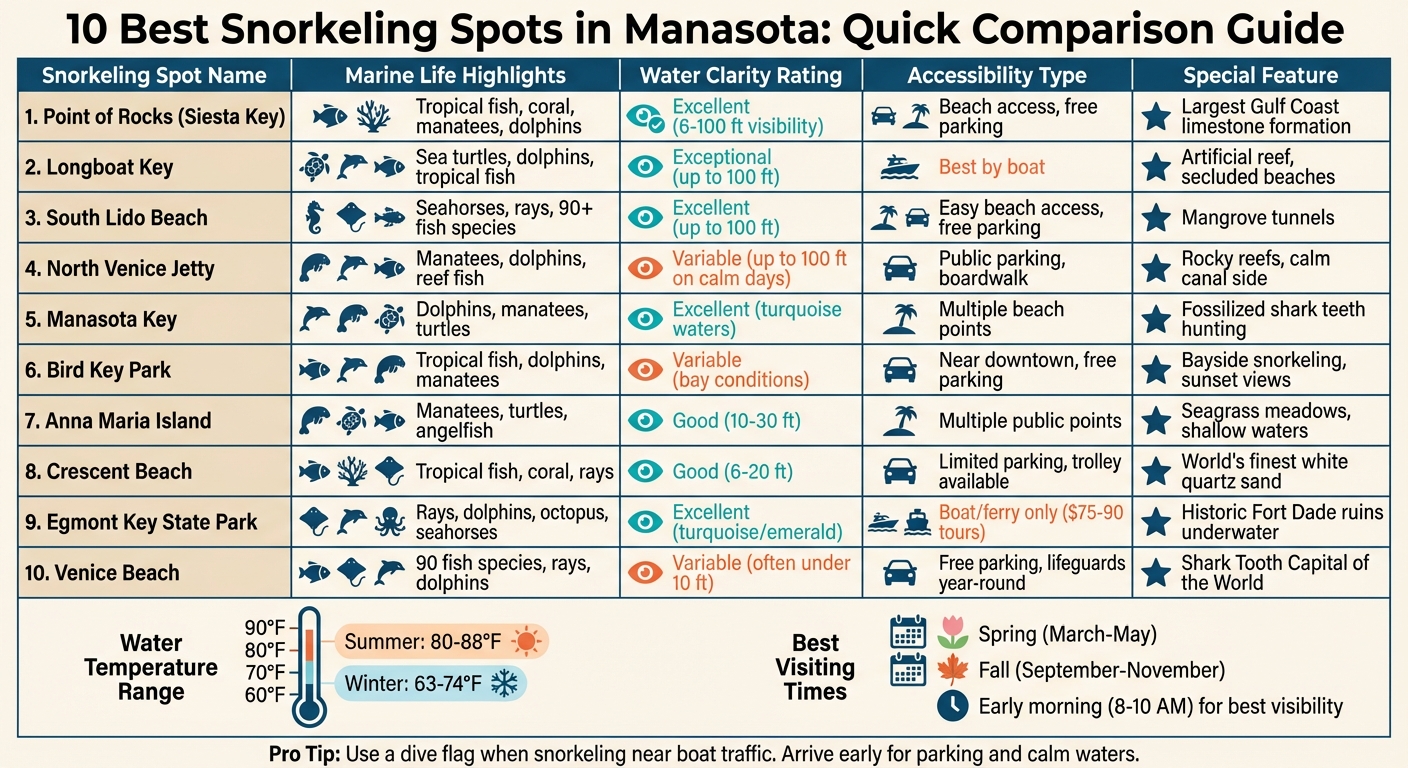
Manasota Snorkeling Spots Comparison: Marine Life, Accessibility & Features
Stump Pass Beach State Park Snorkeling
1. Siesta Key - Point of Rocks
Point of Rocks is the largest limestone rock formation along Florida's Gulf Coast, located at the southern end of Crescent Beach. This spot is perfect for snorkeling without needing a boat, thanks to its natural limestone ledges, reefs, and tidal pools that are teeming with marine life.
Marine Life Diversity
Snorkelers here can spot a variety of fish, including sergeant majors, sheepshead, parrotfish, snook, and snapper. The rocky crevices are home to blue and hermit crabs, sea stars, sea urchins, anemones, and red-boring sponges. If you’re lucky, you might even see manatees, dolphins, stingrays, sea turtles, or small sharks. The underwater scenery is enhanced with soft coral formations and patches of green algae, adding to the vibrant ecosystem.
Water Clarity
Visibility ranges from 6 feet near the rocks to about 20 feet in shallower waters, with occasional days offering crystal-clear views of over 100 feet. For the best experience, plan your snorkeling trip between 8:00 a.m. and 10:00 a.m. before the wind stirs up sediment. Spring through early fall offers ideal conditions, with summer water temperatures varying between 74°F and 90°F. Low to mid-tide is the best time to explore the area.
Accessibility
Getting to Point of Rocks is simple via Beach Access #12 at 6900 Point of Rocks Road. The parking here is free but limited, so arriving before 8:00 a.m. is recommended. From the parking area, it’s just a short walk south along the beach to reach the rocks. Water shoes are a must, as the limestone can be sharp and slippery. During high tide, swimming over the ledges is often easier than wading through them.
Special Features
The limestone formation serves as a natural breakwater, creating calmer waters compared to other Gulf Coast spots. This makes Point of Rocks a great choice for beginner snorkelers. Adding a touch of mystery, local lore claims the area is connected to pirate treasure maps. For safety, use a brightly colored float or dive flag to stay visible to boaters, and remember - manatees are protected by federal law, so hands off
2. Longboat Key
Longboat Key provides a peaceful snorkeling experience, far removed from the hustle and bustle of more crowded locations. With its small bays and hidden coves, the area boasts calm, sheltered waters - perfect for beginners looking to ease into the activity. At its northern tip, you’ll find Beer Can Island (also called Greer Island), where driftwood sculptures and shifting sandbars create fascinating underwater scenery. This tranquil spot combines gentle waters with abundant marine life, making it a fantastic destination for snorkeling enthusiasts.
Marine Life Diversity
The waters around Longboat Key are home to an impressive variety of marine creatures. Snorkelers might spot loggerhead, green, and hawksbill sea turtles, along with rays gliding gracefully through the water. Schools of colorful fish, including angelfish, butterflyfish, parrotfish, and damselfish, add vibrant splashes of color to the underwater world. During the warmer months, dolphins and manatees often make appearances. Just offshore, the Longboat Key Reef attracts larger species like Goliath groupers, octopuses, and the strikingly colorful nudibranchs, adding even more excitement to the experience.
Water Clarity
The water clarity at Longboat Key is exceptional, often reaching up to 100 feet. The best visibility typically occurs during the spring and fall months. Water temperatures are also inviting, ranging from 80°F to 88°F in summer and 63°F to 74°F in winter.
Accessibility
Getting to Longboat Key’s best snorkeling spots is straightforward, thanks to 11 public beach access points and a variety of boat tour operators. For those who prefer a traditional shore entry, Whitney Beach at the northern end is a great option. Mid-island access points lead to quieter stretches, ideal for extended swims along the shoreline. For prime snorkeling spots like the Longboat Key Reef and Jewfish Key, boat access is recommended. Local tour operators such as Suncoast Oasis Boat Tours, Kathleen D Sailing Catamarans, and Sarasota Boat Tours can help you reach these locations with ease.
Special Features
The Longboat Key Reef is an artificial structure that attracts a wide range of fish species, offering a rewarding snorkeling experience. Over on the bayside, Jewfish Key features a shallow, crystal-clear sandbar, perfect for leisurely snorkeling. This 38-acre island got its name from the Goliath groupers that were once abundant in the area. At the southern end of Longboat Key, Quick Point Nature Preserve offers a different kind of adventure, with tidal lagoons and rock groins that draw wading birds and other wildlife. Blending natural beauty with man-made enhancements, Longboat Key delivers a snorkeling experience that’s both serene and captivating.
3. South Lido Beach (Lido Key)
South Lido Beach, located within Ted Sperling Park, spans 100 acres where the Gulf of Mexico, Big Pass, Sarasota Bay, and Brushy Bayou meet. With 1,580 feet of shoreline, this natural haven offers plenty of room to explore. However, swimmers should be cautious near Big Pass, as strong currents can pose risks. Beneath the surface, a world of fascinating marine life awaits.
Marine Life Diversity
Snorkelers at South Lido Beach are in for a treat. You might spot manatees gliding gracefully, bottlenose dolphins playing nearby, or rays such as cownose, spotted eagle, and devil rays. The sandy seabed is home to creatures like sand dollars, conchs, coquina clams, stone crabs, and even seahorses. Fish enthusiasts will find a variety of species, including sheepshead, mangrove snappers, Atlantic spadefish, tarpon, and even juvenile Goliath groupers and barracudas. In fact, over 90 fish species have been recorded in these waters.
"The biodiversity found off Sarasota's beaches is astounding. Even an experienced Sarasotan can still find unfamiliar fish swimming across their path. From seahorses to sharks to Goliath groupers, Sarasota's got it all." - Allison Vilardi, Staff Instructor, Florida Underwater Sports
Water Clarity
The Gulf waters here are known for their exceptional clarity, offering visibility up to 100 feet. Seasonal temperatures range from 63°F–74°F in winter to 80°F–88°F in summer. For the best snorkeling conditions, visit from morning to early afternoon during late spring through early fall.
Accessibility
Getting to South Lido Beach is simple. Ben Franklin Drive leads directly to the park's unpaved parking lot at 2201 Benjamin Franklin Drive. There are 29 free parking spaces, though they fill up quickly, so arriving early is a smart move. Entrance and parking are free, and the park is equipped with restrooms, public showers, and even boat and kayak launches for those eager to explore beyond the shore.
Special Features
This beach offers more than just snorkeling. Visitors can navigate the intricate mangrove tunnels, relax on offshore sandbars in Big Pass, or enjoy panoramic views from the observation tower overlooking the Gulf and bay. Coastal nature trails add another layer of adventure. However, avoid swimming on the northwest side of the waterway channel, as the currents there are dangerous.
4. Casey Key - North Venice Jetty
At the southern tip of Nokomis Beach on Casey Key, you'll find North Venice Jetty, a spot where rock jetties create an artificial reef teeming with marine life all year. Accessible through North Jetty Beach Park, this location offers a quieter and less crowded snorkeling experience compared to other popular spots in the area. It combines the beauty of a natural reef with the convenience of nearby park facilities, making it a standout destination in Manasota.
Marine Life Diversity
The underwater rocks here are a magnet for reef fish, while larger creatures like manatees, dolphins, and even the occasional leatherback turtle can often be spotted. These animals frequent the shoreline, inlet, and the canal side of the jetty, making every snorkeling trip an opportunity to encounter something extraordinary.
Water Clarity
The water clarity depends on which side of the jetty you're exploring. The canal side is usually calm and clear, with conditions that resemble a tranquil saltwater pond. On the Gulf side, however, visibility can be reduced due to waves and boat activity. On calm days, visibility can extend to an impressive 100 feet or more, revealing a seafloor dotted with fascinating shells. Water temperatures range from 63°F to 74°F in the winter and 80°F to 88°F during the summer months.
Accessibility
Getting to North Venice Jetty is straightforward. North Jetty Beach Park provides free parking and direct access to the beach via boardwalks. From there, you can wade into the water and start snorkeling near the rocks on the north side. The park is well-equipped with restrooms, picnic areas, barbecue grills, and a concession stand for snacks and drinks. If you're in the mood for more exploration, kayak and paddleboard rentals are also available close by.
Special Features
Because of the high boat and jet ski traffic in the area, safety should be a top priority. Wearing bright colors and carrying a dive flag will help keep you visible to passing boaters. Additionally, sturdy footwear is a must, as the entry points are often lined with sharp seashells. For the best conditions, try visiting during low tide or after a storm, when the water settles and reveals even more shells to discover.
5. Manasota Key
Manasota Key, a serene barrier island along Florida's Gulf Coast, is a haven for snorkeling enthusiasts. Known for its unspoiled charm and laid-back atmosphere, this destination offers multiple beach access points, each promising a distinct underwater adventure.
Marine Life Diversity
The waters surrounding Manasota Key are teeming with life. Bottlenose dolphins often frolic in the waves, while West Indian manatees graze peacefully on seagrass beds during the warmer months. Close to the shore, snorkelers can spot a variety of fish, crabs, and even small stingrays gliding across the sandy seabed. Loggerhead sea turtles are another highlight, frequently seen in these waters. It’s important to admire these creatures from a distance, as both manatees and sea turtles are protected species. Be mindful of roped-off nesting areas along the beach to avoid disturbing these habitats.
Water Clarity
Manasota Key’s waters are renowned for their clarity, especially in spots like Stump Pass, where the turquoise hues almost seem to glow. This exceptional visibility owes much to the thriving seagrass beds, which act as natural water filters and reflect the health of the local ecosystem.
Accessibility
Getting to Manasota Key is easy via Manasota Key Road, which connects several public beach access points. Parking options vary - some areas offer free lots, while others charge a small fee. For those seeking tranquility, Manasota Beach is a hidden gem, often cited as the least crowded beach in Sarasota County.
Special Features
Snorkelers here often stumble upon fossilized shark teeth and unique shells hidden in the sandy seafloor, making it a favorite spot for fossil hunters. The calm, emerald waters near the shore are ideal for exploring without needing to venture far out. For an even more secluded experience, boat-accessible sandbars offer private snorkeling opportunities away from the busier beaches.
6. Bird Key Park
Just across the John Ringling Bridge, Bird Key Park offers a refreshing take on snorkeling, set against the backdrop of Sarasota Bay. Unlike the Gulf Coast's typical snorkeling spots, this compact park provides easy access, free parking, and a chance to explore bay-side waters teeming with life.
Marine Life Diversity
The bay here acts as a migration route for a variety of fish species, making it a hotspot for marine activity. Snorkelers often encounter snapper, grouper, tuna, and tarpon, along with vibrant tropical fish darting in the shallows. Larger marine animals like dolphins, manatees, stingrays, sea turtles, and even small sharks are known to make appearances, especially during feeding times. The area also attracts marine biologists conducting research, often marked by dive flags.
Water Clarity
Visibility at Bird Key Park isn’t as consistent as the Gulf, due to the bay's susceptibility to turbidity. Factors like tides, weather, and rainfall influence how clear the water is, with early mornings generally offering the best conditions. Water temperatures fluctuate between 63–74°F in the winter and 80–88°F during summer months, so be prepared for a range of conditions. While the water clarity can change, the park's facilities make entering the water straightforward and safe.
Accessibility
The park is well-equipped with amenities to make your visit easy. A handicapped-accessible canoe and kayak launch, restrooms, drinking fountains, and picnic pavilions are all available. However, the area experiences heavy watercraft traffic, including boats, jet skis, kayaks, and paddleboards. To stay safe, it’s a good idea to use a dive flag and wear brightly colored gear to remain visible.
Special Features
Bird Key Park isn’t just about snorkeling. It’s also a prime spot for bird-watching and serves as a launch point for kayaking and stand-up paddleboarding adventures. Plus, its location offers stunning views of both sunrise and sunset, making it a favorite for photographers and nature lovers alike.
7. Anna Maria Island
Just a short drive northwest of Sarasota, Anna Maria Island offers a different kind of underwater experience. Instead of coral reefs, this area is known for its vibrant seagrass meadows. Bean Point, located at the island's northern tip, is a favorite starting spot. Its shallow waters, ranging from 3 to 6 feet deep, make it a perfect choice for beginners and families.
Marine Life Diversity
The shallow waters aren’t just easy to navigate - they’re teeming with life. Snorkelers can encounter manatees, dolphins, and sea turtles weaving through the lush seagrass beds. These beds support a wide variety of marine species, creating a lively underwater ecosystem. If you're visiting between November and March, you’re in luck - that’s when manatees are most commonly spotted. The cooler months are ideal for those hoping to see these gentle giants.
Water Clarity
Timing is everything when it comes to visibility. Early mornings or late afternoons during slack tide often provide the best conditions, with visibility ranging from 10 to 30 feet. Incoming tides tend to improve water clarity, and fewer crowds during these times make for a more peaceful experience.
Accessibility
Getting into the water is simple at both Bean Point and the Rod & Reel Pier. The shallow bays and grass flats make entry easy, even for beginners. However, due to the area's boat traffic, a dive flag is a must for safety. While you can find gear rentals nearby, bringing your own equipment can save time and ensure you're ready to go.
Special Features
The island’s seagrass meadows and sandy shores are perfect for finding shells, and you might even stumble upon a fossilized shark tooth. Sandbars and rocky outcrops at the northern end attract fish, creating hotspots for marine life activity. Bean Point has earned glowing praise from visitors, holding a 4.7 out of 5 rating on TripAdvisor from over 500 reviews. Guests often highlight the "abundant sea life like rays and fish in crystal-clear shallows." However, keep in mind that visibility can drop after storms. These natural features make Anna Maria Island a standout destination for snorkeling, continuing the area's reputation for accessible and diverse underwater adventures.
8. Crescent Beach (Siesta Key)
Nestled at the quieter southern end of Siesta Key, Crescent Beach offers a serene escape where soft, white quartz sand meets the vibrant underwater world of Point of Rocks. This beach gained fame in 1987 when it was recognized at the Great International Sand Challenge for having the "world's finest, whitest sand." Unlike the busier stretches of Siesta Key, Crescent Beach is perfect for snorkelers looking to explore the calm, clear waters and the diverse marine life below.
Marine Life Diversity
The natural reef at Point of Rocks transforms the underwater seascape into a haven for marine life. Snorkelers often encounter schools of sergeant majors, parrotfish, sheepshead, snook, snapper, and grouper. The rocky outcrops also provide shelter for red sponges, sea urchins, anemones, crabs, and other crustaceans. During the summer, dolphins and manatees are frequent visitors to the shallow waters, while stingrays and sea turtles can be spotted throughout the year.
Water Clarity
For the best visibility, plan your snorkeling adventure in the early morning hours (8–10 AM), when deeper waters can offer up to 20 feet of clarity. Near the rocks, visibility is often reduced to about 6 feet due to sediment. The turquoise waters shine brightest during high tide and calm weather, before afternoon winds stir things up. If you're visiting during the cooler months, when water temperatures dip to 63–74°F, a 3/2mm wetsuit is a smart choice for comfort.
Accessibility
Entry to Crescent Beach is available at Beach Access Point #12, located at 6900 Point of Rocks Road. A gravel pathway leads to the shore, but parking is limited and fills up quickly. For a hassle-free visit, consider taking the Siesta Island trolley, which stops at Stickney Point Road and Midnight Pass Road. If you need snorkeling gear, local shops like Siesta Sports Rentals offer rentals for around $15 per day. Keep in mind that Crescent Beach does not have on-site facilities, but nearby Siesta Beach provides restrooms and showers.
Special Features
Crescent Beach offers more than just snorkeling. Visitors often stumble upon fossilized shark teeth and enjoy the cool, smooth quartz sand, which stays comfortable underfoot even on the hottest days. For safety, snorkelers are required by Florida law to display a "diver down" flag to alert boaters, and water shoes are recommended for navigating the sharp limestone formations. Ranked #3 in "Best Things To Do in Siesta Key" by U.S. News & World Report, Crescent Beach is frequently praised by visitors for its crystal-clear waters, excellent shelling, and peaceful atmosphere.
9. Egmont Key State Park
Egmont Key, a 280-acre island off Tampa Bay, offers a one-of-a-kind snorkeling adventure. Accessible only by boat, this remote spot combines natural beauty with historical intrigue. A standout feature is the submerged ruins of Fort Dade, particularly Battery Burchstead. These ruins, now an artificial reef due to erosion, are home to an abundance of marine life.
Marine Life Diversity
The waters around Egmont Key are bustling with life. Snorkelers often spot dolphins, manatees, sea turtles, and even manta rays or stingrays near the grass beds and ruins. Smaller creatures like octopus, seahorses, starfish, and crabs add to the underwater charm. For those interested in larger fish, species such as snook, tarpon, trout, grouper, snapper, and flounder are common. Vibrant tropical fish also weave through the ruins. As Florida State Parks puts it:
"If you venture out snorkeling, keep your eyes open for the beautiful sea life that inhabits the dilapidated structures which have sunk into the sea."
Water Clarity
The waters surrounding Egmont Key range from turquoise to emerald, offering excellent visibility, especially in late spring and early summer when the weather is calm. Travel writer Hayden Dunsel notes:
"The water surrounding Egmont Key is usually very clear and has a bright turquoise color. The clarity can be reduced during windy conditions and as waves kick up sand, but it is crystal clear when the wind and waves are calm."
To enjoy the best snorkeling conditions, aim to visit during calm weather.
Accessibility
Getting to Egmont Key takes a bit of effort. The ferry from Hubbard's Marina at Fort De Soto County Park is a popular option, with parking costing $5 and tolls adding about $3. Guided snorkeling trips are available through Coastline Excursions, with three-hour tours priced at $75 per person and four-hour trips ranging from $85 to $90. Private boaters can anchor offshore, while experienced kayakers can paddle to the island on calm days. However, beginners should avoid the open water crossings.
Special Features
Egmont Key is also home to an 87-foot lighthouse, a historic structure dating back to 1858, which stands as a beacon visible from the water. Beyond snorkeling, visitors can hunt for fossilized shark teeth and sand dollars along the shoreline. The island also boasts the highest concentration of gopher tortoises in the world. Keep in mind that Egmont Key has no facilities, so bring essentials like drinking water and reef-safe sunscreen. Additionally, the southern end of the island is a designated shorebird refuge and is off-limits to visitors.
10. Venice Beach
Venice Beach, often called the "Shark Tooth Capital of the World", draws snorkelers eager to explore its fossil-filled waters. Beneath the beach lies a fossil layer that’s 18–35 feet deep, where storms continually reveal prehistoric shark teeth - some belonging to the massive Megalodon. To reach these fossil beds, snorkelers need to swim about 30–40 yards beyond the buoys.
Marine Life Diversity
The waters off Venice Beach are teeming with marine life, hosting around 90 fish species. Close to shore, snorkelers might spot black-and-white striped sheepshead, mangrove snappers, Atlantic spadefish, and sand perch. Venturing further, about 250–350 yards offshore near coquina and artificial reefs, brings opportunities to encounter hogfish, sea robins, snapper, and grouper. Manatees and bottlenose dolphins are common sights near the shoreline, while rays like cownose and spotted eagle rays glide along the sandy bottom.
Allison Vilardi, a Staff Instructor at Florida Underwater Sports, highlights the area's appeal:
"The biodiversity found off Sarasota's beaches is astounding. Even an experienced Sarasotan can still find unfamiliar fish swimming across their path."
This vibrant marine life thrives despite the shifting near-shore conditions.
Water Clarity
Although the Gulf of Mexico can offer visibility of over 100 feet, Venice Beach’s near-shore waters often have limited clarity, typically under 10 feet when waves stir up sand. Calm mornings and early afternoons during late spring through early fall generally provide the best conditions for spotting marine life and fossils. Water temperatures range from 63–74°F in winter to 80–88°F in summer.
Accessibility
Venice Beach is visitor-friendly, offering free parking at 101 The Esplanade S, along with restrooms, showers, and changing facilities. There’s also a concession stand, and lifeguards are on duty year-round. For the best snorkeling experience, head roughly 100 yards from the lifeguard tower or 30–40 yards past the buoys. Florida law requires snorkelers to display a Diver Down flag (at least 12 inches by 12 inches) and stay within 100 feet of it. Swimmers should also avoid venturing within 100 yards of the Venice Jetty and Venice Fishing Pier.
Special Features
Beyond its famous shark teeth, Venice Beach offers the chance to explore coquina and artificial limestone reefs that are home to diverse marine ecosystems. Ben Schultz, owner of Venice Dive Center, shares this tip:
"When you get to the beach, turn 45° right and swim 350 yards to reach gravel and fossil beds ideal for spotting Megalodon teeth."
The area’s mix of marine life and fossil treasures makes it a standout among Manasota snorkeling spots. Keep an eye out for black sand ripples on the ocean floor - these often hide shells and fossilized teeth. To aid your search, consider renting or buying a "Venice Snow Shovel" (a screened basket on a handle) from Papa's Bait Shop at the Venice Fishing Pier. Low tide or the aftermath of a storm are prime times for fossil hunting, as these conditions churn up the ocean floor.
Quick Comparison of Snorkeling Spots
Snorkeling spots differ in marine life, water clarity, accessibility, and standout features. While some spots are perfect for families with easy beach access, others require boat rides for those seeking a more adventurous experience.
The table below highlights key details to help you quickly compare and pick a snorkeling destination that matches your preferences.
| Snorkeling Spot | Marine Life Diversity | Water Clarity | Accessibility | Key Highlights |
|---|---|---|---|---|
| Siesta Key - Point of Rocks | High: Tropical fish, crabs, octopus, coral | Excellent: Calm and shallow | Beach access; small parking lot; 5‑min walk | Gulf Coast's largest limestone formation |
| Longboat Key | Moderate: Sea turtles, dolphins, tropical fish | Clear | Best by boat; Longboat Key Reef is an artificial reef | Secluded beaches and upscale environment |
| South Lido Beach (Lido Key) | Moderate: Seahorses, starfish, rays | Good: Very close to shoreline | Multiple parking areas; beginner‑friendly | Extremely short swim to reef |
| Casey Key - North Venice Jetty | Moderate to High: Varied species near rocks | Variable: Can be stirred by currents | Public parking; requires caution near jetty | Rocky structures attract diverse fish |
| Manasota Key | Moderate: Tropical fish, occasional turtles | Good to Excellent: Depends on conditions | Beach access points available | Less crowded than popular spots |
| Bird Key Park | Moderate: Sarasota Bay fish species | Translucent | Near Downtown Sarasota; easy pull‑in | Popular for sunset watching and SUP/kayaking |
| Anna Maria Island | High: Angelfish, sea turtles, manatees | Pristine and clear | Multiple public access points (Bean Point, Coquina) | Regina Sugar Barge shipwreck (Bradenton Beach) |
| Crescent Beach (Siesta Key) | Moderate: Similar to Point of Rocks | Calm waters | South end of Midnight Pass Rd; very limited parking | Powdery quartz sand; fewer crowds than Siesta |
| Egmont Key State Park | Very High: Eagle rays, parrotfish, lobsters | Excellent | Accessible only by boat/ferry | Historic fort ruins and sunken ruins |
| Venice Beach | High: 90 fish species, rays, dolphins | Variable: Often under 10 feet near shore | Free parking; lifeguards year‑round | Shark Tooth Capital of the World; fossil hunting |
The Gulf's water temperatures range from 63–74°F in winter to 80–88°F in summer, with visibility reaching up to 100 feet on clear days. However, nearshore waters may appear less clear due to sand and waves.
For the best snorkeling experience, head out early for calmer waters and better visibility. If you're venturing into areas with boat traffic, remember to display a Diver Down flag and stay within 100 feet of it.
Conclusion
The snorkeling spots in the Manasota region showcase an incredible variety of underwater adventures, each offering a distinct experience. From searching for ancient shark teeth in Venice to swimming among tropical fish at Point of Rocks, this area provides something special for every water lover.
The marine life here is equally impressive. You might catch sight of manatees and dolphins around Anna Maria Island or stumble upon seahorses and starfish at South Lido Beach. With water temperatures ranging from 63–74°F in winter to 80–88°F in summer, and visibility sometimes stretching up to 100 feet on clear days, the conditions are ideal for snorkeling almost any time of year.
Manasota's charm lies in its ability to cater to everyone. Beginners can stick to the calm, shallow waters at places like Point of Rocks or Lido Beach Reef, while experienced snorkelers can explore the historic underwater ruins at Egmont Key State Park. The region also retains its "Old Florida" character, especially at spots like Manasota Key, where natural sand dunes and sea oats dominate the landscape.
For the best experience, plan your visit early in the morning to secure parking and enjoy calmer waters before the afternoon winds kick in. Always use a diver-down flag when snorkeling near jetties or boat traffic. Spring (March–May) and fall (September–November) are great times to visit, offering warm temperatures and excellent visibility. Whether you're drawn to the lively energy of Siesta Key or the tranquil beauty of Manasota Beach, each site offers a unique adventure to match your mood.
FAQs
Which Manasota snorkeling spot is best for beginners?
Point of Rocks at Crescent Beach is a fantastic spot for beginner snorkelers in Manasota. The shallow, crystal-clear waters provide excellent visibility, making it easy to explore the vibrant marine life below. This location offers a safe and enjoyable way to experience the stunning underwater scenery of the area.
What gear should I bring for Manasota snorkeling?
When heading to Manasota for snorkeling, make sure to pack the basics: a swim mask, snorkel, and fins. These essentials ensure both comfort and safety in the water. If you don’t already own gear, you can rent or buy it locally - this way, you can find equipment that fits well and meets quality standards. During cooler months, a wetsuit can help keep you warm, and a snorkeling vest adds buoyancy and an extra layer of safety. Local shops often carry a variety of options, so you’ll have no trouble finding what you need.
How can I check visibility and currents before snorkeling?
Before diving in, it's smart to check visibility and currents. Start by consulting local guides - they often have the most up-to-date information. Also, review recent weather reports and water condition updates to get a clearer picture of what to expect. Once you're at the site, take a moment to observe the water clarity and wave activity. Remember, conditions can shift due to storms, changing tides, or even the time of day. Staying informed and assessing the area carefully can make all the difference when it comes to safety and enjoyment.