10 Marine Species to Spot While Snorkeling Manasota Waters
Spot manatees, dolphins, sea turtles and colorful reef fish while snorkeling Manasota — plus safety and best-spot tips.
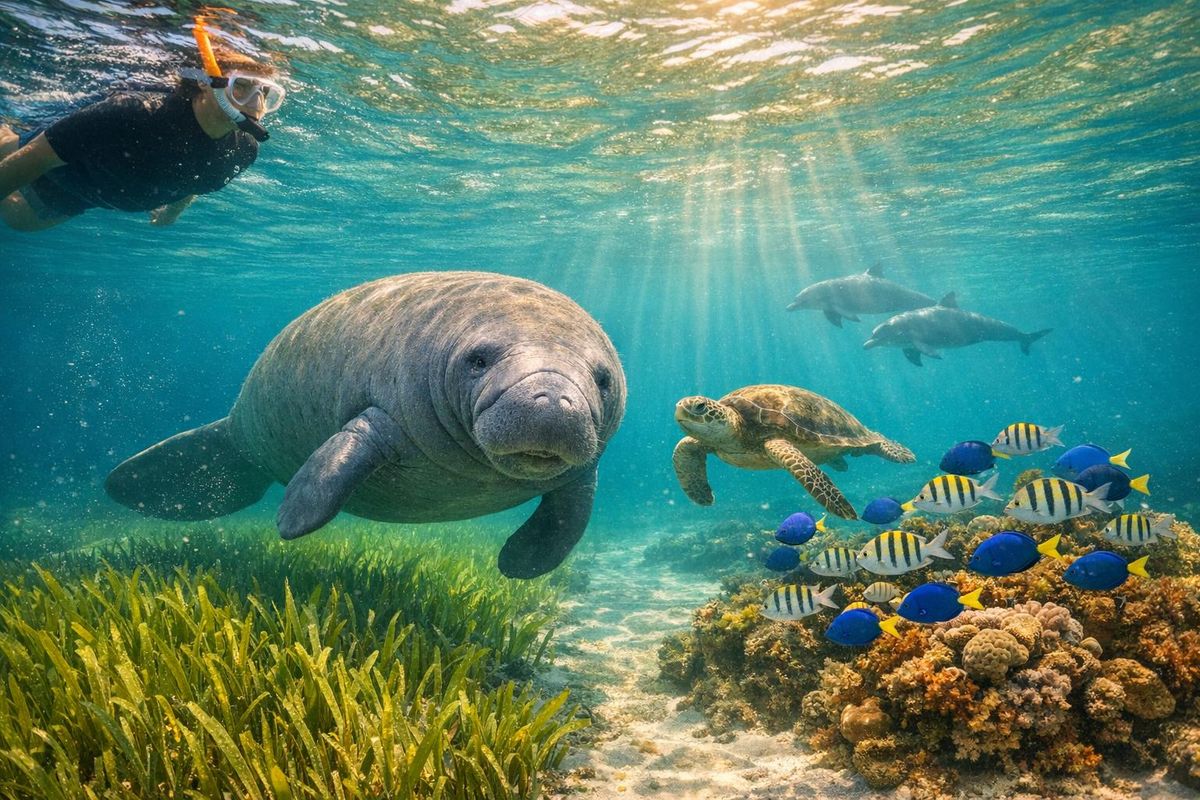
Snorkeling in Manasota's waters offers a chance to see diverse marine life up close. From gentle manatees to vibrant reef fish, here are 10 species you might encounter:
- Manatees: Found in shallow seagrass beds, these gentle giants often surface for air, leaving ripples behind.
- Dolphins: Playful bottlenose dolphins can be seen in pods, sometimes riding waves near boats.
- Sea Turtles: Loggerhead and green sea turtles thrive in seagrass beds and reefs.
- Angelfish: Colorful gray and French angelfish frequent rocky reefs close to shore.
- Parrotfish: Known for their beak-like mouths, they help maintain reef health by feeding on algae.
- Butterflyfish: Vibrant and patterned, they swim near coral formations just off the shore.
- Snapper: Various species like mangrove and red snapper gather near reefs and structures.
- Grouper: From red to massive Goliath groupers, these fish inhabit limestone ledges and reefs.
- Sheepshead: Recognized by their striped appearance, they prefer nearshore reefs and piers.
- Sergeant Majors: Small, striped fish often found in large schools around reefs and shipwrecks.
Snorkeling Tips: Visit early morning or late afternoon for better visibility (50–70 feet). Use reef-safe sunscreen, carry a dive flag, and always respect marine wildlife by maintaining safe distances. Popular spots include Turtle Beach, Emerson Point Preserve, and Blind Pass.
Manasota waters are perfect for beginners and seasoned snorkelers, with warm, clear waters and abundant marine life. Dive in and enjoy the natural beauty!
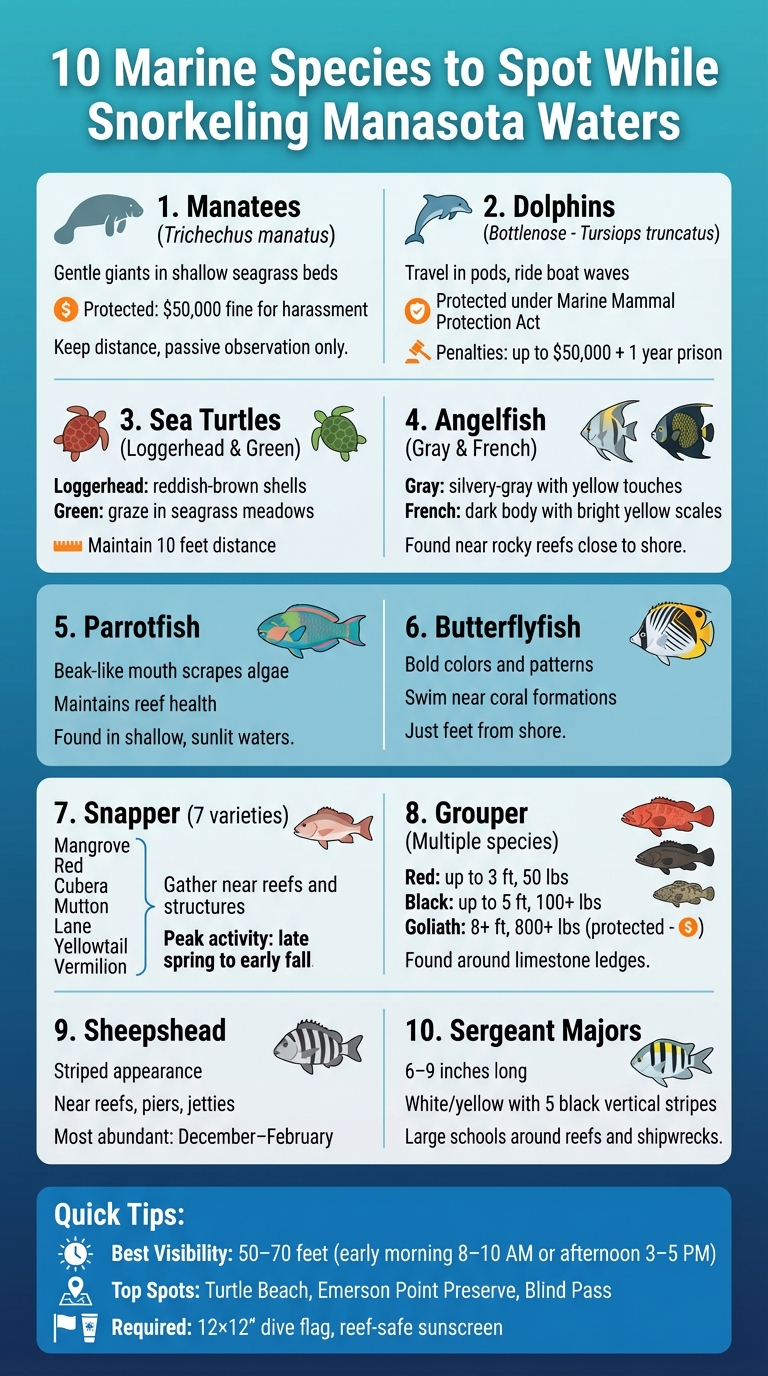
10 Marine Species to Spot While Snorkeling in Manasota Waters
1. Manatees
Florida manatees (Trichechus manatus) are gentle giants often found grazing on seagrass in shallow waters. They frequently surface for air, leaving behind circular ripples known as "footprints." If you're lucky, you might hear the soft sound of their breaths as they surface. While many manatees migrate to Florida's warm waters during the winter, some stay year-round, making them a potential sighting any time you snorkel in Manasota's waters.
These fascinating creatures are not just a delight to observe - they are also protected by law. Federal and state regulations, including the Florida Manatee Sanctuary Act, ensure their safety:
"It is unlawful for any person, at any time, intentionally or negligently, to annoy, molest, harass, or disturb any manatee."
Breaking these laws can result in fines of up to $50,000 and even a year in prison.
The Florida Fish and Wildlife Conservation Commission provides clear guidance for interacting with manatees:
"Keeping your distance and passive observation are the best ways to view manatees."
To respect these animals, stay quiet and avoid making bubbles. Never chase or feed them. If a manatee approaches you, remain still and allow it to pass calmly. Should you encounter an injured or distressed manatee, contact the Florida Fish and Wildlife Conservation Commission immediately.
2. Dolphins
After the tranquil experience with manatees, dolphins bring an energetic vibe to the waters of Manasota. Bottlenose dolphins (Tursiops truncatus) are a standout attraction in these coastal areas. Known for their intelligence and social nature, these marine mammals often travel in pods and are frequently seen riding the waves created by boats. Their playful antics sometimes bring them close to snorkelers, creating unforgettable moments.
Dolphins are protected under the Marine Mammal Protection Act of 1972. Any actions that disturb them or alter their natural behavior can lead to penalties of up to $50,000 and up to one year in prison.
To enjoy these fascinating creatures responsibly, practice passive observation. Float quietly in the water and avoid using gear that produces bubbles. Never chase, touch, or feed dolphins, and give them the space to behave naturally without interference.
3. Sea Turtles
Swim alongside loggerhead and green sea turtles in the crystal-clear Gulf waters of Manasota. These turtles thrive in the region's lush seagrass beds and along its natural reefs. The two most common species here are the loggerhead sea turtle (Caretta caretta) and the green sea turtle (Chelonia mydas).
Each species has unique features that make them easy to recognize. Loggerheads are known for their strong, reddish-brown shells, while green sea turtles are often seen grazing peacefully in seagrass meadows. Both species are classified as threatened under the Endangered Species Act, which means it’s crucial to observe them responsibly.
If you’re lucky enough to encounter a sea turtle while snorkeling, maintain at least 10 feet of distance to avoid disturbing them, especially when they surface for air. Never touch, chase, or attempt to ride them. If a turtle approaches you, stay calm and let it move past naturally.
The seagrass beds and rocky habitats in Sarasota and Manatee counties serve as essential feeding and resting areas for these turtles. You might spot them lounging on the seafloor or gracefully surfacing for a breath.
When photographing these gentle creatures, avoid using flash - it can startle them. Keep an eye out for their distinctive flippers, which help them glide effortlessly through the water. Up next, dive into the colorful world of Manasota's reef fish!
4. Angelfish
Angelfish bring a burst of color to the underwater world of Manasota, making them a favorite sight for snorkelers exploring the reefs around Manatee and Sarasota. Their eye-catching patterns and distinctive shapes create a striking underwater spectacle.
Two species often spotted in these waters are the Gray Angelfish (Pomacanthus arcuatus) and the French Angelfish (Pomacanthus paru). The Gray Angelfish features a silvery-gray body with delicate touches of yellow, while the French Angelfish is easily recognized by its dark body adorned with bright yellow scales that seem to shimmer in the sunlight.
You’ll find these angelfish near rocky reefs just a short swim from the shore, especially around the public beaches of Manasota Key. Their presence highlights the incredible marine life that thrives in this region.
Next, discover the colorful parrotfish that add even more vibrancy to Manasota’s underwater landscape.
5. Parrotfish
Parrotfish bring a splash of color and a distinct look to Manasota's underwater world. With their fused teeth forming a beak-like mouth, they scrape algae off rocks and coral - a behavior that helps maintain a balanced underwater ecosystem.
You’ll usually spot parrotfish in the shallow, sunlit waters around Manasota Beach and Blind Pass Beach Park. The northern and central parts of Manasota Key often have calmer, less busy waters, making them ideal for observing these vibrant fish.
For the best chance to see them up close, take a short 5- to 10-minute walk inland to discover quieter viewing spots.
As you explore further, keep an eye out for the lively movements of butterflyfish nearby.
6. Butterflyfish
Butterflyfish are some of the most eye-catching creatures you’ll spot while snorkeling in the waters around Manasota. These striking fish, with their bold colors and patterns, often swim just a few feet from the shore, where coral formations provide them with shelter and plenty of food. Their presence adds a splash of color to the already mesmerizing underwater scenery.
For the best chance to see butterflyfish, head to Manasota Beach (north end), Blind Pass Beach Park (middle), or Stump Pass Beach State Park (south). Want a more peaceful experience with crystal-clear water? Take a 5–10 minute walk away from the busier access points, and you’ll likely find these lively fish darting around the coral.
Up next, meet the snapper, a strong swimmer that thrives in these vibrant coastal waters.
7. Snapper
Snapper are a delight to spot in Manasota waters, with several varieties making their home here, including Mangrove (Gray), Red, Cubera, Mutton, Lane, Yellowtail, and Vermilion. The Mangrove Snapper - nicknamed the "Grey Ghost" - is the most common inshore species. These fish are easily recognized by their grayish-silver bodies and their tendency to linger around shadows and structures.
"Mangrove Snapper, also known as Gray Snapper, are commonly found around structures like docks, mangroves, and reefs." – Landed Fishing
Snapper are known to gather near mangrove roots, docks, piers, artificial reefs, and rocky ledges. If you're looking for prime snapper locations, check out Sarasota Bay, Longboat Key, or the waters near the Skyway Bridge - these spots are known to be productive. Their activity peaks from late spring through early fall.
For the best chance of spotting them, focus on underwater edges where reefs meet sandy bottoms or shaded areas under mangrove canopies, especially during moving tides when they’re more likely to feed. Snappers often appear in small groups, either near the bottom or mid-water column, typically sticking close to protective structures.
Up next, let’s dive into the world of the grouper, another species that thrives around underwater structures.
8. Grouper
Grouper are a well-known species in the waters around Manasota, with several varieties thriving in this area. Among the most common are Red grouper, Black grouper, Gag grouper, and Scamp grouper. There's also the impressive Goliath grouper, which holds the title of the largest grouper species in Florida waters.
Red grouper can grow as large as 3 feet long and weigh up to 50 pounds. Black grouper are even bigger, reaching up to 5 feet and over 100 pounds. Then there’s the Goliath grouper, which can exceed 8 feet in length and tip the scales at over 800 pounds - though the state record is 680 pounds.
Manasota’s unique limestone bottom, often described as "Swiss cheese", is located closer to shore than in many other parts of Florida. This geological feature makes it easier to find groupers in shallower, more accessible waters.
"The limestone shelf off the coast of Sarasota sits closer to the shoreline than in many other Florida regions. This gives local anglers access to productive grouper bottom with shorter runs, often finding fish in shallower water than their counterparts to the north." - SarasotaCast
If you’re looking to spot grouper, check around limestone ledges, artificial reefs, or rock piles. Smaller species, like Gag and Red grouper, tend to stick to inshore reefs and bay structures. Meanwhile, larger species like Black and Goliath grouper are usually found around deeper offshore reefs and wrecks. The best time to find them is between June and October, when their activity in local waters is at its peak. Keep in mind, though, that Goliath groupers are a protected species in Florida and cannot be harvested.
Next, dive into the world of sheepshead - a fish known for its striking teeth and striped appearance.
9. Sheepshead
Sheepshead are a fascinating species often found in the nearshore waters of Manasota. These fish typically inhabit areas like nearshore reefs, piers, jetties, and shipwrecks. They are drawn to hard surfaces, making them easy to spot in shallow waters near the beach. Look for them around concrete pilings, reef structures, and other man-made habitats. Popular locations to find sheepshead include Sarasota, Bradenton Beach, Holmes Beach, Cortez, and Longboat Key.
"Captain Steve put us on fish (sheepshead) immediately - from shore!" - Will U., Angler
These fish can be spotted throughout the year, but they are most abundant from December to February. From April to October, however, finding them takes a bit more effort.
Up next, learn about Sergeant Majors, another colorful resident of Manasota's waters.
10. Sergeant Majors
Sergeant majors are strikingly patterned fish commonly found in the waters around Manasota. These small fish typically measure between 6 and 9 inches long. Their standout look includes white bodies topped with yellow and five bold black or dark blue vertical stripes running along their sides.
The Florida Museum explains, "Sergeant majors earn their name from their brightly striped sides, reminiscent of a military sergeant major's insignia."
Known for their social behavior, sergeant majors often form large schools. Adults are usually seen around coral reefs, while juveniles prefer shallow tidal pools. You can spot them near reef outcrops, shipwrecks, and pilings. During breeding season, males guard their nests and may even take on a bluish tint.
These fish are also known for their cleaning habits, occasionally helping green sea turtles by removing parasites. Their varied diet allows them to thrive in local reef ecosystems. Keep an eye out for these vibrant fish to add excitement to your snorkeling trips in Manasota waters.
Snorkeling Tips for Manasota Waters
Plan your snorkeling trip wisely to make the most of Manasota's waters. The best times to snorkel are early in the morning (8–10 AM) or later in the afternoon (3–5 PM) when visibility reaches an impressive 50–70 feet. During the summer months (May–October), you’ll enjoy calm waters with temperatures ranging from 70–85°F. In contrast, winter (November–April) brings cooler waters at 65–75°F and slightly rougher conditions. Always check NOAA tide charts before heading out, aiming for high tide when marine life is more active and easier to spot.
Gear up properly to ensure a smooth experience. Pack a high-quality mask, an adjustable snorkel with a splash guard, and a reliable pair of fins. Florida law also requires snorkelers to carry a 12×12-inch dive flag for safety, which has significantly reduced boat-related accidents in areas like Sarasota Bay. Protect yourself and the environment by using reef-safe sunscreen (SPF 30+), free of oxybenzone and octinoxate - ingredients banned in Florida since 2021 to combat coral bleaching. A rash guard can help shield you from the sun, while beginners might find a 3mm wetsuit useful for staying comfortable year-round.
Stay safe while exploring Manasota’s underwater treasures. Always snorkel with a buddy and stick within 300 feet of shore, especially during outgoing tides. Check the weather forecast using tools like the Windy app to avoid sudden afternoon storms. Stay hydrated, drinking about 16 ounces of water per hour, and keep your body horizontal in the water to minimize disturbances.
Respect the local wildlife to protect both yourself and the marine animals. Follow Florida Fish and Wildlife Conservation (FWC) guidelines by keeping a distance of at least 50 feet from manatees and dolphins (100 feet if calves are present) and 10 feet from sea turtles. Never chase, touch, or feed marine life - violations can result in fines starting at $500. Use hand signals to communicate quietly and stick to a “look but don’t touch” approach to preserve their natural behaviors.
Take care of the environment to maintain the beauty of Manasota waters for future visitors. Avoid contact with coral, and remove any trash you come across, including microplastics. Rinse your gear with fresh water after each use to keep it in good condition. For some of the top snorkeling spots, check out Turtle Beach, Emerson Point Preserve, and Beer Can Island near Blind Pass. These locations feature shallow waters (5–15 feet deep) and convenient parking options for $5–$10 daily.
Conclusion
From gentle manatees to vibrant reef fish, every snorkeling trip offers a chance to discover something new. The waters of Manasota are teeming with marine life, including gentle manatees, playful dolphins, vibrant angelfish, and colorful parrotfish. These ten species are just a small sample of the incredible underwater world waiting to be explored. Whether you're new to snorkeling or a seasoned ocean lover, the clear, warm waters of Manatee and Sarasota counties provide the ideal backdrop for unforgettable encounters.
Kickstart your underwater adventure with a bit of preparation and consider guided tours to make the most of your experience. Options like the Shark Tooth Hunt in Manasota Key ($65) or the Manatee Discovery Tour in Bradenton Beach ($55, with an impressive 5.0/5 rating from 400 reviews) are excellent ways to dive deeper into the region’s unique offerings.
The beauty of snorkeling here lies in its unpredictability. Marine life behavior changes with the seasons, tides, and time of day, ensuring that no two excursions are ever the same. Each trip is a fresh opportunity to glimpse the vibrant underwater world of Manasota.
For more tips, stories, and ideas about exploring the Manasota area - from hidden beaches to local events - head over to Manasota.co. So, grab your mask and fins and dive into the natural wonders that await!
FAQs
Do I need a dive flag to snorkel in Manasota?
Yes, if you're snorkeling in Manasota waters, a dive flag is a must. It needs to be displayed either on a boat or attached to a surface float, standing at least three feet above the water. This flag is crucial for ensuring you're visible to nearby boats, keeping your snorkeling experience safe and worry-free.
What should I do if a manatee or dolphin swims toward me?
When encountering a manatee or dolphin, it's essential to stay calm and give the animal plenty of space. If a manatee reacts to your presence, back away slowly to avoid disturbing its natural behavior. Remember, never touch, feed, or block their path. Keeping a respectful distance not only keeps you safe but also helps protect these marine animals.
How can I tell similar reef fish apart while snorkeling?
To tell similar reef fish apart, pay attention to their body shape, color patterns, and fin designs. A reef fish identification guide tailored to Florida waters is a handy tool for comparing these features. Observing distinctive markings or behaviors can also make identifying them much simpler.