Ultimate Guide to Eco-Friendly Diving in Manasota
Tips for eco-conscious divers: best shore and boat sites, reef-safe gear, local operators, and cleanup efforts.
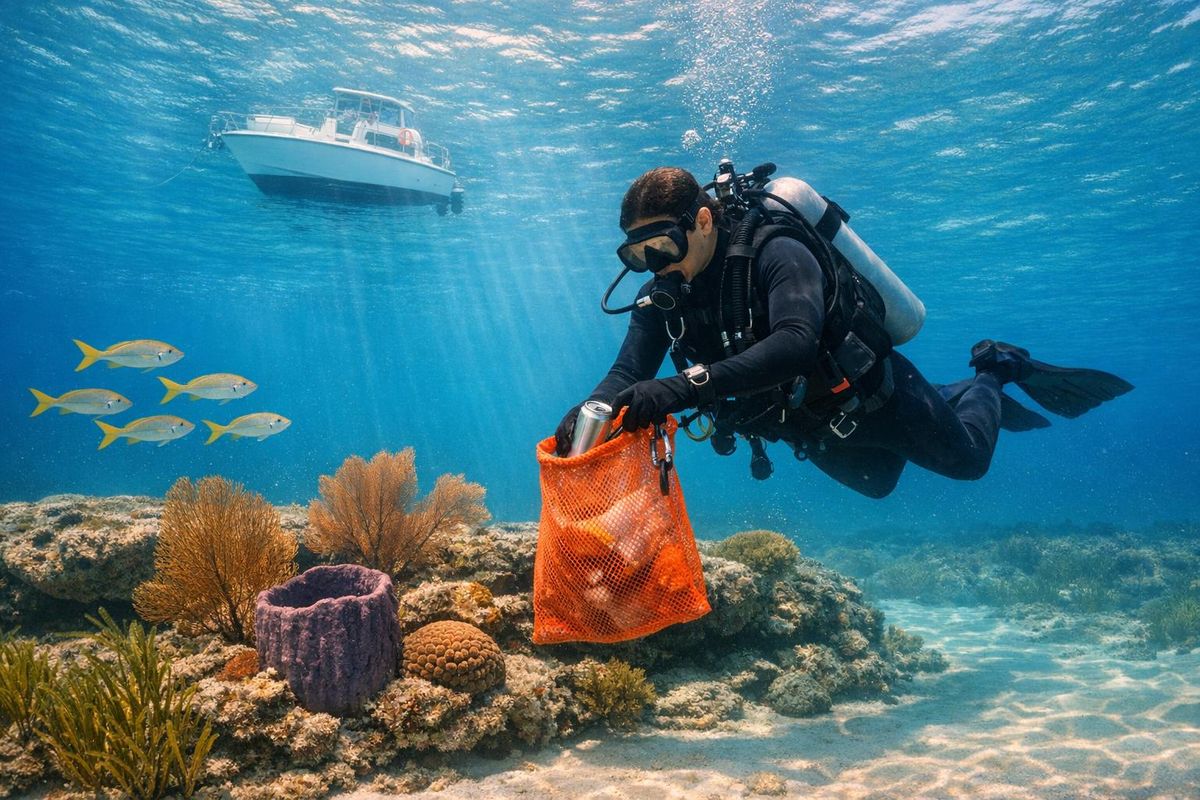
Manasota offers a rare blend of underwater adventure and conservation, making it a top destination for divers who care about protecting marine ecosystems. From vibrant artificial reefs to natural limestone ledges, this Florida Gulf Coast area is rich in marine life and history. But diving here comes with responsibility. Small actions, like using reef-safe sunscreen and mastering buoyancy, help preserve fragile habitats. Local dive shops and conservation groups also play a big role, offering clean-up events, training, and research opportunities. Here's how you can dive responsibly while enjoying Manasota's underwater treasures:
- Top Dive Sites: Explore artificial reefs like Lynn Silvertooth Reef or natural ledges like Gunsmoke Ledge. Both offer diverse marine life and manageable depths for all skill levels.
- Dive Rules: Avoid touching coral, anchor away from reefs, and collect debris when possible. These simple practices protect marine ecosystems.
- Eco-Conscious Operators: Choose dive shops that limit group sizes, prioritize conservation, and provide high-quality, eco-friendly gear.
- Conservation Efforts: Join local initiatives like clean-up drives or donate to organizations like Mote Marine Laboratory, which leads marine research and restoration.
Manasota’s waters are not just a diving destination - they’re a chance to contribute to preserving marine life for future generations. Dive responsibly and leave only bubbles behind.
Coral Restoration Ecotourism in the Florida Keys
sbb-itb-354efe9
Best Eco-Friendly Dive Sites in Manasota
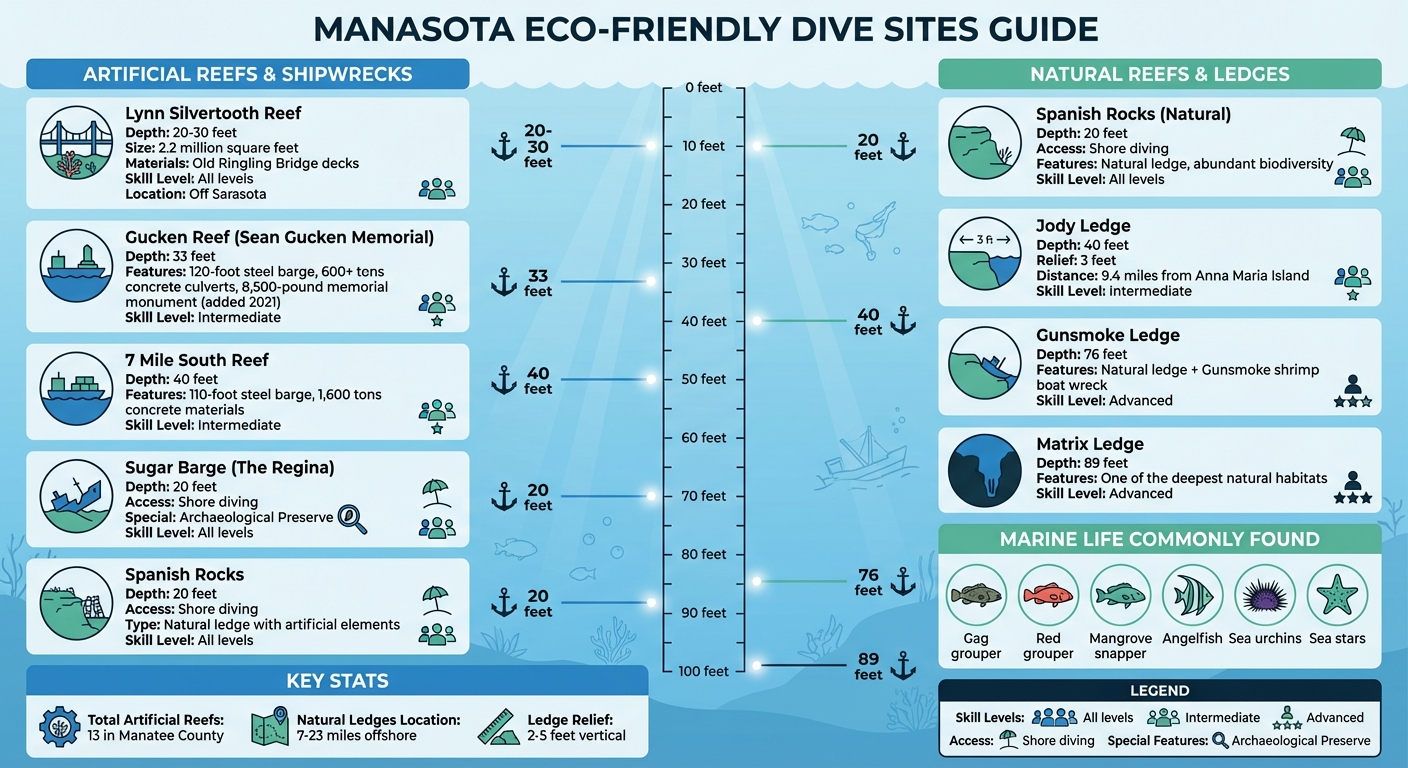
Manasota Eco-Friendly Dive Sites Comparison Guide
The waters off Manatee and Sarasota counties offer a mix of adventure and conservation, making them a haven for eco-conscious divers. From artificial reefs bustling with marine life to natural limestone ledges, these dive sites show how responsible diving practices can protect and enhance marine ecosystems. Let’s dive into the highlights, starting with the manmade structures that have transformed into thriving underwater habitats.
Artificial Reefs and Shipwrecks
Manatee County is home to 13 artificial reefs designed to balance recreation, fishing, and conservation efforts. These reefs are constructed using recycled materials like bridge spans, concrete culverts, steel barges, and limestone boulders, providing essential habitats for marine species. The Manatee County Ecological & Marine Resources Division explains their mission:
The County's major objectives in constructing artificial reefs are to create an underwater environment that balances public user-group interests, such as fishing and diving, with resource conservation and minimal environmental impact.
One standout is the Lynn Silvertooth Reef, a sprawling site covering 2.2 million square feet off Sarasota. Built with old Ringling Bridge decks, it sits at a depth of 20–30 feet, making it accessible for divers of all skill levels. Another notable site is the Gucken Reef (Sean Gucken Memorial), featuring a 120-foot steel barge and over 600 tons of concrete culverts at 33 feet deep. This site also includes a striking 8,500-pound memorial monument, added in 2021. For those seeking deeper dives, the 7 Mile South Reef offers a 110-foot steel barge and 1,600 tons of concrete materials at 40 feet.
Shore diving enthusiasts can explore Sugar Barge (The Regina) and Spanish Rocks, both accessible directly from the shore. These sites, sitting at about 20 feet, are excellent for observing marine life while minimizing environmental impact. The Sugar Barge, in particular, is a designated Archaeological Preserve, adding historical significance to its natural beauty.
Natural Reefs and Marine Habitats
Manasota’s natural limestone ledges offer equally captivating underwater experiences. Located 7 to 23 miles offshore, these ledges provide 2 to 5 feet of vertical relief, creating crevices that attract a variety of marine life. According to the Manatee County Ecological & Marine Resources Division:
The County, when possible, will strive to create the most natural rocky bottom substrate using natural materials such as limestone as it is the most suitable material for artificial reefs in the Gulf of Mexico.
For a shallow dive, Spanish Rocks offers a natural ledge experience at around 20 feet, with abundant biodiversity and easy shore access. Jody Ledge, located 9.4 miles from the northern tip of Anna Maria Island, sits at 40 feet with 3 feet of relief, making it a favorite for those looking for a slightly deeper dive. Advanced divers can explore Gunsmoke Ledge, which combines a natural ledge with the wreck of the shrimp boat Gunsmoke at 76 feet. For even greater depth, Matrix Ledge reaches 89 feet, making it one of the area’s deepest natural habitats.
These natural sites host a wide range of marine species, including gag and red grouper, mangrove snapper, angelfish, sea urchins, and sea stars. Divers are encouraged to stay close to the bottom to observe the species that inhabit the crevices, as the ledges typically have only 2 to 4 feet of vertical relief.
Rules for Diving in Marine Protected Areas
To protect these underwater treasures, divers must adhere to specific guidelines. Avoid anchoring directly on reef structures - anchor at a safe distance to prevent damage. Harvesting invasive lionfish is encouraged, as it helps protect native species. Always remove fishing gear, lines, or nets to prevent harm to marine mammals and sea turtles. Feeding marine animals, like sea turtles, is both illegal and harmful. If you encounter an injured marine mammal or sea turtle, contact the Stranding Investigation Program immediately. Additionally, keep an eye out for non-native species like the Tessellated Blenny, Regal Damselfish, and Orange Cup Coral, which compete with native species for space. By respecting these rules, divers can help preserve these vibrant ecosystems for years to come.
Eco-Conscious Dive Shops and Operators
What Makes a Dive Shop Eco-Conscious
The most responsible dive shops actively work to protect the underwater ecosystems they depend on. One key indicator? Small group sizes. By limiting the number of divers in classes or tours, these shops provide more personalized guidance, helping divers improve buoyancy control and avoid unintentional damage to fragile marine habitats. This approach shifts diving from a high-impact activity to a more mindful and managed experience.
Another hallmark of eco-conscious operators is their commitment to conservation. Look for dive shops involved in reef restoration, partnerships with marine protection organizations, or debris cleanup initiatives. Education plays a big role, too. As Scuba Steve's Adventures explains:
At SCUBA Steve's, our courses and offerings are designed not only to certify students for SCUBA diving, but also to teach people how to dive these local treasures with confidence and awareness.
This philosophy of "certification with a purpose" ensures divers are trained to explore shipwrecks and springs responsibly, minimizing their environmental impact. Other signs of a responsible operator include high-quality, leak-resistant equipment, gear designed to avoid reef contact, and training that emphasizes techniques like frog kicking to reduce sediment disturbance.
These practices highlight how local dive shops can set the standard for eco-conscious diving.
Local Dive Shops to Consider
Several local dive shops exemplify these principles, blending rigorous training with conservation efforts. Suncoast Aqua Ventures has been a leader in cleanup initiatives, removing an impressive 290,092 pounds of trash from coastal and underwater areas since 2016. This includes over 250 discarded tires. In 2025 alone, they hosted 15 cleanup events, collecting 96,391 pounds of debris. Their 10th Annual Reef and Beach Cleanup, scheduled for September 12, 2026, at Terra Ceia SeaBreeze Park, will bring together scuba divers, fishermen, and volunteers for a cleanup event followed by an awards ceremony.
Mote Marine Laboratory & Aquarium in Sarasota is another standout. With 38 active research programs focused on marine conservation and restoration, Mote offers eco boat tours and behind-the-scenes educational experiences that connect divers with ongoing research efforts. In April 2026, they hosted the "Run for the Turtles" event to support sea turtle conservation.
For divers seeking professional certifications, Florida Underwater Sports is a PADI 5 Star and Scubapro Platinum-certified shop, ensuring high standards and top-notch equipment. Meanwhile, Dive Florida LLC serves both Manatee and Sarasota counties as a 5-star facility offering training programs through NAUI, PADI, and SDI/TDI.
When choosing a dive shop, consider asking about their diver-to-guide ratios, involvement in conservation projects like those with the Sarasota Bay Estuary Program or Keep Manatee Beautiful, and participation in citizen science initiatives that contribute to local marine research.
How to Practice Eco-Friendly Diving
Preparing for Your Dive
Being eco-conscious starts before you even dive in. For instance, your choice of sunscreen can have a huge impact on marine ecosystems. Sunscreens with chemical filters like oxybenzone and octinoxate are known to cause coral bleaching and disrupt reproduction, even in small amounts. Opt for mineral-based sunscreens containing non-nano zinc oxide or titanium dioxide, and apply them well in advance to minimize their impact when you enter the water.
Another essential step is securing your diving gear. Make sure gauges, alternate air sources, and accessories are tightly fastened to avoid snagging on fragile marine habitats. If you're diving in shallow areas like Manasota, check tide and navigation charts beforehand. This ensures there’s enough water clearance to prevent boat motors from stirring up sediment, which can harm rooted vegetation that supports marine life.
| Gear Type | Eco-Friendly Choice | Why It Matters |
|---|---|---|
| Sunscreen | Mineral-based (non-nano zinc oxide) | Prevents coral bleaching and chemical damage |
| Lubricants | Plant-based, silicon-free | Reduces harmful chemical residues in the water |
| Debris Collection | Reusable mesh bags | Helps remove litter during dives |
Before descending, perform a buoyancy check to ensure you’re properly weighted. This prevents accidental contact with the seabed, protecting sensitive marine habitats. Also, consider sustainable alternatives for your gear - materials like limestone neoprene or Yulex are better options compared to petroleum-based neoprene. Lastly, pack reusable water bottles and utensils to cut down on single-use plastics.
Once your surface preparations are complete, it’s time to focus on eco-conscious practices underwater.
Proper Underwater Behavior
When diving, follow a strict "no touch, no feed" rule to avoid disturbing marine life. Coral reefs and marine creatures are incredibly delicate, so keeping your distance is key to preserving their structures. This is especially critical in Florida waters, where you might encounter protected species like manatees, sea turtles, or dolphins.
Refine your kicking technique by using the frog-kick method instead of the traditional flutter kick. Frog-kicking reduces downward water force, preventing silt from being stirred up and damaging coral. Always maintain a respectful distance from wildlife, and don’t chase animals for a photo. Instead, use wide-angle lenses to capture great shots without getting too close.
The Florida Fish and Wildlife Conservation Commission puts it best:
Take only photos, leave only bubbles.
Bring along a reusable mesh bag to collect any plastic or litter you find during your dive. With over 6 million tons of trash entering the ocean annually, every piece you remove counts. If you want to take your efforts further, consider joining initiatives like REEF fish surveys or PADI AWARE’s Dive Against Debris. These programs let you contribute to citizen science by reporting your findings.
Marine Conservation Efforts in Manasota
Local Marine Conservation Organizations
Manasota is home to several groups dedicated to protecting its marine ecosystems. One standout is the Mote Marine Laboratory & Aquarium, which runs a Stranding Investigations Program. Since its inception, this program has recovered over 2,000 sea turtles (since 2003) and responded to more than 780 cetacean strandings (since 1985). They also operate a 24-hour hotline (888‑345‑2335) for reporting sick, injured, or deceased marine mammals and sea turtles in Sarasota and Manatee counties.
For divers eager to contribute, the Suncoast Reef Rovers is a volunteer-driven group that has removed over 50,000 pounds of marine debris from local waters since 1997. In 2024 alone, they hauled out 2,925 pounds of trash, including 365 pounds from the Donald Roehr Artificial Reef. The group meets every third Thursday at 6:30 pm to coordinate efforts.
Another key player is the Coastal Wildlife Club, which manages about 20 miles of beach on Manasota Key and nearby islands. With a team of approximately 140 patrol volunteers, they monitor sea turtle nesting activity from mid-April through October. Meanwhile, Sarasota Bay Watch focuses on habitat restoration projects, such as the naturalization of the Jim Neville Marine Preserve, and organizes youth marine science camps. The Sarasota Bay Estuary Program also plays a vital role, tracking ecosystem health through annual report cards that assess nitrogen, chlorophyll‑a, macroalgae, and seagrass levels across five bay segments.
These organizations not only safeguard marine life but also provide plenty of opportunities for locals and visitors to actively participate in conservation efforts.
Ways to Get Involved
If you're inspired by these conservation initiatives, there are plenty of ways to make a difference. By volunteering or supporting these efforts, you can help preserve Manasota's vibrant underwater ecosystems for years to come.
Divers can join the Suncoast Reef Rovers to participate in underwater cleanups at local jetties, reefs, and piers. These efforts focus on removing derelict fishing gear and ghost nets that pose a threat to marine life. For example, in October 2024, volunteers cleaned debris from damaged docks at the Sarasota Sailing Squadron. Local dive shops also frequently host larger cleanup events, offering even more opportunities to get involved.
You can also contribute to restoration efforts through programs like Sarasota Bay Watch's 2026 Giving Challenge, held on April 15–16. Donations up to $100 during this event will be matched 1:1, doubling their impact. For those interested in citizen science, Mote Marine Laboratory offers educational programs that reached 50,934 students in 2024. Volunteers are welcome to assist with various research projects. As Mote Marine Laboratory & Aquarium emphasizes:
Only through exposure, hands-on experiences, and education can people truly understand the impact of marine science.
Conclusion
Manasota's underwater world is a true gem, offering a glimpse into both ancient history and vibrant marine life. It’s home to the 7,200-year-old Manasota Key Offshore archaeological site - the first prehistoric burial site of its kind found in the Americas - alongside flourishing artificial reefs and natural marine habitats. Together, these elements highlight an extraordinary ecological and historical legacy that deserves our care and respect. This rich heritage reminds us of the importance of responsible diving.
Taking steps to protect this underwater wonder is simpler than you might think. Focus on mastering buoyancy control, avoid touching corals or artifacts, and use reef-safe sunscreen to minimize harm. As oceanographer Dr. Sylvia Earle wisely puts it:
Look, don't touch. Touching can kill.
These small actions matter immensely, especially considering that coral and other delicate marine organisms can take decades - or even centuries - to recover from damage.
Beyond individual practices, supporting local conservation efforts can magnify your positive influence. Whether it’s joining a citizen science project or participating in clean-up events, your involvement helps combat the staggering 6 million tons of trash that pollute our oceans every year.
The future of Manasota as a world-class diving destination hinges on the health of its marine ecosystems. By opting for eco-conscious dive operators, employing sustainable diving techniques, and backing conservation organizations, you’re doing more than safeguarding the ocean - you’re helping ensure these breathtaking dive sites remain vibrant and accessible for future generations. As Ricky Jehen aptly states:
Sustainable diving - often termed eco-diving - isn't merely a preference; it's a fundamental shift demanding conscious interaction with the ocean.
FAQs
What’s the best time of year to dive in Manasota?
The best time to go diving in Manasota is typically from late spring through early fall. During these months, the water is warmer, and visibility tends to improve, creating ideal conditions for an enjoyable dive.
Do I need a boat to reach the top eco-friendly dive sites?
No, you don’t always need a boat. Many of the top eco-friendly dive spots in the Manasota area are perfect for shore diving. This means you can dive right from the beach, skipping the need for a vessel while still enjoying incredible underwater adventures.
How can I join a local dive cleanup or citizen science dive?
You can get involved in local dive cleanups or citizen science dives in the Manasota area through events like the underwater cleanup at the St. Pete Yacht Club in Pass-a-Grille on April 11, 2026. Organizations such as the Suncoast Reef Rovers, active since 1997, also host regular cleanup events. Another way to contribute is by joining SSI’s Ocean Month Cleanup Challenge, which helps bolster conservation efforts in the community.