Ultimate Guide to Volunteer Recruitment in Sports
Clear steps to define roles, recruit, train, and retain volunteers for youth and community sports programs.
Recruiting and retaining volunteers is the backbone of successful sports programs. Without their help, youth leagues and community sports would struggle to operate. This guide provides actionable steps to streamline the recruitment process, define clear roles, and keep volunteers engaged long-term. Here’s what you’ll learn:
- How to identify specific volunteer roles: From coaches to event staff, outline tasks clearly to attract the right people.
- Recruitment strategies: Leverage local networks, schools, and online platforms like VolunteerMatch to find and connect with potential volunteers.
- Training and onboarding: Provide role-specific training, background checks, and ongoing support to set volunteers up for success.
- Retention tips: Show appreciation through public recognition, manageable workloads, and community-building events to prevent burnout and boost commitment.
Volunteers are more than just helpers - they’re the driving force behind community sports. By defining roles, simplifying recruitment, and fostering connections, you can build a strong, dedicated volunteer base that keeps your program thriving.
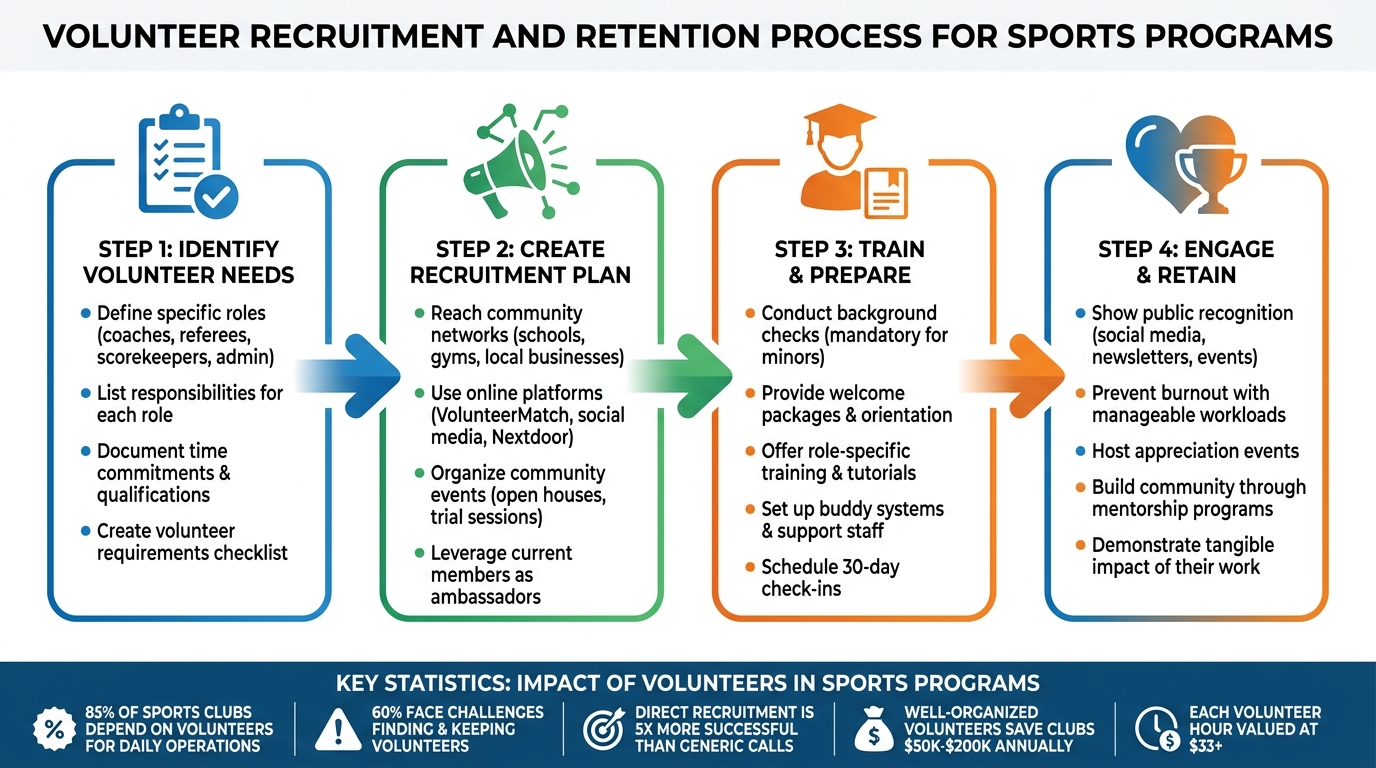
4-Step Volunteer Recruitment Process for Sports Programs
A Guide To Volunteering in Grassroots Football
sbb-itb-354efe9
Identifying Your Volunteer Needs
Before you start recruiting, it's crucial to define the specific tasks your sports program needs volunteers to handle. This means creating a detailed list of every task, from coaching to managing registrations. Understanding the full scope of work is essential. As Joe Brezonik, Associate Marketing Manager at NBC Sports Next, puts it:
"To encourage people to volunteer, it is important to provide clear and specific volunteer opportunities. This means identifying specific tasks and roles that need to be filled and providing detailed information about what each role entails".
When volunteers have a clear picture of their responsibilities, they’re more likely to step up. Once you’ve outlined all the tasks, break them down into specific roles to make recruitment more efficient.
Listing Roles and Responsibilities
Divide your volunteer needs into clear categories, assigning distinct responsibilities to each role. For instance:
- Coaches: Focus on skill development, mentoring athletes, and ensuring their safety.
- Referees and Umpires: Enforce rules and oversee games - roles that are especially critical given the national shortage of officials.
- Scorekeepers: Track points and game statistics.
- Behind-the-Scenes Roles: Include registrars, concessions managers, and field managers to handle logistics.
Administrative volunteers are equally important, managing tasks like organizing fundraisers or overseeing league financials. This is especially vital as youth sports organizations face rising operating costs - up 46% since 2019. Concessions management also consistently requires extra hands, making it another area of high demand.
Once roles are defined, formalize their responsibilities and requirements in a detailed checklist. This helps set clear expectations and makes the recruitment process smoother.
Building a Volunteer Requirements Checklist
For each role, document the number of volunteers needed, the time commitment, and any specific qualifications. For example, a head coach might need to dedicate 10 hours per week during the season, while a concessions volunteer may only need to cover two-hour shifts on game days. This level of clarity allows potential volunteers to determine if the role matches their availability.
It's also important to develop a screening process. As Jennifer Gladstone, Owner of Gladstone Creative Media, highlights:
"Background checks help make sure adults working with children have no history that might raise red flags".
Mandatory background checks should be a non-negotiable for anyone working with minors. These checks should include reviews of criminal history and sex offender registries. For technical roles like officiating or scorekeeping, consider offering tutorials or training to ensure volunteers feel confident and prepared.
To streamline the process, use digital tools like SportsEngine HQ to create customized registration forms that capture volunteer qualifications. These tools help track sign-ups and progress, turning vague requests for help into clearly defined opportunities that community members can easily evaluate and commit to.
Creating Your Recruitment Plan
Once you’ve identified your volunteer needs, the next step is spreading the word. A well-thought-out recruitment plan for sports programs blends local outreach with digital tools to connect you with the volunteers who will help your program thrive. The goal is to make it easy for people to sign up and get involved.
Start by focusing on places where potential volunteers naturally gather - schools, gyms, local businesses, and community events. Then, expand your efforts online to reach those who might not see a physical flyer. As MonClubSportif points out, “Volunteers can act as ambassadors for your sports association, helping to promote its activities to a wider audience”. Your current members and their networks are often an untapped resource for finding new volunteers.
Reaching Out Through Community Networks
Local connections are a powerful way to recruit volunteers. Schools, colleges, and universities are great starting points. High school students often need community service hours to graduate, and college students may be looking for practical experience related to their studies.
You can also place flyers in popular spots like sports equipment stores, gyms, and community centers. Participating in community fairs, festivals, or local sporting events allows you to meet potential volunteers face-to-face and explain the opportunities available.
Encourage your current members to spread the word through their personal networks. Make it easy for them by providing shareable social media posts, ready-to-send email templates, or printed materials. Offering flexible options, like short shifts - say, a two-hour concession stand shift on a Saturday - can attract people who have limited time but still want to help.
While these local efforts create a solid base, online platforms can help you reach a much broader audience.
Using Online Platforms for Recruitment
Digital tools are invaluable for reaching beyond your immediate community. Social media platforms like Facebook, Instagram, and LinkedIn allow you to target specific groups. LinkedIn, for example, is ideal for finding professionals for board roles or specialized tasks, while Nextdoor connects you with people in your local neighborhood.
Volunteer management platforms, such as SportsPlus and VolunteerHub, take the hassle out of organizing by offering features like visual signup forms, automated reminders, and centralized databases. VolunteerMatch, which merged with Idealist in 2025, connects you to a network of 3.8 million volunteers and over 100,000 nonprofits. Kristina Hjertkvist, Manager of Community Relations & Social Impact for the Tampa Bay Lightning, highlights the benefits: “VolunteerHub has streamlined the way that we recruit, engage, and manage employees... We could not imagine managing our program without the features VolunteerHub provides”.
When posting online, clearly outline the “Who” and “Why” - explain your program’s mission and how volunteers will make a difference. Make the signup process simple by including all the key details: locations, dates, time slots, and any physical requirements. Transparency about the time commitment helps set expectations upfront.
While digital tools are effective, community events offer a more personal way to attract volunteers.
Organizing Community Events to Find Volunteers
Community events can serve as recruitment opportunities while also building excitement for your program. Hosting open-house events, trial volunteer sessions, or major competitions allows potential volunteers to experience your program firsthand and interact with your team. These events give people a chance to see the roles available and learn about the support you’ll provide.
A great example comes from Special Olympics Indiana. In August 2026, they hosted the "Plane Pull Challenge", where teams of 15 pulled an 82-ton Boeing 757 jetliner - a single-day fundraiser requiring a large number of volunteers to handle logistics. Later that year, their "EKS Weekend" combined four state championship events, inviting community members to attend, enjoy the festivities, and explore volunteer opportunities.
To make roles more accessible, categorize them by commitment level. For instance, coaching might be a long-term role, while scorekeeping or announcing could be single-day tasks. Providing event volunteers with branded T-shirts not only makes them easily identifiable but also builds a sense of belonging. Using digital tools to track attendance in real time ensures any gaps can be addressed immediately.
With each volunteer hour valued at over $33 and 70% of donors also volunteering with nonprofits, investing in a strong recruitment plan pays off in more ways than one.
Training and Preparing Volunteers
Once you've recruited volunteers, the next step is setting them up for success. A well-organized onboarding process can make all the difference in their experience. Start by providing a welcome package that outlines your program's mission, introduces key contacts, and explains what their role entails. Follow this with an orientation session where volunteers can tour the facilities, meet league staff, and ask any questions. For roles involving minors, conducting background checks is non-negotiable. These checks should cover criminal history, sex offender registries, and identity verification. Jennifer Gladstone, Owner of Gladstone Creative Media, underscores the importance of this step:
"Implementing background checks as part of your league's vetting process sets a standard for your community. Not only does it show how committed your organization is to safety... but it also creates a culture where accountability is prioritized".
Interviewing and Screening Candidates
Not every volunteer is a perfect fit for every role, so it’s essential to assess their skills and interests before assigning tasks. Use an evaluation checklist to determine if they meet specific requirements, such as certifications, specialized training, or relevant experience. A short interview or survey during recruitment can uncover hidden talents - like an accountant who could help with fundraising or a social media expert who could manage your league’s online presence. Assigning roles that align with a volunteer’s strengths not only makes training smoother but also boosts their satisfaction. For coaching positions, ensure candidates have completed any required certifications, such as First Aid or Concussion protocol, at least 30 days before the season begins.
Once roles are assigned, focus on providing training tailored to their responsibilities.
Offering Training for Specific Roles
Role-specific training is key to building confidence in your volunteers. Offer manuals, guides, and tutorials for tasks like scorekeeping, operating the snack stand, or using league-specific software. For more technical roles, create short video tutorials that volunteers can access anytime. Organize "dry run" sessions where they can practice their tasks in real-life settings - whether it’s on the field, at the registration desk, or in the concession stand - before the season officially starts. TeamLinkt emphasizes this approach:
"Providing comprehensive training and support is essential for helping volunteers feel confident and capable in their roles".
Don’t forget compliance training. Programs like SafeSport, which focus on abuse prevention, are increasingly mandatory not just for coaches but for parents and general volunteers as well.
Setting Up Support Systems
Even the best-trained volunteers need ongoing support. Introduce a buddy system where new volunteers are paired with experienced ones who can offer immediate guidance and answer questions as they arise. This is especially helpful for roles like coaching or coordinating, where quick learning is crucial. Designate a staff member to oversee volunteers, handle scheduling, share updates, and address concerns. Schedule a 30-day check-in to tackle any early challenges and ensure volunteers feel supported.
Paul Varian, a sport-management consultant, shares a great example from Oakville Soccer Club in July 2023. The club made it a point to have staff personally greet every coach returning equipment at the end of the season, thank them, and ask for feedback. This simple act left a positive impression and helped improve volunteer retention. Additionally, anonymous end-of-season surveys can provide valuable insights into what’s working and where improvements are needed.
Keeping Volunteers Engaged and Appreciated
Once roles are defined and training is in place, the next step is keeping volunteers engaged through meaningful recognition, manageable workloads, and fostering a sense of community. Recruiting volunteers is just the beginning - the real challenge lies in maintaining their enthusiasm and commitment over time. It's not enough to simply say "thank you"; the goal is to show them the tangible impact of their contributions. As Paul Varian, a sport-management consultant, aptly points out:
"We're bad, as a sector, at showing volunteers how they're making a difference".
When volunteers see how their efforts improve the experience for young athletes, they're much more likely to stay involved. Let’s dive into how to recognize their work, prevent burnout, and turn short-term involvement into lasting dedication.
Showing Appreciation for Volunteer Work
Recognition is most effective when it’s heartfelt and public. Highlight volunteer contributions on social media, in newsletters, or during events. For instance, give a shoutout to the person who flawlessly organized opening day or the parent who kept the snack stand running for an entire season. You can also feature volunteer spotlights in league communications or make announcements during games to celebrate their efforts.
Small rewards can go a long way in showing gratitude. Consider offering coffee gift cards, league-branded merchandise, or exclusive perks to emphasize their importance. For younger volunteers, like those from Gen Z, framing their roles as internships or providing networking opportunities with league sponsors can be especially motivating.
Hosting end-of-season appreciation events is another great way to make volunteers feel valued while giving them a chance to socialize outside of their responsibilities. Even simple gestures, like providing quality snacks during events, can boost morale. These efforts create an environment where volunteers feel recognized and appreciated, rather than overlooked. However, while recognition is key, it’s equally important to ensure volunteers aren’t overburdened.
Avoiding Volunteer Burnout
Burnout is a major obstacle to retaining volunteers. It often stems from unclear expectations or overwhelming responsibilities. To combat this, set clear time commitments from the start and use scheduling tools to keep tasks organized and manageable. Sports management software can simplify sign-ups, scheduling, and communication, cutting down on the administrative workload for everyone involved.
During events, conduct real-time check-ins to make sure everything is running smoothly and address any issues before they escalate. After events, gather feedback through surveys or follow-up emails, ensuring volunteers know their input is valued and used to improve future experiences. When people see their feedback leading to real changes, it reinforces that their voices matter.
Creating Lasting Volunteer Commitment
Once volunteers feel appreciated and workloads are manageable, the focus shifts to building a sense of community. Long-term engagement thrives when volunteers feel connected to something bigger than their individual tasks. Organize community-building events like kick-off dinners or post-season celebrations, and consider mentorship programs that pair new volunteers with experienced ones. Online groups can also help foster personal connections and team spirit.
Tailor your approach to different generational motivations. Millennials often want to use specific skills and see measurable results, while Gen Z may view volunteering as a way to gain career-related experience. Shift your messaging from simply asking for help to highlighting the value volunteers gain - whether it’s building relationships, developing skills, or expanding their networks. As Paul Varian explains:
"If you've guilt tripped people into volunteering, they're more likely to put in the minimum effort because you've kind of forced them into it".
Instead, treat volunteer development as a key investment, just like facilities or equipment. By focusing on their growth and satisfaction, you can create a dedicated, engaged volunteer base that keeps coming back season after season.
Conclusion
The success of sports programs hinges on an effective volunteer management system that focuses on smart recruitment and building lasting relationships. As Paul Varian aptly said, volunteers are the "gasoline in the engine of sport" - without them, these programs simply can't run. Moving away from a "begging" mentality to one that emphasizes value and purpose is key, especially when engaging Millennials and Gen Z, who prioritize opportunities to apply their skills, see tangible results, and grow professionally.
The statistics are clear: 85% of sports clubs depend on volunteers for daily operations, yet 60% face challenges in finding and keeping them. Direct, personalized recruitment is five times more successful than generic calls for help, and a well-organized volunteer base can save clubs anywhere from $50,000 to $200,000 annually. Every clearly defined role and motivated volunteer strengthens the community and enhances the sports experiences we all cherish.
To address these challenges, consider dedicating resources specifically to volunteer management. Assign a staff member to oversee this area, design a recruitment plan that speaks to the motivations of different generations, and create feedback systems that show volunteers their voices matter and lead to real change. Leverage digital tools to simplify scheduling and communication, cutting down on unnecessary administrative burdens for everyone involved.
Make sure volunteers understand the real impact of their efforts - this clarity can inspire them to stay committed long-term. And don’t forget: one of the biggest barriers to volunteering is that people are simply never asked. So, reach out, be clear about the value they bring, and show them what’s in it for them. Local sports programs in the Manasota area have thrived by adopting these strategies - find more inspiring examples at Manasota.co.
FAQs
How can I get more parents to volunteer without guilt-tripping them?
Encouraging parents to volunteer starts with creating a welcoming and inclusive space where they feel valued and excited to participate. Highlight the social and enjoyable aspects of volunteering, emphasizing the sense of community it fosters. Offer flexible opportunities that cater to different schedules, such as event-based roles or short-term commitments, making it easier for busy parents to get involved.
Providing training and mentorship can also go a long way in building confidence and ensuring parents feel prepared for their roles. Make it clear how their efforts directly benefit the children and the community, giving them a sense of purpose and impact. Most importantly, focus on cultivating a supportive environment where volunteering feels like a rewarding experience rather than an obligation.
What’s the simplest way to run background checks for youth sports volunteers?
The simplest way to handle background checks for youth sports volunteers is by working with a third-party screening provider that adheres to all relevant regulations. Before starting the process, make sure to secure proper disclosure and written consent from the volunteers. In some cases, organizations permit supervised participation while waiting for the screening results. Partnering with a trusted provider not only makes the process more efficient but also ensures compliance and helps uphold safety standards.
How can I stop volunteers from burning out mid-season?
Preventing mid-season volunteer burnout requires a thoughtful approach to keep your team motivated and energized. Start by ensuring clear role definitions so volunteers understand their responsibilities and feel confident in their contributions. Offering perks like micro-credentials or scholarships can also provide an extra incentive, showing appreciation for their efforts.
Another effective strategy is to create volunteer career pathways, giving individuals a sense of purpose and the opportunity to grow within the organization. Pair this with a supportive environment that actively recognizes their contributions - whether through shout-outs, awards, or simple thank-you gestures.
By combining these strategies, you can maintain engagement and help volunteers stay committed throughout the season.