How to Prepare for Hurricane Season in Manatee & Sarasota Counties: A Local Homeowner’s Guide
Practical hurricane checklist for Manatee and Sarasota homeowners: build emergency kits, map evacuation zones, secure your home, check insurance, and plan for pets.
Hurricane season runs from June 1 to November 30, and preparation is key to protecting your home and family. Recent storms like Hurricane Ian in 2022 caused significant damage in Sarasota County, highlighting the importance of readiness. Here's how you can get started:
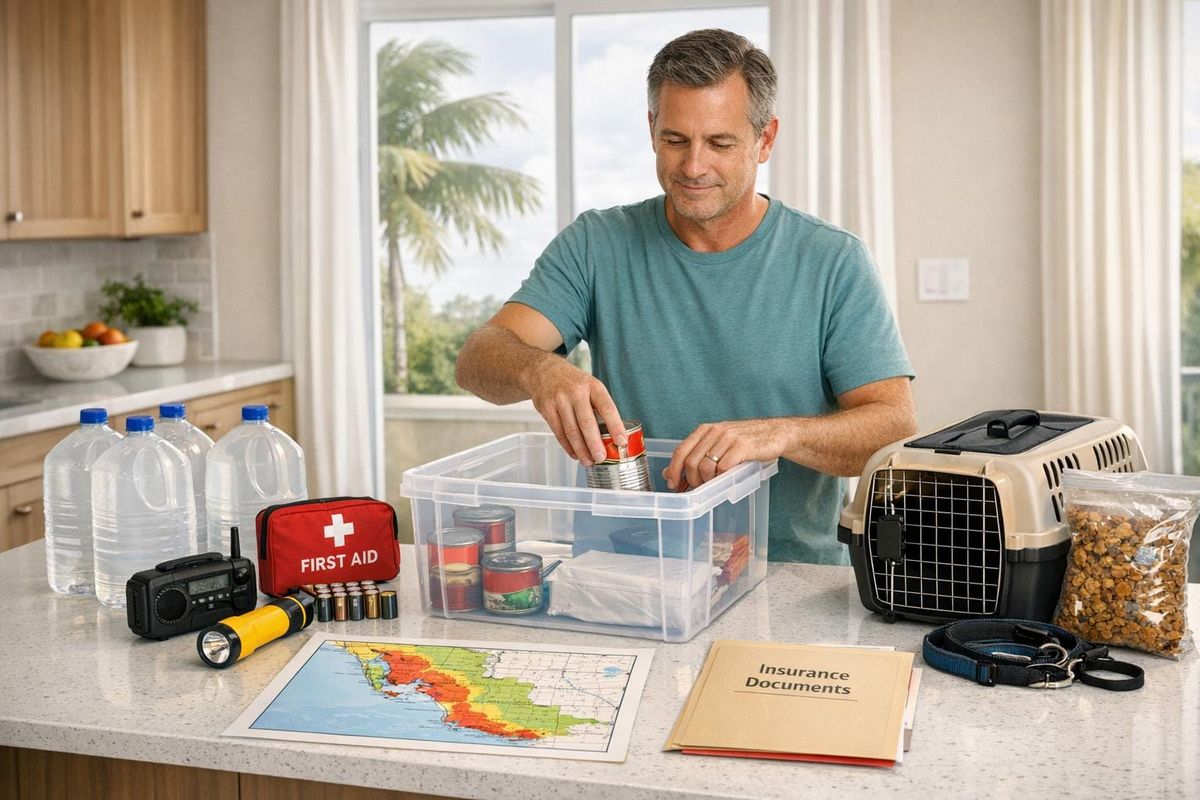
- Emergency Kit: Stock a 10-day supply of water (1 gallon per person/day), non-perishable food, medications, flashlights, batteries, and sanitation items. Don’t forget supplies for pets.
- Evacuation Plans: Know your evacuation zone and routes. Use tools like "Learn Your Level" (Manatee) or "Know Your Level" (Sarasota) to assess your flood risk and evacuation zone.
- Home Preparation: Secure windows, doors, and roofs. Clear gutters, trim trees, and bring outdoor items inside. Mobile homes must always evacuate during Level A orders.
- Insurance: Check your flood insurance coverage. Policies often take 30 days to activate, so act early.
- Stay Informed: Sign up for Alert Manatee or Alert Sarasota County for real-time updates. Keep a NOAA Weather Radio and backup power sources handy.
Taking these steps now ensures you’re ready when storms approach. Visit scgov.net/beprepared or mymanatee.org for more resources.
Is your Home Ready for a Hurricane in Florida? 9 Things YOU MUST DO!
Build Your Emergency Supply Kit
An emergency kit can be a lifesaver during a hurricane, especially for homeowners in Manatee and Sarasota Counties. Local emergency officials recommend preparing a 10-day supply of essentials to ensure you’re ready for any disruptions. As Sandra Tapfumaneyi, Sarasota County's Emergency Management Chief, emphasizes:
"Do not wait to gather your disaster supply kit items or make your plans. The decisions you make should not be based on the last storm you experienced."
This advice reflects a growing understanding of how storms impact communities. Supply chains often break down after hurricanes, and first responders may not reach you once winds exceed 45 mph. To avoid last-minute panic, consider building your kit gradually using a "20 weeks to preparedness" strategy. And since there’s no Florida hurricane sales tax holiday for the 2025 season, plan your budget accordingly.
Basic Supplies You Need
Start with the basics: store at least one gallon of drinking water per person per day. For a family of four preparing for 10 days, that’s at least 40 gallons of drinking water. Additionally, fill bathtubs and large containers with water for non-drinking needs like flushing toilets. Some homeowners opt for a WaterBOB, a bathtub liner that can hold up to 60 gallons of clean water, keeping bottled water reserved for drinking.
Stock up on non-perishable, high-energy foods, and don’t forget a manual can opener, disposable plates, and utensils. Keep your vehicle’s gas tank at least half full throughout hurricane season to avoid fuel shortages. Having cash on hand is also crucial since ATMs and card readers may not work during power outages.
Medical supplies are another priority. Maintain a two-week supply of medications, along with a list of dosages and contact details for your doctors and pharmacies. Florida law allows early prescription refills during a state of emergency, so take advantage of this if needed. Don’t overlook extra eyeglasses, contact lenses, or hearing aid batteries.
For communication and lighting, every family member should have a flashlight with extra batteries. A battery-powered or hand-crank NOAA Weather Radio is essential for receiving updates when internet access is unavailable. A whistle can also come in handy for signaling if you need help.
Sanitation is another key area. Stock items like toilet paper, moist towelettes, garbage bags, plastic ties, disinfectant, and hand sanitizer to maintain hygiene during an emergency.
Protect Your Documents and Communication Tools
Once your supplies are ready, focus on safeguarding critical documents and ensuring you have reliable communication. Store copies of insurance policies, ID cards, medical records, and banking information in waterproof, portable containers. Record a video walkthrough of your home’s interior and exterior 48 hours before a storm for insurance purposes. Keep a physical list of important phone numbers - family, doctors, and insurance agents - and have local maps available in case digital devices fail.
Modern smartphones, like the iPhone 14 or Google Pixel 9 series, can send emergency messages via satellite even without cell service. To keep devices powered, invest in at least two high-capacity power banks (around 40,000mAh) and solar-powered chargers. Conserve battery life by using low-power mode and only charging phones in your vehicle while the engine is running. Finally, sign up for local alert systems like Alert Manatee or Alert Sarasota County to stay informed about evacuations and safety updates.
Supplies for Your Pets
Don’t forget about your pets - they need their own emergency kit. Prepare a 10-day supply of pet food and at least 3 days of water. Evacuation center policies vary: Sarasota County shelters accept dogs, cats, birds, rodents, and turtles, while Manatee County has more limited options, so check the rules in advance. Your pet’s kit should include vaccination records (required for shelters), a sturdy crate or carrier, a leash, ID tags, waste bags, and a photo of you with your pet in case you get separated.
Find Your Evacuation Zone and Flood Risk
Florida Flood Zone Risk Levels and Insurance Requirements Guide
Knowing your evacuation zone and flood risk is a critical part of hurricane preparedness. Both Manatee and Sarasota Counties provide free online tools to help you assess your property's risk. In Manatee County, you can use the "Learn Your Level" interactive map or the "Resident Information Tool" to find your evacuation level, closest shelter, and flood risk. Sarasota County residents can access the "Know Your Level" map or the "Zone Lookup" tool through Sarasota County Emergency Services.
Evacuation levels (A–E) reflect storm surge potential, while flood zones focus on risks from rainfall and freshwater flooding. For example, you might be in evacuation Level C but located in flood Zone X - each classification requires different preparations.
If you live in a mobile home, manufactured home, or RV, be aware that you must evacuate when a Level A order is issued, no matter your specific location. Next, let’s break down how to navigate these mapping tools.
How to Use County Evacuation and Flood Maps
You can search for your property using an address, owner name, or tax ID on the county mapping tools. For flood risks, Manatee County's "Live Maps" allows you to overlay the "FEMA Flood" layer, showing high-risk zones (A or V) and moderate-risk zones (X). Sarasota County offers an interactive flood zone map at ags3.scgov.net/sarcoflood.
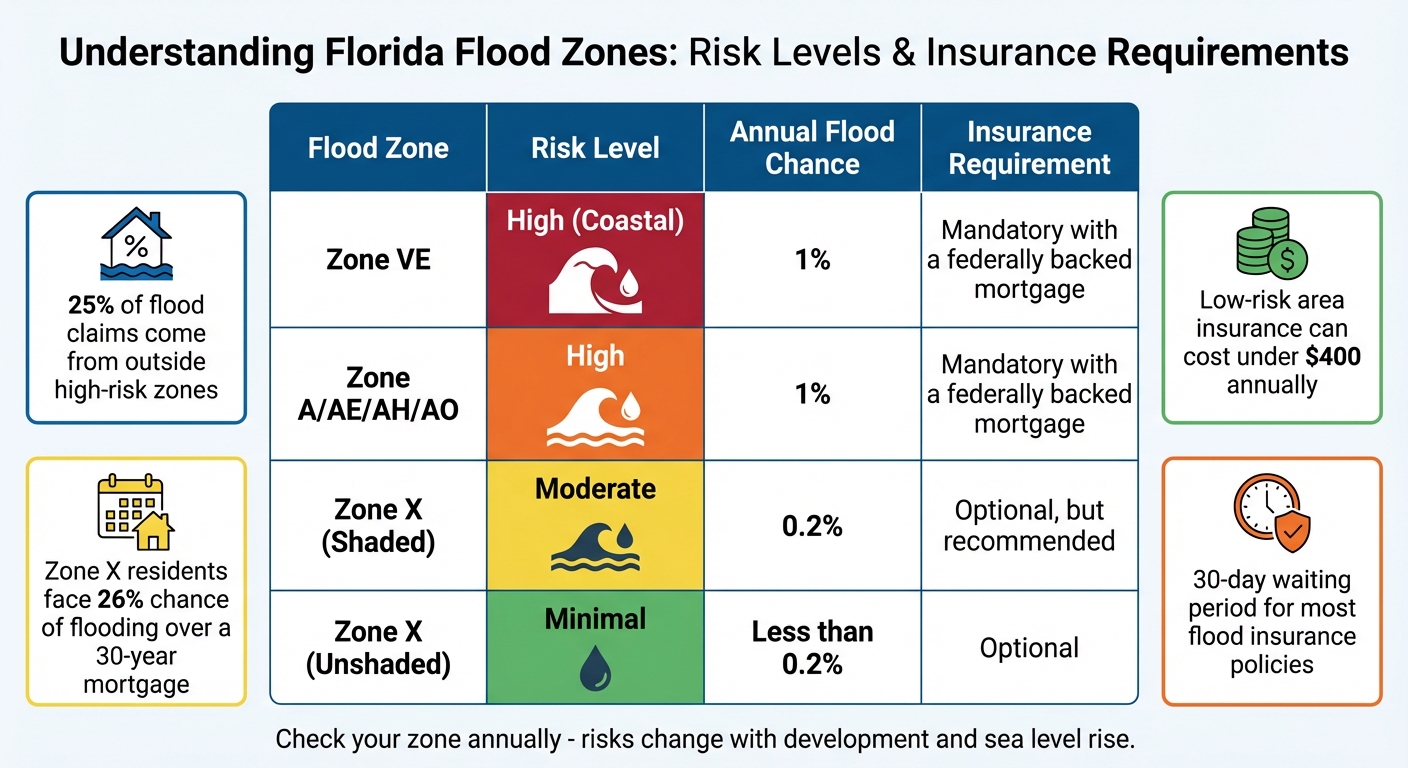
Understanding these zones is crucial for making informed decisions. About 25% of all flood claims come from areas outside high-risk zones, and even moderate-risk Zone X residents face a 26% chance of flooding over a 30-year mortgage. If you’re in a lower-risk area, flood insurance can cost under $400 annually.
Here’s a quick summary of flood zones, their risk levels, and insurance requirements:
| Flood Zone | Risk Level | Annual Flood Chance | Insurance Requirement |
|---|---|---|---|
| Zone VE | High (Coastal) | 1% | Mandatory with a federally backed mortgage |
| Zone A/AE/AH/AO | High | 1% | Mandatory with a federally backed mortgage |
| Zone X (Shaded) | Moderate | 0.2% | Optional, but recommended |
| Zone X (Unshaded) | Minimal | Less than 0.2% | Optional |
If you need help navigating these tools, dial 3-1-1 in either county or call (941) 748-4501 for Manatee County and (941) 861-5000 for Sarasota County.
Changes in Flood Risk Over Time
Flood risks aren’t static - they evolve with factors like regional growth and climate changes. Bob Bunting, CEO of Sarasota's Climate Adaptation Center, highlights:
"Remember that sea levels are already 9 inches higher than they were 50 or so years ago, so minor storms have bigger flooding impacts."
This 9-inch rise means that even smaller storms can now cause significant flooding. Many local evacuation routes remain vulnerable because roads haven’t been elevated to match current sea levels. On March 27, 2024, FEMA released updated flood maps for Sarasota County, reflecting changes from urban development, construction, and other environmental shifts. These updates could reclassify properties into higher-risk zones, potentially leading to mandatory insurance or higher premiums.
Check your evacuation level and flood zone every year. If your property shifts into a higher-risk zone, consider purchasing flood insurance before the updated maps are officially adopted. Doing so can help you lock in lower premiums and delay full-rate increases. Remember, most flood insurance policies have a 30-day waiting period before they take effect, so don’t wait until a storm is approaching. Regularly reviewing your flood risk ensures your preparedness plan stays up to date.
Create Your Family Evacuation Plan
Having a solid household evacuation plan is crucial - know where you're going, how to get there, and how you'll stay in touch. Don’t wait for a hurricane watch to scramble for answers. Preparing ahead of time ensures you’re ready when it matters most.
Start by deciding on your evacuation destination. If possible, plan to stay with friends or family outside of evacuation zones. Public shelters should only be a fallback option. For those in Manatee and Sarasota Counties, familiarize yourself with local shelter locations in advance. Sarasota County shelters are all pet-friendly, while in Manatee County, only specific shelters, like Mills Elementary and Sugg Middle, allow pets. Keep in mind, shelters only open when announced by local officials, so stay informed. Once you’ve chosen your destination, make sure everyone in your household knows the plan.
Plan Your Evacuation Routes
Map out several evacuation routes from your home to your chosen destination. Flooding can make certain roads impassable, so having alternatives is essential. Bob Bunting, CEO of Sarasota's Climate Adaptation Center, emphasizes:
"Escape routes can be very vulnerable because roads in many areas have not been raised".
With sea levels now 9 inches higher than they were 50 years ago, even smaller storms can flood roads in low-lying areas. To stay ahead, download the free Florida Storms app. It provides live forecasts, updates on shelters, and alerts about road closures. Knowing your routes and staying informed can make all the difference.
Sign Up for Emergency Alerts
Stay connected by registering for your county’s emergency alert system. These services send evacuation orders, weather updates, and road conditions directly to your phone, email, or via text. In Manatee County, sign up for Alert Manatee at the Everbridge website or text "MANATEEREADY" to 888777. Sarasota County residents can register for Alert Sarasota County at scgov.net.
If someone in your household depends on medical equipment or needs help evacuating, register with the Special Needs Registry (called the Medical Dependent Program in Sarasota County). This ensures you’ll receive assistance during evacuations. Both counties also offer a 311 hotline for storm-related questions. These tools keep you in the loop when every second counts.
Set Up Family Communication Methods
Have a plan for how your family will stay in touch during an emergency. Designate an out-of-state contact, as local lines often get overwhelmed. Keep emergency contact numbers, along with photocopies of IDs and insurance documents, in a waterproof container. Use your smartphone’s satellite connectivity to reach emergency services if cellular networks go down. Additionally, include a battery-operated radio or TV in your emergency kit to monitor local broadcasts during power outages. Before hurricane season begins, ensure every family member knows your evacuation destinations and has a copy of the communication plan.
Protect Your Home from Storm Damage
Getting your home ready before a hurricane can mean the difference between minor fixes and major destruction. Homes built under the 2002 Florida Building Code tend to fare much better, especially when paired with storm shutters. But if your home was built before 2002, extra precautions are a must.
Reinforce Your Home's Structure
Once your emergency kit and evacuation plan are in place, turn your attention to reinforcing your home's structure. Start with your roof, windows, and doors - these are the most vulnerable parts of your home during high winds. Garage doors, in particular, are prone to damage and should be reinforced or replaced if they don't meet modern standards. If you're planning to replace your roof, make sure it's built to the latest Florida Building Codes to handle stronger winds. For example:
- Homes in Manatee County built after March 2012 must withstand winds up to 150 mph.
- Those built between March 2002 and March 2012 were designed for 130 mph winds.
- Older homes may only handle 110 mph on the coast and as low as 90 mph inland.
Adding storm shutters or other coverings to your windows and doors will help protect against flying debris. According to the Sarasota County Government:
"Hurricane research studies have shown that on average; homes built under the 2002 Florida Building Code sustained less damage and when paired with shutters may be safe to stay in as long as they are not in an evacuation area".
Don't forget to secure your rain gutters and downspouts - clear them of debris to prevent water damage. If you live in a mobile home, check the tie-downs every year to ensure they're tight and properly aligned. Replace any corroded ground anchors right away. However, it's important to note:
"Mobile homes are an unsafe shelter in high winds no matter how well fastened to the ground".
Secure Outdoor and Indoor Property
Anything left outside during a storm can become a dangerous projectile. Bring patio furniture, grills, potted plants, and lawn decorations inside your home or garage before the storm arrives. Trim large trees and remove loose branches to reduce the risk of them falling on your house. For items that can't be moved indoors, like signs or portable buildings, anchor them securely to the ground.
Inside your home, move furniture away from windows and secure loose items in drawers or closets. Unplug electronics and cover them with plastic to protect against water damage. If you're evacuating, turn off the main water valve, unplug appliances like the pool pump and water heater, and switch off the circuit breaker. If you're staying, set your refrigerator to the coldest setting. If you're leaving, empty it and unplug it instead. Make sure you know how to turn off gas, water, and electricity before the storm hits. Once your home is secure inside, focus on protecting your vehicle and any backup systems.
Prepare Your Vehicle and Generator
Always keep your gas tank full during hurricane season so you're ready to evacuate at a moment's notice. If you own an electric vehicle, keep it charged and protect its electrical components from potential water damage. Park your car on high ground in a covered area, away from buildings, to reduce the risk of damage from debris.
For generators, test them regularly to ensure they're working properly. Check the fuel and oil levels, and store the generator on high ground in a well-ventilated, secure spot safe from floodwaters.
Use Local Resources to Stay Informed
Staying informed with accurate and up-to-date local information is essential when preparing for hurricanes. Both Manatee and Sarasota Counties have dedicated alert systems and resources tailored to assist residents during emergencies.
Monitor Weather Updates and Warnings
Sarasota County residents can rely on Alert Sarasota County, the official notification system for emergencies. This service provides updates through phone calls, texts, emails, and an app. It covers all municipalities, including Sarasota, North Port, Venice, and Longboat Key. To register, visit alertsarasotacounty.com and use the "Jurisdiction Map" to ensure you're signed up for notifications specific to your area. Additionally, the free Everbridge app can send you public alerts based on your current location.
In Manatee County, Alert Manatee serves as the main communication platform for evacuation notices, boil water advisories, and weather warnings. The Manatee County Extreme Weather Dashboard is another valuable tool, offering real-time updates on tropical weather, road closures, sandbag distribution, and power outages. If you have questions or need assistance with storm preparation, you can call 311 for non-emergency support.
Both counties also maintain active social media channels to keep residents informed. For example, Manatee County’s official government Facebook page has a following of over 83,000, while the Manatee County Public Safety Department shares critical updates with more than 21,567 followers. For broader weather forecasts and severe weather alerts specific to West Central Florida, keep an eye on updates from the National Weather Service (NWS) Tampa Bay.
With these resources at your fingertips, you can stay informed and prepare effectively. Don't forget to review your insurance policies ahead of time.
Check Your Insurance Coverage
Manatee and Sarasota Counties face unique risks from floods and storms, so reviewing your insurance coverage before June 1 is a smart move. While standard homeowners insurance typically covers catastrophic losses, it does not include protection against flooding or rising water. As noted in the Sarasota County Emergency Preparedness Guide:
"Homeowners insurance covers catastrophic loss but it doesn't protect homeowners from loss due to flooding or rising water. A separate flood insurance policy is the only way to ensure this extra level of protection".
If you're considering flood insurance, remember that new policies usually come with a 30-day waiting period before they take effect, unless they're purchased alongside a new mortgage. To determine if your flood risk has changed, use tools like Sarasota County's "Know Your Level" or Manatee County's "Learn Your Level". These tools can help you make informed decisions about your insurance needs.
For expert advice, local agencies like Atlas Insurance, which serves Sarasota, Manatee, and Charlotte counties, can assist with reviewing your homeowners, flood, and wind policies before hurricane season begins. You can also contact the Florida Department of Financial Services at 1-877-MY-FL-CFO for help with storm-related insurance claims and financial preparedness.
Conclusion
Hurricane season spans from June 1 to November 30, and the strategies shared here can help you stay ready and resilient. By assembling a supply kit, identifying your evacuation zone, fortifying your home, and signing up for emergency alerts, you take essential steps to protect your family.
Richard A. Collins, Emergency Services Director for Sarasota County, emphasizes:
"Early Preparation Leads to Smart Action"
Once winds exceed 45 mph, first responders may not be able to reach you. That’s why it’s so important to finalize your evacuation plan, account for your pets, and review your flood insurance coverage well in advance. Each step, from gathering supplies to mapping out evacuation routes, contributes to safeguarding your home and loved ones.
Take action now by visiting scgov.net/beprepared (Sarasota) or mymanatee.org (Manatee) to verify your evacuation zone. Sign up for Alert Sarasota County or Alert Manatee to get real-time emergency updates. Be sure to review your insurance policies, take photos of your property for documentation, and stock up on essentials before supplies run low.
The resources are at your fingertips - using them today can make all the difference tomorrow.
FAQs
Do I need to evacuate if I’m not in a flood zone?
If you live outside a designated evacuation zone, you usually don’t need to evacuate. Evacuation levels, labeled from A to E, are determined by storm surge risks rather than general flood zones. That said, if you reside in a mobile home, RV, or similar structure, you are required to evacuate during Level A orders, regardless of location. For those in structurally sound homes outside these zones, staying put is typically safe - just make sure to stay informed by following official updates.
What’s the quickest way to get my home ready if a storm is 72 hours out?
When a storm is on the horizon, taking action early can make a big difference. Here's what you should focus on in the 72 hours leading up to its arrival:
- Secure gutters and downspouts: Make sure they're firmly attached and free of debris to prevent water buildup.
- Reinforce key areas: Strengthen your roof, windows, doors, and garage doors to withstand strong winds and heavy rain.
- Check mobile home stability: If you live in a mobile home, confirm that tie-downs, anchors, and support piers are secure.
Additionally, ensure your emergency kit is ready. Include essentials like:
- Water: At least 1 gallon per person per day for three days.
- Non-perishable food: Stock up on canned goods and other shelf-stable items.
- Medications: Have a supply of any necessary prescriptions.
- Batteries and flashlights: Power outages are common, so be prepared.
- Important documents: Keep them in a waterproof container for safekeeping.
Acting promptly and efficiently helps protect both your home and your loved ones.
How do I document my home for insurance before a hurricane?
Creating a thorough home inventory can save you a lot of headaches in case of unexpected damage. Start by documenting your belongings and property in detail. Include photos, receipts, and written descriptions for each item. This not only helps you keep track of your valuables but also makes insurance claims much easier.
To ensure this information is safe and accessible, store it securely in the cloud or in an off-site location. That way, even if your home sustains damage, you’ll still have access to your records.
Another smart step is to take “before” pictures of your home and property. These images can serve as proof of your property’s condition prior to any damage, which can be crucial when verifying claims with your insurance provider. By staying prepared, you can streamline the claims process and protect your peace of mind.