Seasonal Jobs in Sarasota: Trends 2026
Sarasota's 2026 seasonal job outlook: tourism, retail and construction growth amid labor shortages, housing strain and staffing solutions.
Sarasota's seasonal job market is evolving in 2026, driven by tourism, population growth, and workforce challenges. Here's what you need to know:
- Tourism and Hospitality: New vacation rental regulations are creating jobs like compliance officers and rental inspectors. Seasonal tourism remains a key revenue driver, with hotels reporting over 33% of annual profits during peak months.
- Retail and Construction Growth: Downtown Sarasota's development is boosting demand for retail workers, while federal funding and private projects fuel construction jobs, especially for skilled professionals.
- Aging Workforce: Rising living costs are pushing retirees back into the labor force, but labor shortages persist in healthcare, retail, and hospitality.
- Housing Challenges: High rents leave many workers cost-burdened. Local businesses are investing in affordable housing projects to improve retention.
- Staffing Solutions: Agencies like TempGuru help businesses manage seasonal hiring, offering temp-to-hire options and compliance support.
Sarasota's economy relies heavily on seasonal employment, but meeting workforce needs requires creative solutions, competitive pay, and long-term planning.
Main Industries Hiring Seasonal Workers in 2026
In 2026, several industries are reshaping Sarasota's seasonal job market, each playing a distinct role in supporting the local economy.
Tourism and Hospitality
Sarasota's stunning beaches and popular attractions continue to drive seasonal employment in property management and guest services. The introduction of the 2026 vacation rental ordinance has added a new layer of job opportunities. This ordinance requires vacation rentals to register, undergo inspections, and adhere to a seven-day minimum stay policy. As a result, roles like rental inspectors and compliance officers are now in demand to ensure properties meet these new standards.
Property owners are required to pay a $500 initial registration fee and $350 annually for renewals. This has created additional administrative roles to handle the paperwork and oversee safety checks.
According to Gulf Coast Property Management, "Sarasota's real estate boom, coupled with strong population growth and pristine beaches, has drawn investors and residents alike".
As the tourism industry evolves, it also boosts related sectors like retail, which are adjusting to meet the needs of visitors and locals alike.
Retail Sector Growth
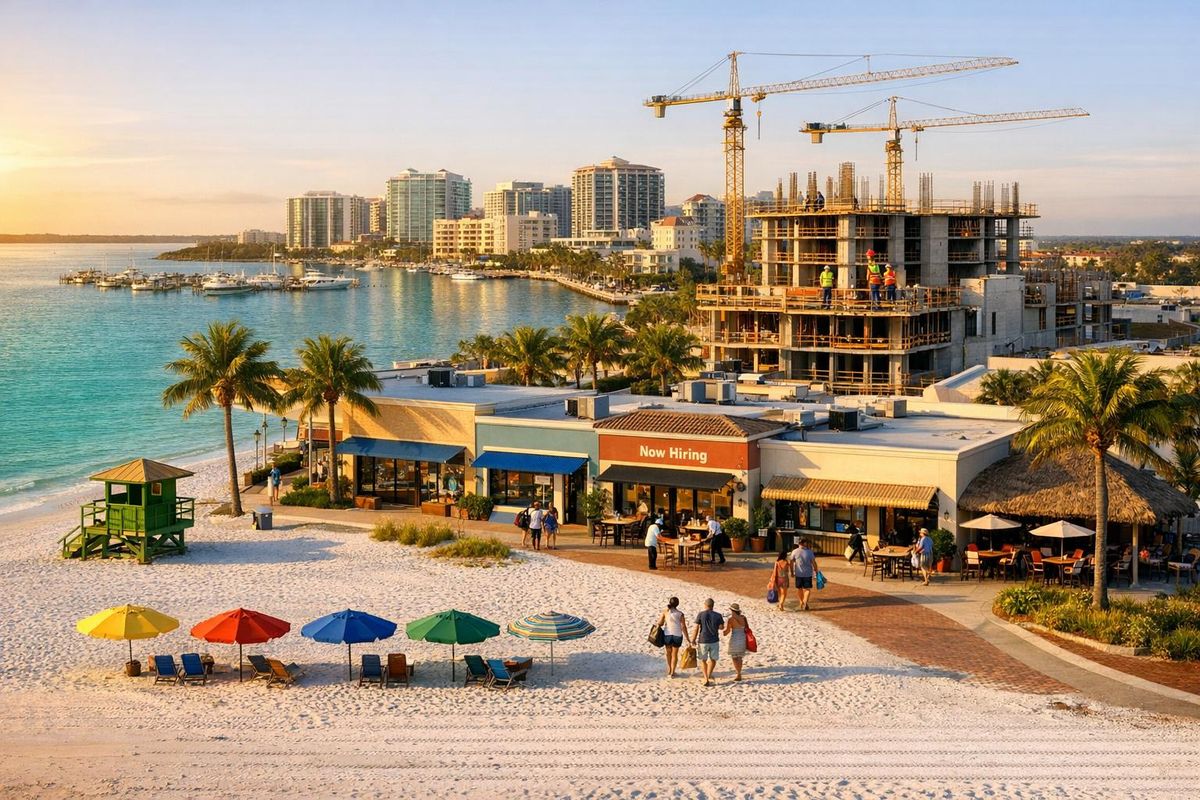
Downtown Sarasota is transforming into a vibrant, walkable district filled with new condominiums, art galleries, and restaurants. This shift is creating more opportunities for retail workers, including sales associates and merchandisers, especially during the holiday season and peak tourist months. Retailers in areas like Siesta Key and downtown Sarasota are expanding their teams to handle the increased demand.
This growth in retail employment is happening alongside Sarasota's booming construction and real estate markets, which are also driving seasonal hiring.
Construction and Real Estate
Sarasota's construction industry is thriving, thanks to federal infrastructure funding and a surge in private development projects. New developments in downtown Sarasota and along the coast are fueling demand for various roles, including construction laborers, project coordinators, and site inspectors. Skilled professionals are especially sought after, with construction managers now earning over $105,000 annually due to the shortage of experienced workers.
Workforce Changes in Sarasota
Sarasota's seasonal job market is undergoing a transformation as shifts in the workforce present both opportunities and hurdles for employers.
How an Aging Population Affects Jobs
Sarasota's aging population is playing a significant role in reshaping the seasonal workforce. Nearly half of senior households in Sarasota County are either living in poverty or struggling to make ends meet, often relying on each paycheck to get by. The rising cost of living is a major factor. Between 2022 and 2023, average monthly housing costs for seniors rose by 29%, climbing from $989 to $1,276.
Economic pressures are pushing many retirees back into the labor force, a trend often referred to as "un-retirement." Take 70-year-old Mari-Anne Saunders, for example. A retired lawyer, Saunders rejoined the workforce in March 2025 after her mobile home lot rent doubled, and she faced $15,000 in hurricane repair expenses. With help from the Women's Resource Center to navigate job platforms, she found a position supporting individuals with developmental disabilities.
"I'm thinking that there is not going to be a time when I don't have to work", Saunders shared.
This trend is particularly pronounced among senior women. In Sarasota County, women receive a median annual Social Security income of $12,652, compared to $18,232 for men. Ashley Brown, President and CEO of the Women's Resource Center, highlighted the growing need:
"Since the pandemic, [the numbers of older retired women needing to return to the workforce] are climbing again. There has not been a peak and downturn; it just keeps coming."
While the return of older workers adds some relief, it isn’t enough to fully address the ongoing shortages in critical industries.
Dealing with Labor Shortages
Even with retirees stepping back into the workforce, labor shortages remain a pressing issue in Sarasota's key sectors. Industries like healthcare and retail, which heavily rely on seasonal employees, are still grappling with a lack of available talent.
To combat this, employers are ramping up compensation efforts. Construction managers in the area now earn over $105,000 a year, while registered nurses can expect salaries ranging from $85,000 to $120,000. Companies are also offering signing bonuses and other incentives to attract workers. However, the challenge persists in finding candidates with the specific skills needed to meet seasonal demands.
These workforce dynamics are directly shaping the availability and effectiveness of Sarasota's seasonal labor pool, leaving employers to navigate an increasingly complex hiring landscape.
How Seasonal Jobs Affect Sarasota's Economy in 2026
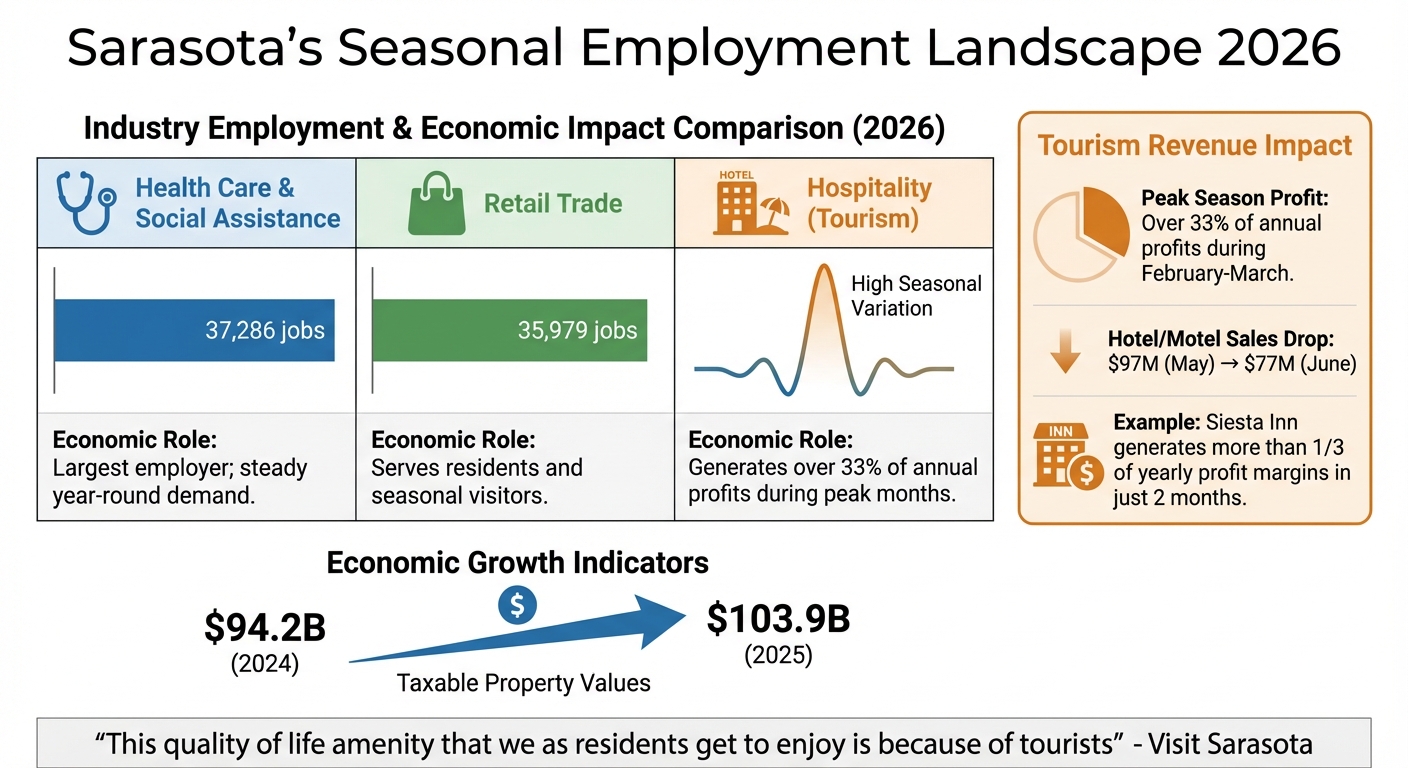
Sarasota Seasonal Employment by Industry 2026: Jobs and Economic Impact
Tourism Revenue and Job Numbers
Seasonal tourism plays a key role in driving revenue for Sarasota's local businesses. Take the Siesta Inn, for example - a family-owned motel near the Sarasota-Bradenton International Airport. During March 2026, it was fully booked every weekend during the spring break rush. Parth Patel, the Director of Operations, shared:
"I would consider February and March to be our two months out of the whole year that account for more than a third of our profit margins."
This surge in revenue during peak season allowed the motel to fund a major renovation project, showcasing a trend where businesses reinvest seasonal earnings into year-round improvements. Beyond individual businesses, seasonal tourism also contributes to development taxes, which are crucial for maintaining public amenities. Erin Duggan from Visit Sarasota highlighted this connection:
"This quality of life amenity that we as residents get to enjoy is because of tourists. It is because of the tourist development tax. Those funds that tourists pay help maintain those stadiums."
These examples underline how seasonal tourism not only boosts business profits but also supports community infrastructure.
Industry Employment Comparison
The impact of seasonal tourism extends beyond revenue, shaping employment trends across Sarasota's economy. While some industries, like healthcare and social assistance, maintain steady demand year-round with 37,286 jobs, others, like hospitality, experience significant seasonal fluctuations. Retail trade, with 35,979 jobs, serves both locals and seasonal visitors, bridging the gap between consistent and cyclical demand.
Hospitality, however, stands out for its pronounced seasonal shifts. For instance, hotel and motel gross sales dropped from $97 million in May to $77 million in June, highlighting how tourism employment ebbs and flows with visitor numbers.
| Industry | Employment (Jobs) | Economic Role |
|---|---|---|
| Health Care & Social Assistance | 37,286 | Largest employer; steady year-round demand |
| Retail Trade | 35,979 | Serves residents and seasonal visitors |
| Hospitality (Tourism) | High seasonal variation | Generates over 33% of annual profits during peak months |
Sarasota County's taxable property values also reflect the broader economic impact of seasonal tourism. By 2025, these values rose to $103.9 billion, up from $94.2 billion the previous year. This growth showcases how reinvested seasonal profits contribute to higher property values and increased local investments, further strengthening the area's economic foundation.
How to Handle Seasonal Workforce Needs
Using Staffing Agencies
For businesses in Sarasota, the winter season from November through April brings a surge in demand, making staffing agencies like TempGuru (TAG) and Ad-Vance Talent Solutions essential. These agencies take care of sourcing, screening, and onboarding workers, allowing companies to focus on their core operations during this busy period.
By providing W-2 compliant employees, these agencies help businesses avoid costly penalties - sometimes exceeding $25,000 - linked to worker misclassification. The bill rates, which cover payroll taxes, workers' compensation, and insurance, typically range from $27 to $33 per hour for general labor and $35 to $41 per hour for supervisory roles. TempGuru, for example, boasts a 99% fill rate guarantee and offers automatic backfill coverage, addressing the common 15–30% no-show rates often experienced with gig platforms.
"The window between a staffing need and a service failure can be measured in days - proactive candidate pools mean you are never caught without the workforce you need."
- Ad-Vance Talent Solutions
Many staffing agencies also provide temp-to-hire programs, enabling employers to evaluate workers during the seasonal rush. This approach can be particularly effective in reducing turnover rates, which in Florida's hospitality sector can exceed 70% annually.
While staffing agencies help alleviate hiring challenges, worker retention often hinges on access to affordable housing.
Housing and Benefits for Workers
Even with staffing solutions in place, worker retention depends heavily on addressing housing and benefits. The average hourly wage for workers in the area is $21.81, far below the $35.50 needed to afford a modest two-bedroom apartment. This leaves nearly 78.5% of workers in the Sarasota–Manatee region "cost-burdened", spending more than 30% of their income on rent.
To tackle this issue, local businesses are collaborating on creative housing projects. One example is the Forest Cove development in Bradenton, a 156-unit project spearheaded by Oysters Rock Hospitality, Goodwill Industries Manasota, and CareerSource. Studio apartments in this development are expected to rent for about $925 per month - 17% to 39% below market rates - and are conveniently located just seven minutes from key employment areas along U.S. 41.
"Putting people closer to work increases quality of life. Once [employees are] hired, we want them to stay long term... We try to create a culture of people who want to stay."
- Eleni Sokos, Executive Vice-President, Oysters Rock Hospitality
Employers participating in such initiatives often see a return on investment of 6–7% while securing housing for their employees through lottery systems based on tenure or job roles. This collaborative approach not only improves retention but also reduces the repetitive cycle of recruiting and training new seasonal workers.
These efforts are helping to ease the strain of seasonal hiring while creating a more stable labor market in Sarasota.
Conclusion
Seasonal employment plays a key role in Sarasota's 2026 economy, helping balance tourism surges with the steady contributions of healthcare and retail. These stable sectors act as a cushion against the ups and downs of seasonal revenue, as shown by notable shifts in earnings during peak times.
Workforce planning has become more important than ever. With 72% of employers now prioritizing skills-based hiring, seasonal workers are finding more opportunities to transition into full-time roles. This shift is critical, especially as demand grows for specialized positions like Registered Nurses (earning $85,000–$120,000) and Construction Managers (earning over $105,000), driven by ongoing infrastructure projects.
However, labor shortages in specialized fields remain a challenge. Employers are turning to collaborative solutions, such as staffing agencies, to address these gaps. This highlights the importance of flexible strategies as demographic trends continue to change.
For businesses, focusing on employee retention and upskilling is crucial. Meanwhile, workers should aim to build expertise in high-demand fields such as healthcare, cybersecurity, and construction management. With Sarasota's population expected to approach 510,000 by 2030, effective workforce planning will be key to ensuring seasonal employment remains a vital part of the local economy.
FAQs
When is Sarasota’s peak seasonal hiring period in 2026?
Sarasota’s busiest hiring seasons in 2026 are expected to be spring and summer, coinciding with the influx of tourists and seasonal residents. Despite this, overall hiring trends across industries appear to be tapering off compared to past years.
What new jobs are created by Sarasota’s 2026 vacation rental ordinance?
The 2026 vacation rental ordinance in Sarasota has opened up new job opportunities in fields such as rental registration, compliance enforcement, and property management. These positions play a crucial role in ensuring properties follow the updated rules and operate efficiently.
How can seasonal workers manage Sarasota’s high rent during peak season?
Seasonal workers in Sarasota can tackle high rental costs by thinking creatively about their housing options. Short-term rentals or sublets are a flexible choice, especially if booked early to snag better rates. Another budget-friendly option is shared housing, which can significantly reduce expenses by splitting costs with roommates.
For those willing to commute, living in more affordable areas outside of Sarasota's high-demand zones can make a big difference. Additionally, local resources like community blogs and forums often share tips and listings for temporary housing that cater specifically to seasonal workers. These platforms can be a goldmine for finding practical and cost-effective solutions.