Hidden Gems: Unique Places to Visit in Manasota
Quiet beaches, wildlife encounters, botanical gardens and state parks near Manasota—affordable, less crowded spots for nature lovers and history buffs.
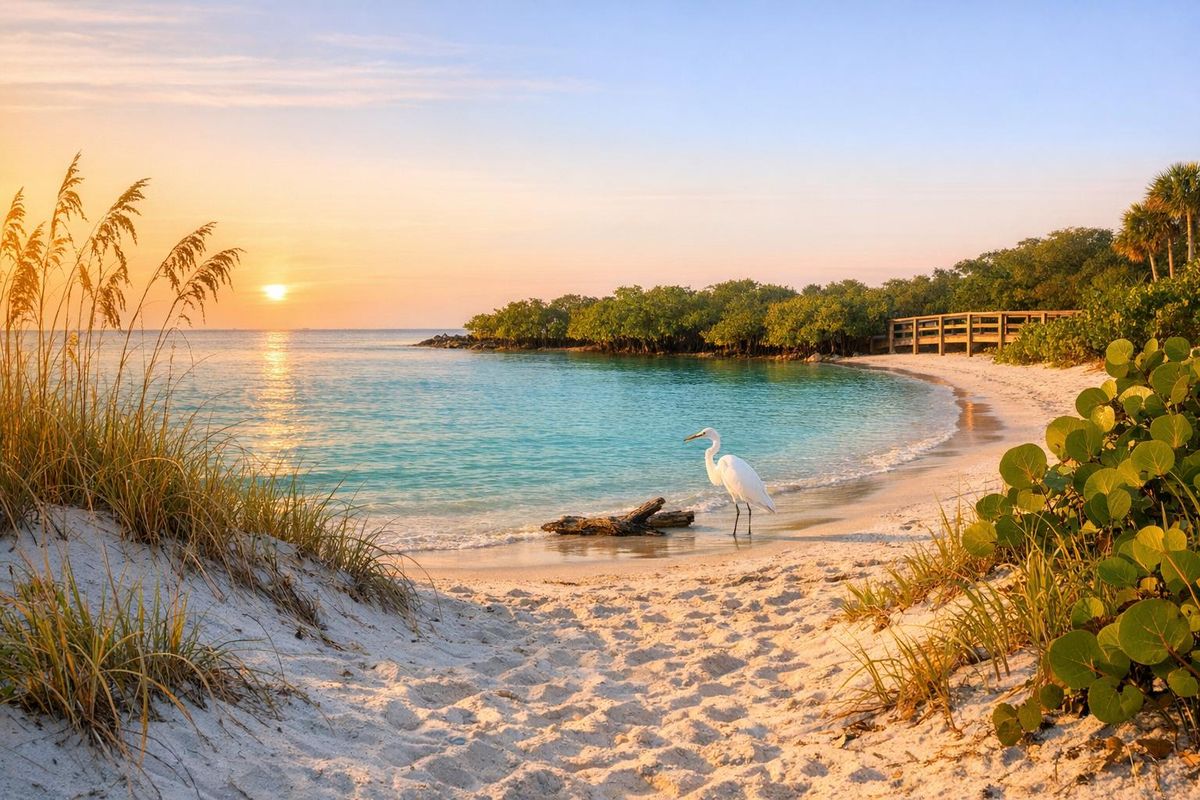
Manasota offers a peaceful escape on Florida's Gulf Coast, blending natural beauty, history, and tranquility. Unlike crowded tourist spots, this area is known for its serene beaches, rare wildlife, and ancient cultural sites. Here's a quick look at some must-visit destinations:
- Manasota Key Beach: Quiet, nostalgic, and perfect for spotting wildlife like sea turtles and manatees. Known for fossilized shark teeth.
- Stump Pass Beach State Park: Remote and calm, with trails, mangroves, and Gulf views. Spot dolphins, turtles, and shorebirds.
- Blind Pass Beach: Gulf-to-bay access with birdwatching, kayaking, and fossil hunting.
- Englewood Beach: A mix of natural beauty and nearby conveniences like restaurants and shops.
- Marie Selby Botanical Gardens: World-class plant collections and waterfront views.
- Sarasota Jungle Gardens: Feed flamingos and explore tropical plants and rescued animals.
- Mote Marine Laboratory & Aquarium: Interactive marine exhibits, including sharks and manatees.
- North Lido Beach: Secluded dunes and trails for birdwatching and quiet relaxation.
- Myakka River State Park: Sprawling park with alligators, hiking, and canopy trails.
Whether you're looking for quiet beaches, wildlife encounters, or historical landmarks, Manasota has it all. Many spots are budget-friendly, making it a perfect getaway for nature enthusiasts and history buffs alike.
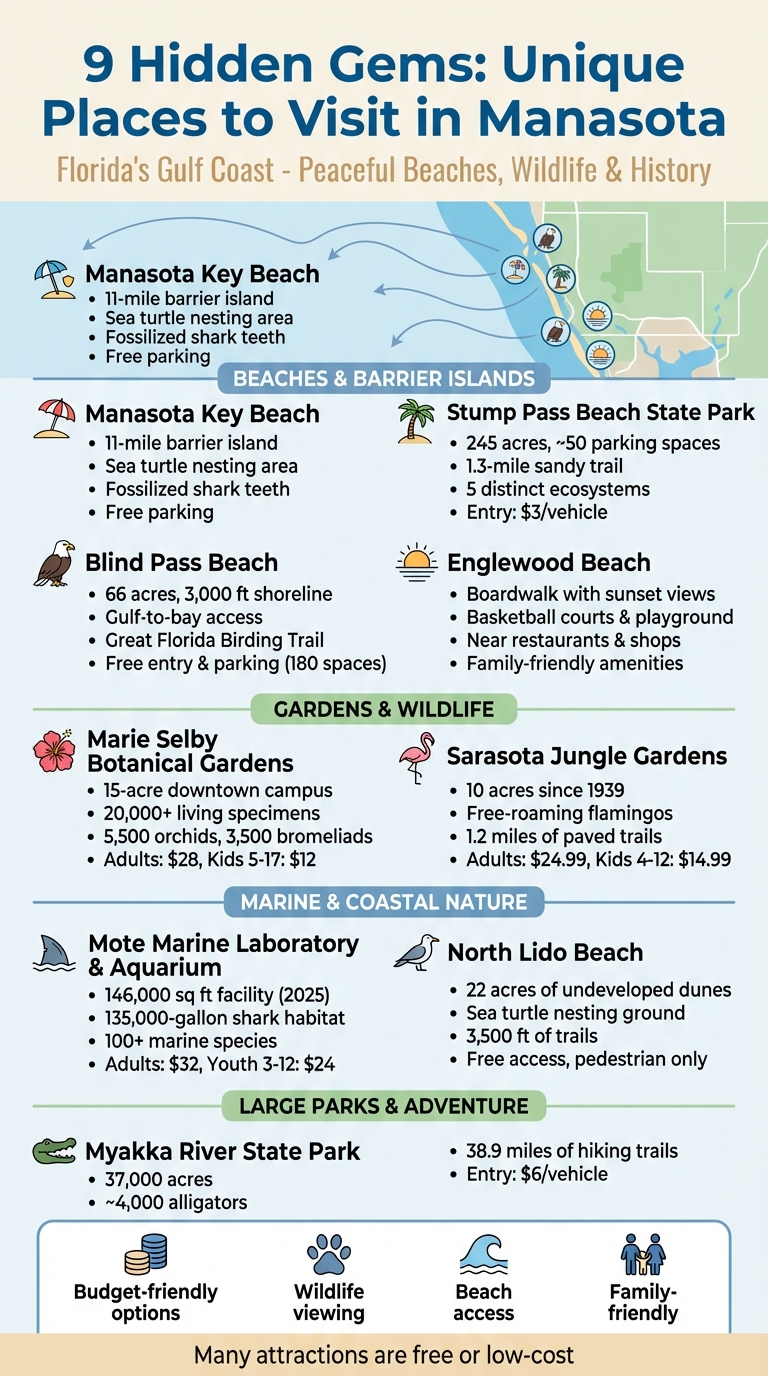
9 Hidden Gems in Manasota Florida - Visitor Guide Map
1. Manasota Key Beach
Seclusion and Tranquility
Manasota Key Beach offers a quiet, laid-back escape that feels like stepping back in time. Unlike the bustling Siesta Key, this 11-mile barrier island maintains a nostalgic "Old Florida" vibe, free from towering high-rises and commercial overload. The northern stretch is almost entirely residential, with a scenic, tree-lined road winding past charming homes instead of tourist-filled strips.
"Manasota Beach might be one of the least crowded beaches in Sarasota County, thus giving a visitor the chance to imagine that the whole gorgeous beach is merely their own private beach for a time." - Matt Murphy, Visit Sarasota County
If you venture just 5 to 10 minutes away from the public access points, you’ll likely find yourself surrounded by nothing but sand, sea, and serenity. This peaceful atmosphere also makes it a haven for wildlife enthusiasts.
Opportunities for Wildlife or Nature Exploration
Manasota Key Beach is a hotspot for nature lovers. The northern dunes are one of the most important nesting areas for sea turtles along the U.S. Gulf Coast. Loggerhead sea turtles are especially active here during the summer, and March often brings sightings of West Indian manatees. Dolphins are a common sight near the shoreline, while snowy egrets, ospreys, herons, and even the occasional southern bald eagle grace the skies.
The sand here is unique compared to Siesta Key’s powdery white quartz. At Manasota Key, you’ll find a mix of quartz, shell fragments, and darker minerals, including prehistoric fossilized shark teeth. These treasures are often uncovered by snorkeling just offshore, where you might also spot crabs and stingrays.
With its blend of natural beauty and practical conveniences, this beach offers something for everyone.
Accessibility and Practical Visiting Tips
Getting to Manasota Key Beach is straightforward. From I-75 Exit 192, head down Jacaranda Boulevard and follow Manasota Key Road to reach the beach. Free parking is available, along with amenities like restrooms, showers, picnic shelters with grills, volleyball courts, a playground, and a fishing pier.
For those interested in fossil hunting, a small mesh sieve can help you sift through the sand for shark teeth and other finds. If you’re exploring the area, take advantage of "Stumpy's" free golf cart shuttle service (tips are appreciated), which connects visitors to local shops and restaurants. A drive along North Manasota Key Road offers a picturesque view, with a natural canopy of trees framing the island’s distinct architecture.
Beach Paradise: Travel Guide to Manasota Key on a Budget
2. Stump Pass Beach State Park
Stump Pass Beach State Park continues Manasota Key's reputation for offering peaceful coastal retreats, providing visitors with a truly remote and tranquil experience.
Seclusion and Tranquility
Nestled at the southern tip of Manasota Key, this 245-acre park is designed to keep crowds at bay. With only about 50 parking spaces available, even during peak season, the park maintains its quiet charm. Its location, far removed from restaurants and shops, ensures a serene escape from the hustle and bustle.
"You know you're in a special place when a state park takes up the entire southern end of a barrier island... and you can explore it without bumping into barely a soul." – Caroline Makepeace, yTravel Blog
A 1.3-mile sandy trail winds through the park, leading visitors to the pass itself. The further you walk from the parking lot, the quieter and more untouched the beach becomes, offering breathtaking views of the Gulf and a sense of complete solitude. This peaceful environment also makes it an ideal spot to encounter local wildlife and admire native plants.
Wildlife and Nature Exploration
Stump Pass Beach State Park is home to five distinct ecosystems, ranging from mangrove forests to Gulf Coast beaches. Wildlife enthusiasts can spot West Indian manatees, gopher tortoises, playful dolphins, and a variety of shorebirds like snowy egrets and ospreys. Beneath the water, seagrass beds shelter marine life such as spiny sea urchins, redfish, snook, and tarpon.
The park's shoreline is a treasure trove for shell collectors, with finds like conchs, murex, and tulip shells. Along the nature trail, you'll encounter native plants like bay cedar, coontie, and prickly pear cactus, providing a glimpse into Florida's diverse flora.
Accessibility and Visiting Tips
While the park's natural beauty is its main draw, a few practical tips can make your visit even more enjoyable.
- Arrive early: The parking lot fills up quickly, so aim to get there by 8:00 AM.
- Entry fees: $3 per vehicle (up to 8 people) or $2 for pedestrians and cyclists. Payments can be made via QR code or honor box.
- Amenities: Restrooms, outdoor showers, and picnic pavilions are available for visitors.
Since there are no nearby shops or restaurants, bring everything you’ll need, including water, snacks, and sunscreen. Pets are welcome on the nature trail if kept on a six-foot leash, but they’re not allowed on the beach to protect nesting birds.
Keep an eye on updates from the Florida State Parks website before heading out. Changes brought by Hurricane Milton in 2025 have reshaped parts of the peninsula, including the creation of a new pass, adding even more character to this already unique destination.
3. Blind Pass Beach
Nestled at the southern end of Sarasota County on Manasota Key, Blind Pass Beach - often called "Middle Beach" by locals - offers a serene, untouched coastal retreat. Spanning 3,000 feet of shoreline across 66 acres, this free-entry park showcases the unspoiled charm that's becoming harder to find along Florida's Gulf Coast.
Seclusion and Tranquility
Blind Pass Beach is a haven for those seeking peace and quiet. Unlike busier beaches, it lacks towering condos, bustling rental shops, and nearby restaurants or stores. Instead, you'll find natural sand dunes and sea oats framing the shoreline. With 180 free parking spaces in an unpaved lot just across the road, visitors can easily carve out their own quiet spot, even on weekends.
"It's popular, but never mobbed with crowds." – Visit Florida
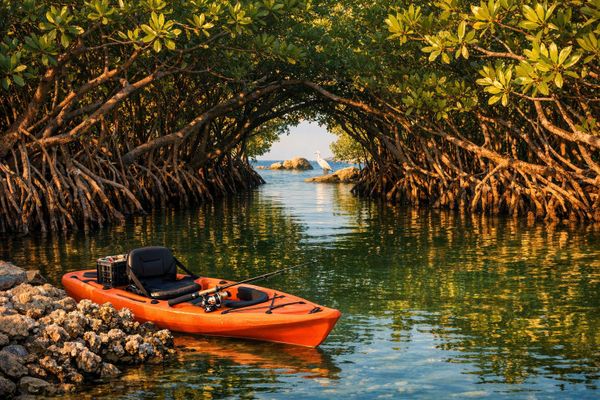
One of its standout features is the Gulf-to-bay access, offering both the expansive Gulf of Mexico and the calm mangrove-lined waters of Lemon Bay. In the summer, the Gulf's waters warm up to nearly 90 degrees, making it perfect for long, leisurely swims.
Wildlife and Nature Exploration
Blind Pass Beach is a dream for nature lovers. As part of the Great Florida Birding Trail, it's a prime spot for spotting shorebirds like Spotted Sandpipers, Willets, and the striking Reddish Egret. A nature trail meanders through the bay-side mangrove forest, leading to mudflats and lagoons within the Lemon Bay Aquatic Preserve - low tide is the best time for birdwatching.
"Blind Pass is the perfect site for uninterrupted beach birding." – Great Florida Birding Trail
Offshore, dolphins, manatees, and manta rays are frequent visitors to the Gulf waters. Between May and October, sea turtles nest in the dunes under the cover of night, creating a special wildlife experience. The beach is also a treasure trove for beachcombers, with fossilized shark teeth, sand dollars, fighting conchs, and lightning whelks scattered along the shore.
Accessibility and Visiting Tips
The park is open daily from 6:00 a.m. to midnight, with free entry and parking. Be sure to pack everything you'll need, as there are no concessions on-site. For those looking to explore, two canoe and kayak launches on the bay side provide easy access to the mangrove tunnels.
Keep in mind there are no lifeguards, so swimming is at your own risk, and occasional strong currents may occur. The unpaved parking lot can get muddy after rain, so unloading heavy gear at the entrance might save you some trouble. If you're without a car, "Stumpy's Free Ride" shuttle service offers a convenient way to reach the beach, making stops along Manasota Key.
With its blend of natural beauty and easy accessibility, Blind Pass Beach offers a tranquil escape that's hard to match.
4. Englewood Beach
Nestled at the crossroads of Beach Road and Manasota Key Road, Englewood Beach is a standout along Manasota Key’s 7-mile stretch of unspoiled coastline. Beyond its sandy shores, the drive through quaint 1950s-style beach homes and mangroves offers a nostalgic glimpse into the past. This mix of natural beauty and nostalgic charm creates a beach experience that feels both refreshing and timeless.
Natural or Cultural Experiences
Englewood Beach strikes a balance between convenience and natural serenity. The boardwalk provides a front-row seat to stunning ocean views and the Gulf’s breathtaking sunsets. On top of that, the beach features amenities like basketball courts, a playground, BBQ grills, picnic tables, and pavilions. It’s also just a short walk from local restaurants, shops, and visitor centers.
This proximity to local life sets Englewood Beach apart. Unlike more secluded beaches, it offers a blend of beachside relaxation and community vibe. The area’s unique character is further enhanced by its location across two counties - Sarasota and Charlotte.
Accessibility and Practical Visiting Tips
Englewood Beach is designed with accessibility in mind, offering plenty of parking along with full restroom and changing facilities, making it a great choice for families. While it tends to draw more visitors than quieter spots like Blind Pass or Manasota Beach, visiting during sunset hours provides a more tranquil experience paired with unforgettable views.
The beach’s atmosphere remains laid-back, thanks to the flat, private houses lining the shore instead of towering condos. Plan a full day by using the on-site amenities and grabbing a meal at one of the nearby eateries. Englewood Beach combines natural beauty, a touch of nostalgia, and modern comforts, making it perfect for those seeking a relaxing yet convenient getaway.
5. Marie Selby Botanical Gardens
After enjoying the tranquil sands of Manasota Key, consider a visit to the serene escape of Marie Selby Botanical Gardens. Nestled along Sarasota Bay, this 15-acre Downtown Sarasota campus offers stunning waterfront views, making it a favorite spot for peaceful nature walks away from busier attractions. With its picturesque bayfront setting, the gardens have earned the nickname "botanical bliss".
Natural or Cultural Experiences
Marie Selby Botanical Gardens holds the distinction of being the only botanical garden in the world dedicated to epiphytic plants like orchids, bromeliads, and ferns - plants that grow on other plants. Its impressive collection boasts more than 20,000 living specimens, including approximately 5,500 orchids and 3,500 bromeliads. Through May 2026, visitors can enjoy the "Alexander Calder: The Nature of Movement" exhibit, which merges fine art with beautiful botanical displays at the Downtown campus.
The gardens are divided into two campuses, about 10 miles apart. The Historic Spanish Point campus in Osprey is home to the "Child's Garden of Verses" exhibit, inspired by Robert Louis Stevenson's poetry and running through August 2026. For dining, the Green Orchid restaurant offers a unique experience as the world’s first net-positive energy restaurant, producing more energy than it consumes. This combination of art, nature, and sustainability adds to the area's charm.
Opportunities for Wildlife or Nature Exploration
The grounds feature a variety of natural habitats, including a banyan grove, bamboo stands, a mangrove walkway, and Florida's largest Bo tree. Kids and families will enjoy the Ann Goldstein Children's Rainforest Garden, complete with swinging bridges and 12-foot-high platforms nestled in enormous ficus trees. Other highlights include a butterfly garden and a koi pond.
Behind the scenes, Selby Gardens houses advanced research facilities, including an herbarium with 106,000 specimens and the world’s second-largest "spirit collection", containing nearly 28,000 vials of preserved flowers. Over the years, Selby’s botanists have identified or described more than 2,000 previously unknown plant species.
Accessibility and Practical Visiting Tips
Marie Selby Botanical Gardens welcomes visitors daily from 10:00 a.m. to 5:00 p.m. at 1534 Mound Street. Admission to the Downtown campus costs $28 for adults and $12 for children ages 5-17, while the Historic Spanish Point campus charges $20 for adults. Members enjoy free access to both locations. Parking is free, and complimentary wheelchairs are available on a first-come, first-served basis.
Most visitors spend 1 to 2 hours exploring, but with exhibits and dining, you could easily spend up to 4 hours. Don’t forget sunscreen and insect repellent, as outside food and drinks are not permitted. With its rare botanical treasures and blend of nature and art, Marie Selby Botanical Gardens is a standout destination among Manasota’s lesser-known gems.
6. Sarasota Jungle Gardens
Since December 31, 1939, Sarasota Jungle Gardens has evolved from an untamed swamp into a lush 10-acre tropical retreat. Operated by the Allyn family since 1971, this destination radiates the charm of "Old Florida". Let’s dive into what makes this spot a standout for both nature lovers and wildlife enthusiasts.
Natural or Cultural Experiences
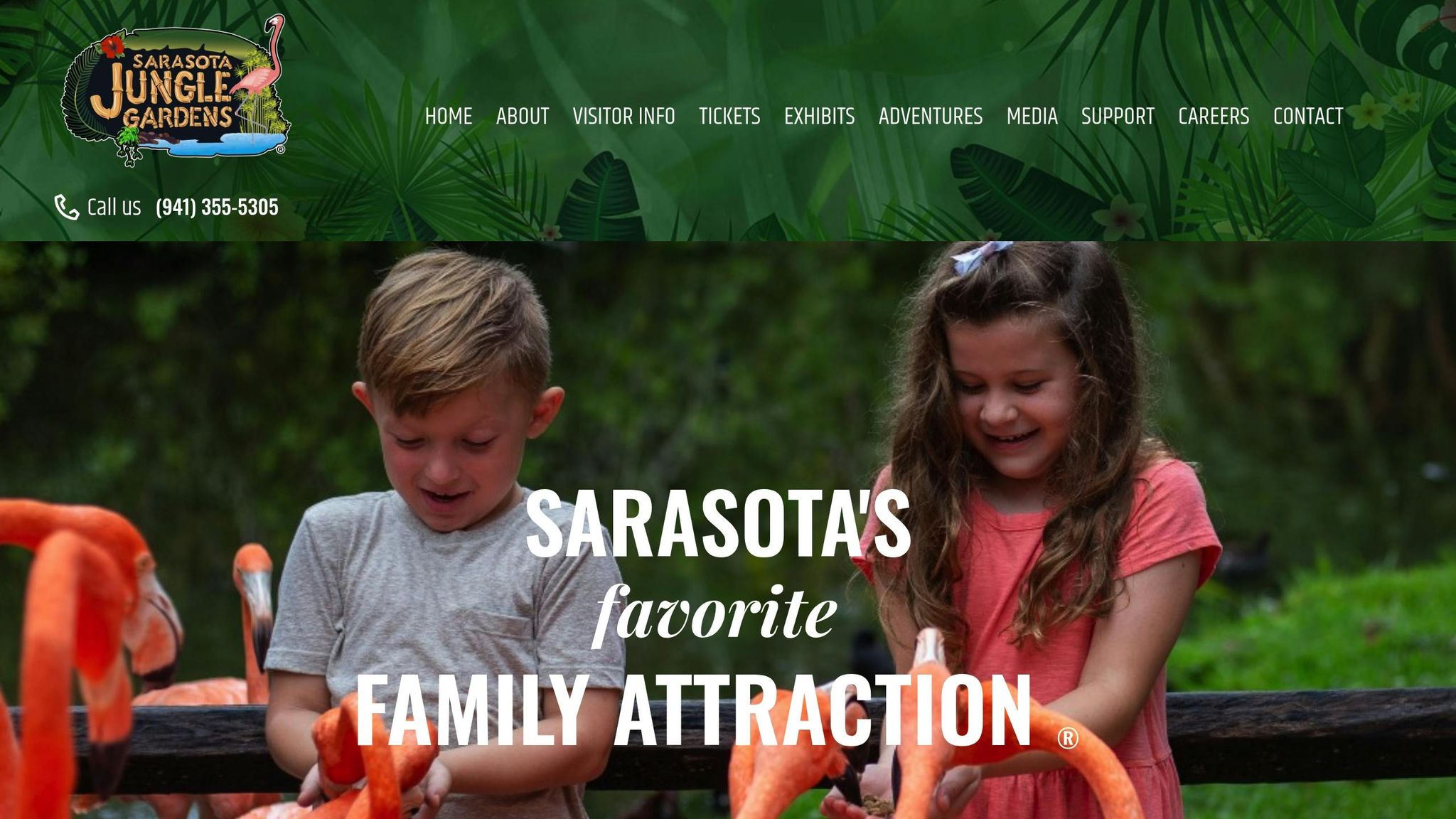
One of the park's most beloved features is the chance to walk among flamingos that roam freely. Visitors can even hand-feed them using food from an on-site kiosk. Beyond these iconic birds, the park offers daily educational shows at a covered pavilion. Highlights include the Wildlife Wonder Show at 11:00 AM and 1:00 PM, the Jungle Bird Show at 12:00 PM, and the Reptile Show at 3:00 PM. Guests looking for a more hands-on experience can pay $5 to $10 to hold exotic reptiles or birds for photos. For $35 per person, 30-minute animal interactions with Aldabra tortoises or Reeves muntjac deer are available.
The gardens also boast unique plant life, such as the Australian Nut Tree, Bunya-Bunya, and the largest Norfolk Island pine in Florida. This mix of close encounters with both animals and rare flora creates a memorable experience for visitors.
Opportunities for Wildlife or Nature Exploration
The gardens host a variety of rescued animals, including lemurs, crocodiles, toucans, and porcupines, all accessible via 1.2 miles of paved trails. A petting zoo featuring goats and chickens operates daily from 11:00 AM to 3:00 PM. For families, the playground near the Flamingo Cafe offers fun with large animal sculptures and an elephant fountain. Visitors can also explore tropical paths leading to a butterfly garden and a koi pond, perfect for moments of quiet nature appreciation.
Accessibility and Practical Visiting Tips
Sarasota Jungle Gardens is open daily from 10:00 AM to 4:00 PM, except on Thanksgiving and Christmas. Admission costs $24.99 for adults and $14.99 for children aged 4-12, while kids under 3 enter free. To save time, buy tickets online and arrive 15 minutes early for scheduled shows. Plan for 2 to 4 hours to fully enjoy the exhibits, shows, and animal encounters.
Parking is free in the lot at 3701 Bay Shore Rd, with overflow parking available at a nearby church during peak times. Outside food isn't allowed (except for children under 3), but the on-site Flamingo Cafe serves sandwiches and snacks for hungry visitors.
7. Mote Marine Laboratory & Aquarium
Mote Marine Laboratory & Aquarium is a standout destination in Manasota, offering a fascinating journey into the world of marine science. In July 2025, the laboratory moved to its impressive 146,000-square-foot facility at Nathan Benderson Park. Established in 1955, Mote has built a strong reputation for its shark research and supports 38 research programs worldwide.
Natural or Cultural Experiences
The Mote Science Education Aquarium (Mote SEA) is home to over 100 marine species, spread across three floors of engaging exhibits. One of the highlights is a massive 135,000-gallon shark habitat featuring blacktip reef and sandbar sharks. Visitors can also marvel at manatees, river otters, Humboldt penguins, and a giant Pacific octopus. Interactive displays, like "Oh Baby! Life Cycles of the Seas", focus on marine reproduction and even include a baby shark touch tank. Meanwhile, "The Teeth Beneath" introduces visitors to watershed wildlife, such as American alligators and spectacled caimans.
"Each gallery is a window into the wonders of aquatic life - from the depths of the ocean to the vibrant ecosystems of rivers, reefs and coastal habitats."
- Mote Marine Laboratory & Aquarium
This mix of hands-on exhibits and live animal displays adds a dynamic layer to your Manasota itinerary.
Opportunities for Wildlife or Nature Exploration
Visitors can get a behind-the-scenes look at cutting-edge research through Mote’s state-of-the-art laboratories. These labs focus on projects like coral reef restoration and marine animal rescue, offering a glimpse into the important work being done. Two interactive touch tanks and an audio-guided tour enhance the experience, making it both educational and entertaining. Set aside 1.5 to 3 hours to fully enjoy everything Mote SEA has to offer.
Accessibility and Practical Visiting Tips
Mote SEA is open daily from 9:30 a.m. to 5:00 p.m. at 225 University Town Center Drive. Tickets are sold in 30-minute time slots to manage crowds, so booking online in advance is a good idea. Admission costs $32 for adults, $24 for youth (ages 3–12), and is free for children under 2 when booked 30 days ahead. Active duty military personnel can enter free with valid ID. Arrive 10 minutes early to your time slot, as arrivals more than an hour late will need to reschedule. Free parking is available on the west side of the property, and visitors can request complimentary wheelchairs or sensory-friendly backpacks at Guest Services. For refreshments, the on-site Bite Cafe offers casual dining options, while coffee and gelato stations are perfect for quick treats.
8. North Lido Beach
North Lido Beach, located at the northern tip of Lido Key, offers a glimpse into the charm of "Old Florida." This 22-acre stretch of undeveloped dunes and sea oats feels like a step back in time. Unlike the bustling Siesta Key or Lido Public Beach, North Lido Beach requires a bit more effort to reach, making it a serene and exclusive retreat [67,70].
Seclusion and Tranquility
This beach is the definition of peace and quiet. With no lifeguards, restrooms, or concessions, and only pedestrian access from parking near Ted Sperling Park or St. Armands Circle, it naturally attracts those looking for solitude [67,72]. Local guide Michael Dattolo describes it best:
"North Lido Beach hides in plain sight... the northern end is less crowded and features undeveloped dunes and trails".
As you move further north toward New Pass, the beach becomes even more secluded. High dunes provide privacy, creating a perfect escape from the crowds [67,70].
A Haven for Nature Lovers
North Lido Beach is a treasure trove for birdwatchers and wildlife enthusiasts. The coastal uplands and tidal areas are home to species like black skimmers, snowy egrets, great egrets, and reddish egrets. Northern harriers can often be spotted gliding over the dunes, and the beach also serves as a nesting ground for sea turtles [66,68,72].
Beyond the shoreline, North Lido Park offers 3,500 feet of unpaved trails that wind through a forest-like landscape. Along the way, you might encounter prickly pear cacti and seasonal wildflowers [68,70]. Even the sand is unique - quartz-based and derived from Appalachian sediments, it stays cool to the touch even on the hottest days.
Tips for Visiting
Getting to North Lido Beach takes a bit of planning. Free parking is available at Ted Sperling Park, but spaces fill up quickly during busy seasons, so arriving early is a good idea. Alternatively, you can hop on the Sarasota County Area Transit (SCAT) Route 11 bus for just $1.00 per ride.
The beach itself is open daily and free to access, but you’ll need to bring your own essentials like water, snacks, chairs, and umbrellas since there are no vendors [66,74]. If you plan to swim, be cautious - there are no lifeguards, and the waters near New Pass can have strong currents [67,72]. Also, note that dogs are not allowed on the beach [70,74].
For a truly unforgettable experience, visit in the late afternoon to catch one of the Gulf Coast’s breathtaking sunsets. It’s the perfect reward for making the journey.
9. Myakka River State Park
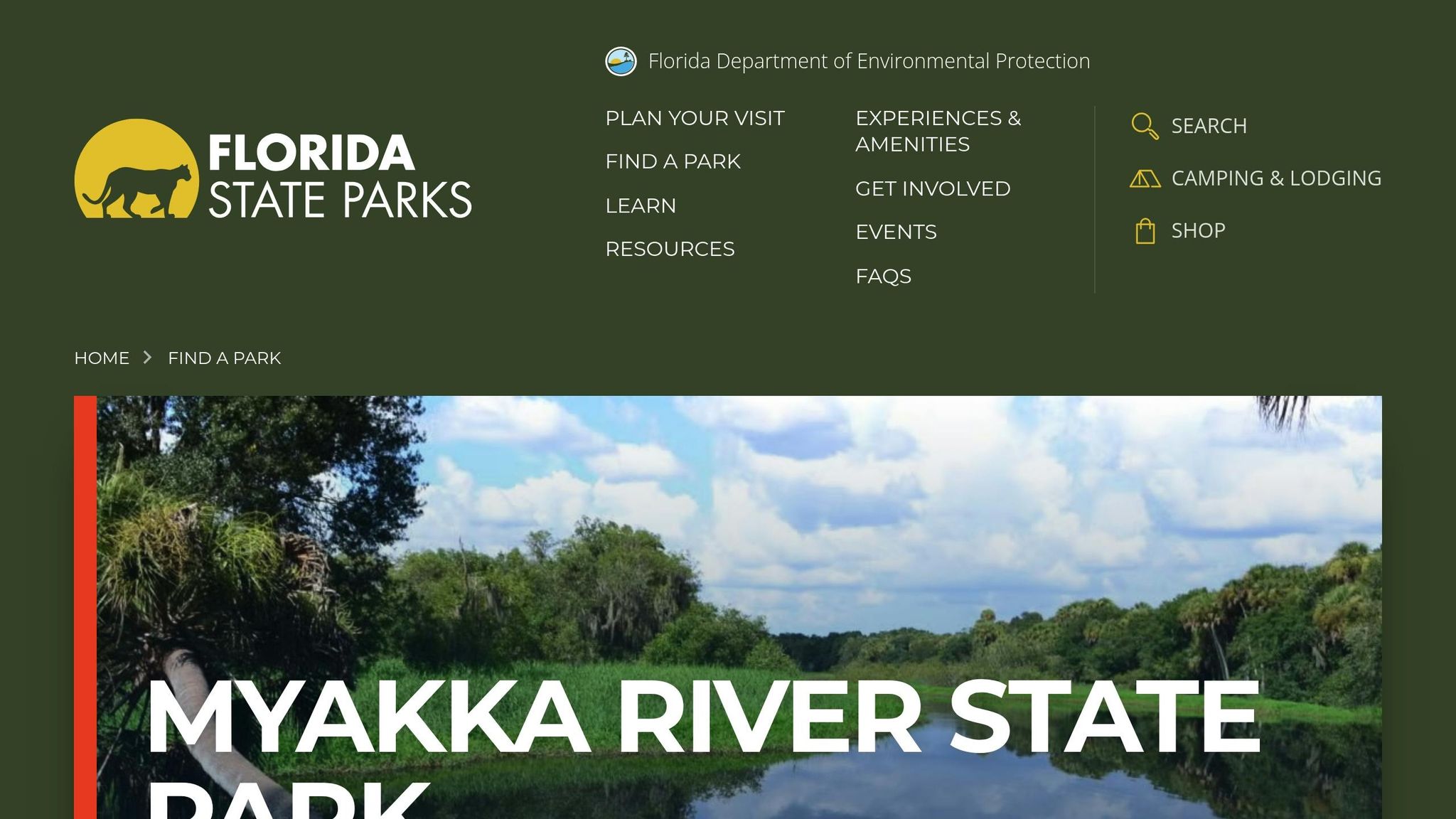
Spanning an impressive 37,000 acres just 9 miles east of I-75, Myakka River State Park is one of Florida's largest and oldest state parks. It safeguards 34 miles of the Myakka River - officially recognized as Florida's first "Wild and Scenic River" - along with a mix of wetlands, prairies, and hammocks. This serene escape offers a refreshing alternative to the bustling coastal areas.
John McCarthy, Vice President for Regional History at Marie Selby Botanical Gardens, describes the park's unique magic:
"The Myakka remains a mysterious, undiscovered territory on the eastern side of our coastal communities, providing a different paddling experience. Here... it is possible to be completely enveloped in nature."
Wildlife and Nature Highlights
The park is a haven for wildlife enthusiasts. It's home to around 4,000 alligators, along with deer, wild hogs, roseate spoonbills, and the elusive crested caracara. One of its standout features is Deep Hole, a massive karst sinkhole measuring 135 feet deep and 295 feet wide. During the dry season, this natural wonder becomes a gathering spot for hundreds of alligators. Access to Deep Hole is limited to just 30 daily permits, which can be obtained at the ranger station.
For those seeking a unique perspective, the Canopy Walkway offers an unforgettable experience. As North America's first public treetop trail, it features a 100-foot-long suspension bridge 25 feet above the ground and a 74-foot observation tower, providing stunning views of the hammock canopy. The park also protects one of the largest remaining areas of Florida dry prairie, a rare and endangered habitat.
Blending Nature with History
Beyond its natural beauty, the park offers a glimpse into its historical roots. Built in the 1930s by the Civilian Conservation Corps, five historic cabins constructed from native sabal palm trunks remain a nod to the park's past. Visitors can also explore 38.9 miles of hiking trails, 7 miles of paved biking paths, and enjoy kayaking at sunrise, when the tea-colored river is shrouded in mist.
Visiting Tips and Accessibility
Entry costs $6 per vehicle (up to eight people), and the park opens daily at 8 a.m. Arriving early is recommended to secure parking and enjoy peak wildlife activity. Visitors should note a few temporary changes: drinking water is unavailable (though free bottled water is provided at the ranger station), campfires are prohibited due to a burn ban, and both the boat launch and bird walk are currently closed. Be sure to check the Florida State Parks website for the latest updates before your trip.
With its mix of natural beauty, wildlife, and historical charm, Myakka River State Park is a must-see destination in the Manasota area.
Conclusion
The Manasota region offers something increasingly rare in Florida: genuine experiences without the crowds. From the ancient shell middens at Historic Spanish Point to the sprawling 682-acre salt marsh at Robinson Preserve, this area is a treasure trove of natural beauty, history, and tranquility.
What sets it apart is its untouched, non-commercial charm. Unlike the bustling tourist beaches lined with high-rises and souvenir shops, spots like Manasota Key Beach offer pure seclusion, boasting 1,400 feet of pristine, undeveloped shoreline. Bruce Rodgers, Executive Director of the Hermitage Artist Retreat, captures this perfectly:
"The Hermitage is a thriving oasis of living history and natural splendor".
Manasota also stands out for its affordability. Many attractions here are easy on the wallet - Manasota Scrub Preserve is free to explore, and launching a kayak at Ray's Canoe Hideaway costs just $8. For those willing to venture off the beaten path, these places offer unforgettable moments: spotting a rare Florida scrub-jay, combing the shore for fossilized shark teeth, or gliding through the misty waters of Myakka River State Park at dawn.
To make the most of your visit, plan for the quieter post-high season and aim to arrive early. Be sure to pack your own water and snacks, check tide charts, and prepare for a self-guided adventure - these hidden gems embrace simplicity over convenience.
Even with its proximity to urban areas, Manasota remains a haven of wilderness and peace. These nine destinations prove that the essence of Old Florida is alive and well, waiting for those ready to seek it out. Every corner of Manasota tells the story of a Florida that’s as timeless as it is unforgettable.
FAQs
What’s the best time of year to visit Manasota’s hidden gems?
The best time to discover Manasota's hidden gems is from late fall to early spring. During these cooler, less humid months, the weather is perfect for outdoor adventures such as hiking, kayaking, and beach visits.
Which spots are best for finding shark teeth and shells?
Caspersen Beach and Stump Pass Beach are must-visit destinations in Manasota for anyone who loves hunting for shark teeth and shells. Caspersen Beach, often referred to as the "shark tooth capital of the world", is a hotspot for finding fossilized shark teeth, making it a favorite for collectors and beachcombers alike. Stump Pass Beach also offers plenty of chances to uncover natural treasures, from unique shells to other seaside gems. Both beaches provide unforgettable experiences for those who enjoy exploring nature's hidden surprises.
What should I pack for the more remote beaches and parks?
For those heading to the remote beaches and parks in Manasota, planning ahead is key since amenities can be sparse. Pack sun protection like sunscreen, a hat, and sunglasses, along with lightweight clothing to stay comfortable. A beach towel and insect repellent are also must-haves.
To make your visit more enjoyable, consider bringing a cooler stocked with drinks and snacks, a portable shade for relief from the sun, and waterproof footwear for exploring. A small first aid kit is a smart addition, and be sure to carry plenty of water to stay hydrated during outdoor activities in these less-developed spots.