
How to Protect Pets from Summer Heat in Florida
Practical tips to prevent pet heatstroke, paw burns, and dehydration in Florida—hydration, timing walks, cooling tools, and emergency steps.
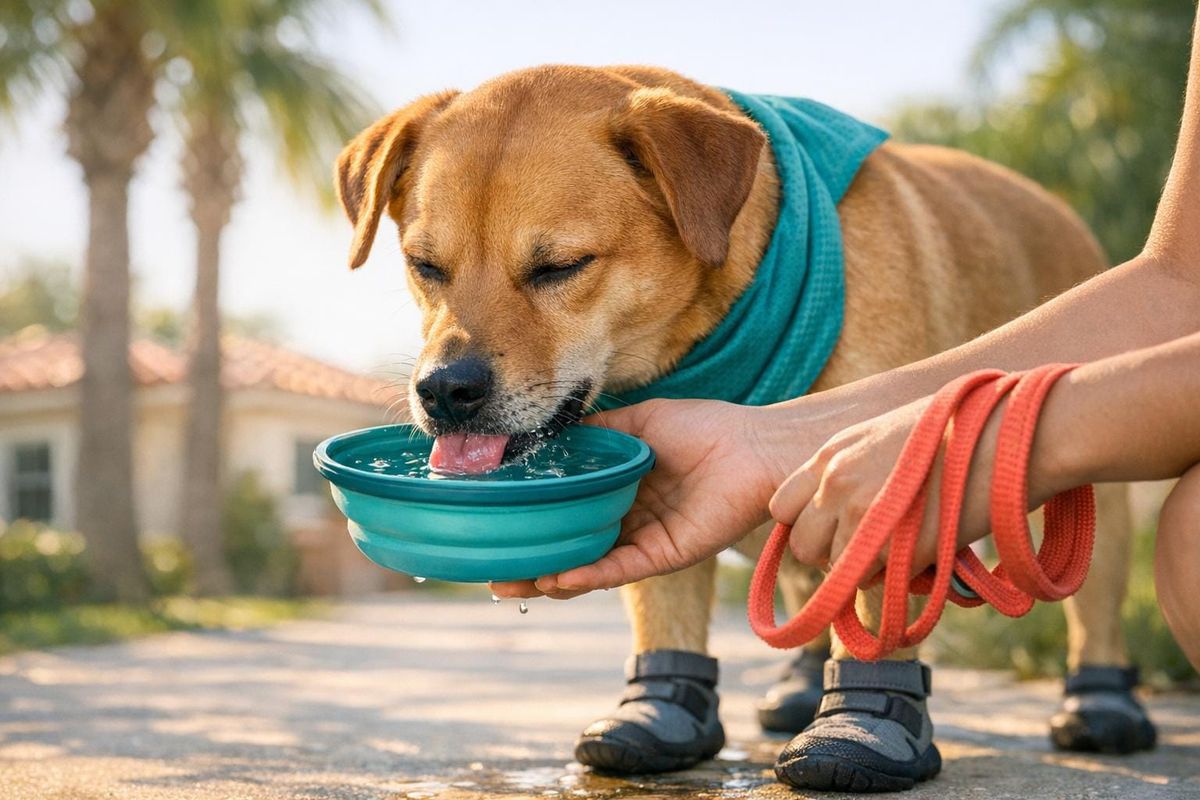
Florida's summer heat and humidity pose serious risks to pets, including heatstroke, paw burns, and dehydration. Unlike humans, pets struggle to cool down effectively, making it essential to take precautions during hot weather. Here’s what you need to know:
- Heatstroke Danger: Pets can suffer heatstroke when their body temperature exceeds 104°F. Signs include excessive panting, drooling, vomiting, and weakness. Immediate cooling and veterinary care are critical.
- Hot Surfaces: Pavement and sand can reach over 130°F, burning paw pads in seconds. Test surfaces with your hand before walks.
- Hydration and Shade: Always provide fresh water and shaded areas. Use cooling mats, fans, or kiddie pools to help pets stay comfortable.
- Exercise Timing: Walk pets early in the morning or late in the evening to avoid peak heat hours (10 a.m.–4 p.m.).
Prepare for emergencies by keeping local vet contacts handy and knowing first aid steps, such as applying cool water to your pet’s neck and groin. Staying vigilant and proactive can keep your furry friends safe during Florida's intense summer heat.
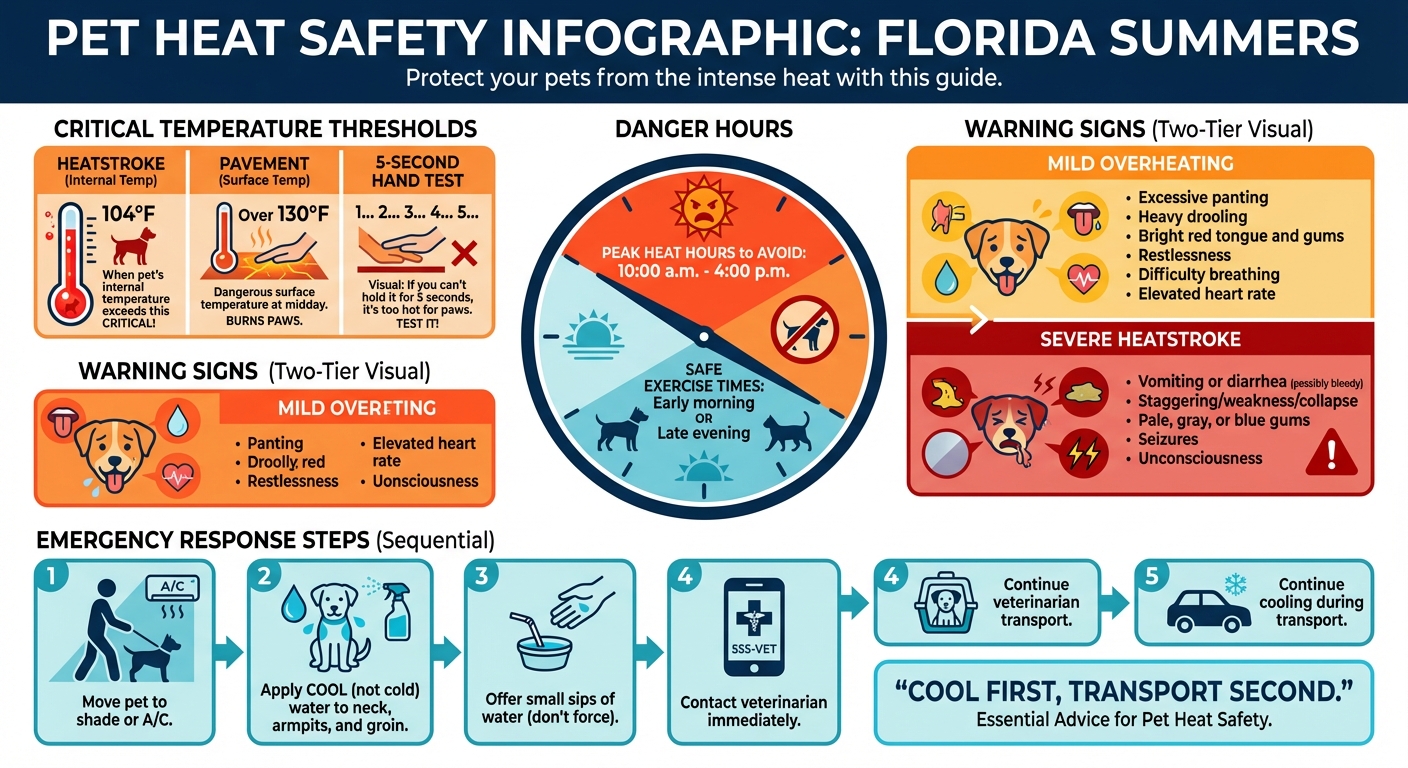
Pet Heat Safety Guide: Temperature Dangers and Warning Signs for Florida Summers
Heatstroke, burned paws: How to keep your pets safe in the summer heat
How Florida's Summer Climate Affects Pets
Florida's Gulf Coast summers are no joke - extreme heat, high humidity, and blazing sunlight can create serious dangers for your pets. These conditions can quickly overwhelm their ability to stay cool, making it crucial to understand how the climate impacts them.
Humidity is a major concern. For example, a 90°F day in Arizona’s dry heat might be tolerable for a dog, but in Florida’s Manasota area, the same temperature paired with high humidity can become life-threatening. Pets rely on panting to regulate their body temperature, as they only sweat through their paw pads. But when the air is thick with moisture, it slows down the evaporation process that’s key to cooling. This makes it much harder for pets to release heat, causing their body temperature to rise dangerously fast.
Heatstroke Risks for Pets
Heatstroke happens when a pet’s internal temperature exceeds 104°F. At this point, their body can no longer manage heat effectively, which can lead to organ damage. Certain breeds, like Bulldogs and Pugs, are at even greater risk because their shorter snouts make breathing - and cooling - more difficult. In the Manasota region, where the heat and humidity often stick around for extended periods, pets face these risks for months on end. Even a short walk or time outdoors during peak heat can turn into a life-threatening situation.
Hot Pavement and Paw Burns
Florida’s intense sunlight doesn’t just heat the air - it also turns asphalt and sand into scorching hazards. Pavement temperatures can soar past 130°F by midday, and at these levels, a pet’s paw pads can burn in seconds. Here’s a quick test: place the back of your hand on the pavement. If you can’t hold it there for five seconds, it’s too hot for your pet to walk on.
It’s not just asphalt - concrete sidewalks and beach sand can also reach dangerous temperatures, especially during peak sun hours between 10 a.m. and 4 p.m. Paw pad burns are incredibly painful and take a long time to heal, but they’re entirely preventable. By being mindful of timing and surfaces, you can avoid this unnecessary pain for your pet.
Next, we’ll dive into how to spot the signs of overheating and what to do if your pet is in distress.
How to Recognize Overheating and Heatstroke in Pets
Understanding the difference between mild overheating and severe heatstroke can make all the difference for your pet. These conditions can escalate quickly, so spotting the signs early is crucial.
Warning Signs to Watch For
Mild overheating often begins with excessive panting and heavy drooling. Your pet might seem restless, try to find shade, or lie on cool surfaces. Their tongue and gums may appear bright red as their body struggles to cool down. Other signs include difficulty breathing, a dry nose, or an elevated heart rate.
If overheating progresses to heatstroke, the symptoms become much more severe. Your pet might start vomiting or have diarrhea, which can sometimes be bloody. They may stagger, become weak, or even collapse. Watch for changes in gum color - what starts as bright red may turn pale, gray, or blue, signaling a dangerous lack of oxygen. In extreme cases, seizures or unconsciousness can occur, requiring immediate intervention.
What to Do Right Away
If you suspect heatstroke, act immediately. Move your pet to a shaded or air-conditioned area. Apply cool (not cold) water to their neck, armpits, and groin. Wet towels can help, but make sure to replace them frequently, as they can trap heat if left on too long.
"Extreme cold causes blood vessels to constrict, which actually traps heat in the body's core and can make things worse." - Skyway Animal Hospital
Offer small sips of fresh water, but don’t force them to drink. Even if your pet seems to recover, contact a veterinarian right away. Heatstroke can cause internal organ damage that isn’t immediately visible, and only a professional can assess the full extent of the issue.
How to Keep Pets Cool During Hot Weather
Once you understand the risks of overheating, taking steps to keep your pet cool becomes crucial. Preventing heat-related issues is far simpler than treating heatstroke. With Florida’s intense heat and humidity, pets need extra care to stay safe and comfortable during the summer months.
Keep Your Pet Hydrated
Always ensure your pet has access to fresh water. Set up multiple water stations around your home and yard - especially if your pet spends time outdoors - so they can easily stay hydrated.
On particularly hot days, add ice cubes to their water bowls to keep the water cooler for longer. You can also offer frozen treats, like pet-safe popsicles or frozen stuffed toys (think Kongs), to encourage hydration while helping them cool off. If you have a yard, consider setting up a kiddie pool where your dog can splash around and stay active while beating the heat.
Adjust Exercise Times
Plan walks during the cooler parts of the day, such as early morning or late evening, when temperatures are more manageable. Avoid taking your pet out during peak heat hours, typically between 10:00 a.m. and 4:00 p.m., when both the sun and pavement are at their hottest. Instead of one long walk, opt for several short potty breaks in cooler conditions.
Always bring fresh water and a portable bowl when heading out. Keep an eye out for signs of overheating, like heavy panting, seeking shade, or slowing down, and take breaks in shaded or cool areas. Choose shaded trails or grassy paths over hot asphalt or sand, which can be harsh on your pet’s paws.
Protect Paws and Skin
Hot surfaces, like pavement or sand, can burn your pet’s paw pads and make it harder for them to cool themselves down. Dog booties are a great way to shield their paws from these surfaces. For pets with light-colored, short, or white fur - or hairless breeds - apply pet-safe sunscreen to areas like the nose, ears, and belly. Avoid using human sunscreen, as it often contains ingredients harmful to animals.
Use Cooling Tools and Accessories
In addition to hydration and adjusting exercise routines, cooling tools can help your pet stay comfortable. Make sure they have access to shaded areas throughout the day. Cooling mats, fans, or air-conditioned spaces can help regulate their body temperature. Regular brushing improves airflow to their skin, but avoid shaving double-coated breeds like Golden Retrievers or Border Collies.
"Don't shave a double-coated dog. Shaving them does not help keep them cool; it does the opposite." - Hillsborough County Animal Control Division
Their fur acts as insulation, protecting them from harmful UV rays and heat, so keeping it intact is essential for their safety.
How to Prepare for Heat Emergencies in the Manasota Area
Florida summers can be brutal, and heat emergencies can happen fast. Preparing ahead of time is essential to protect your pet and ensure their safety during unexpected situations. Knowing where to go and how to act quickly can make all the difference if your pet starts showing signs of overheating.
Keep Local Veterinary Contacts Handy
Having a list of emergency veterinary contacts in the Manasota area can save precious time. Keep this information easily accessible - store it in your phone, stick it on your fridge, or keep a copy in your car. Here are some key options:
- Animal ER of University Park – 8440 Cooper Creek Blvd, Bradenton (Open 24/7 for emergencies)
- Bradenton Veterinary Emergency – 2910 Manatee Ave W (Available Monday–Friday from 6:00 p.m.–7:30 a.m. and 24/7 on weekends)
- Animal Hospital at Lakewood Ranch – Located on SR 70, one mile east of I-75 (Offers same-day and urgent care services)
- Manatee Veterinary Clinic – 3607 Manatee Ave W (Provides same-day and urgent care)
- Vet Care Express – 941-592-5131 (Professional animal ambulance service)
Always call ahead before arriving to ensure the clinic is ready for your pet and to confirm immediate availability. Acting quickly and efficiently is just as important as knowing where to go.
First Aid Steps for Overheating
If your pet shows signs of overheating, immediate action is crucial. Start cooling your pet even before heading to the vet. Move them to a shaded area or an air-conditioned space and apply cool (but not ice-cold) water to areas like their head, stomach, armpits, and groin.
"Cool first, transport second." - Royal Veterinary College
Offer small sips of cool water if your pet is able to drink, but don’t force it. Use wet towels to help with cooling, but replace them often to prevent trapping heat. Once you've started the cooling process, contact your veterinarian right away and continue cooling during transport. Quick action can make all the difference, so don’t hesitate to seek professional help.
Conclusion
Florida's intense heat, paired with high humidity that hinders your pet's ability to cool down naturally, requires consistent prevention and quick action. Even after cooling measures, serious health issues can still occur, making preparation and vigilance crucial.
The key is to focus on daily preventive measures. Plan walks during the cooler hours of early morning or late evening, check pavement temperatures using the five-second hand rule, and always ensure your pet has access to fresh water. Never leave your pet in a parked car - even for a brief moment.
Be alert to warning signs like heavy panting, drooling, or bright red gums. If you notice these, move your pet to a shaded area, apply cool water to their neck and groin, and contact your veterinarian immediately. Having emergency contact information handy can make all the difference when time is critical.
"With proper precautions and awareness, you can keep your pets safe while still enjoying outdoor activities together." - Dr. Shannon Dalene, DVM, Skyway Animal Hospital
Stay watchful during the summer, especially between 10:00 a.m. and 4:00 p.m., when the heat is at its peak. Your attentiveness and preparation are the best ways to protect your furry family members during Florida's sweltering summer months. For more local pet care tips and updates, visit Manasota.co.
FAQs
Which pets are most at risk in Florida heat?
Pets that are particularly at risk during Florida's sweltering summer include brachycephalic breeds - such as Bulldogs, Pugs, and Persian cats - along with senior pets, very young animals, overweight pets, and those with heart or respiratory conditions. These groups are more susceptible to heatstroke and other heat-related illnesses, making it crucial to take extra precautions to ensure their safety in the heat.
How long is too long outside in summer?
During the hottest parts of the day - generally between 10 a.m. and 4 p.m. - it's best to keep pets indoors as much as possible. High temperatures and humidity can be tough on them, so if they do go outside, keep it short. Make sure they always have access to shade and fresh water, and keep an eye out for signs of overheating, such as heavy panting or unusual tiredness. While there’s no strict rule for how long is too long, shorter outdoor activities during extreme heat are the safest way to avoid heat-related problems like heatstroke.
When should I go to the emergency vet?
Take your pet to an emergency vet right away if they exhibit signs of heatstroke. Symptoms like vomiting, diarrhea, staggering, weakness, collapsing, or being unable to stand are serious and could mean their life is at risk. Immediate medical attention is crucial in these situations.