Top 7 Wetland Volunteer Groups in Manasota
Seven clear volunteer paths for protecting Manasota wetlands—compare location, tasks, effort, and family-friendliness to find your fit.
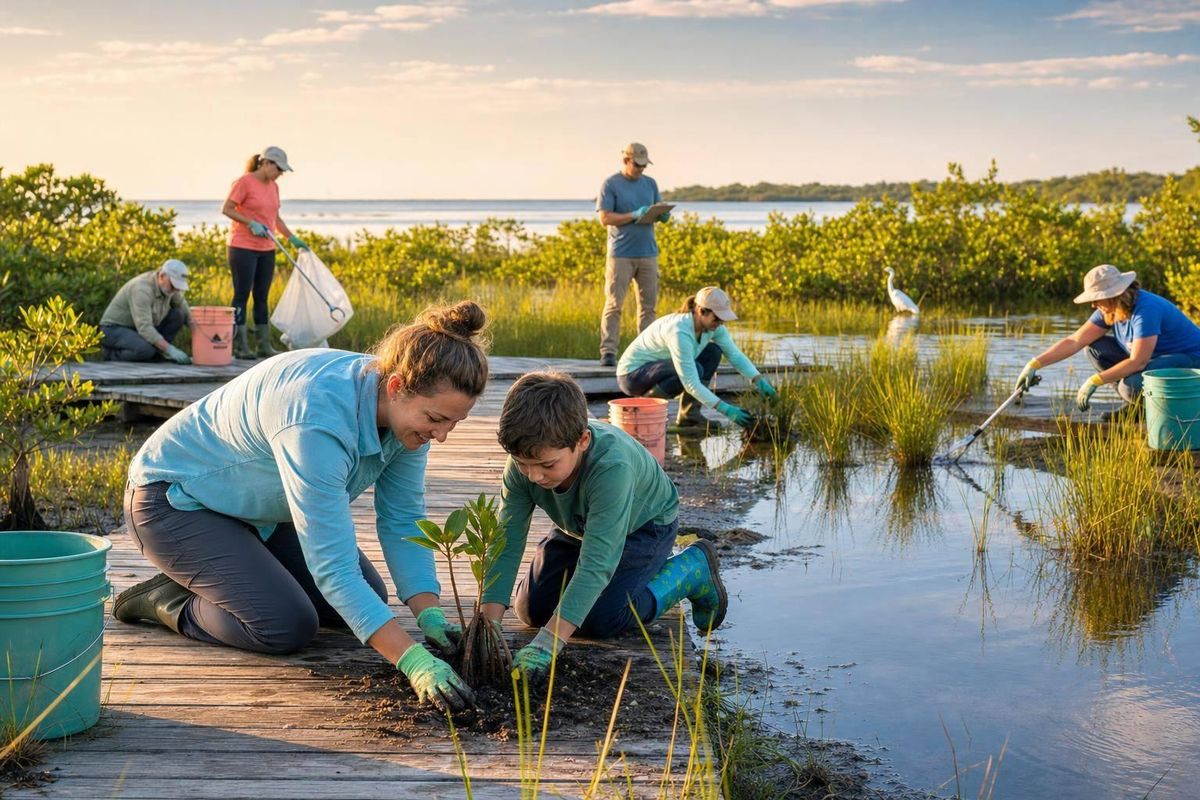
If I want to help Manasota wetlands, I have 7 clear options. The list covers Manatee County Parks and Natural Resources, Sarasota Bay Estuary Program, Suncoast Waterkeeper, Lemon Bay Conservancy, Around the Bend Nature Tours, Myakka River State Park, and Sarasota Audubon.
Here’s the short version:
- I can choose mud-and-water field work with county parks, Lemon Bay Conservancy, or Myakka River State Park.
- I can choose citizen science and monitoring with SBEP or Suncoast Waterkeeper.
- I can choose lighter public-facing roles with Around the Bend Nature Tours or Sarasota Audubon.
- Most events start early, often around 7:00 to 8:00 AM, and many run 1 to 3 hours.
- Common conditions include heat, mud, sun, bugs, and shallow water.
- Some roles are family-friendly, while others need snorkeling, boating, kayaking, or extra training.
- The article also points to smaller local groups worth watching, such as Manatee County Audubon, Sarasota Bay Watch, the Mangrove Chapter of the Florida Native Plant Society, and Friends of the Little Manatee River.
A few facts stand out. SBEP has helped restore more than 2,000 acres of wetlands, and one Manatee County workday planted nearly 10,000 native plants across 17.2 acres. So even one morning of volunteer time can add up.
Restoring Florida's Wetlands: Community Action at Rock Ponds 2025
sbb-itb-354efe9
Quick Comparison
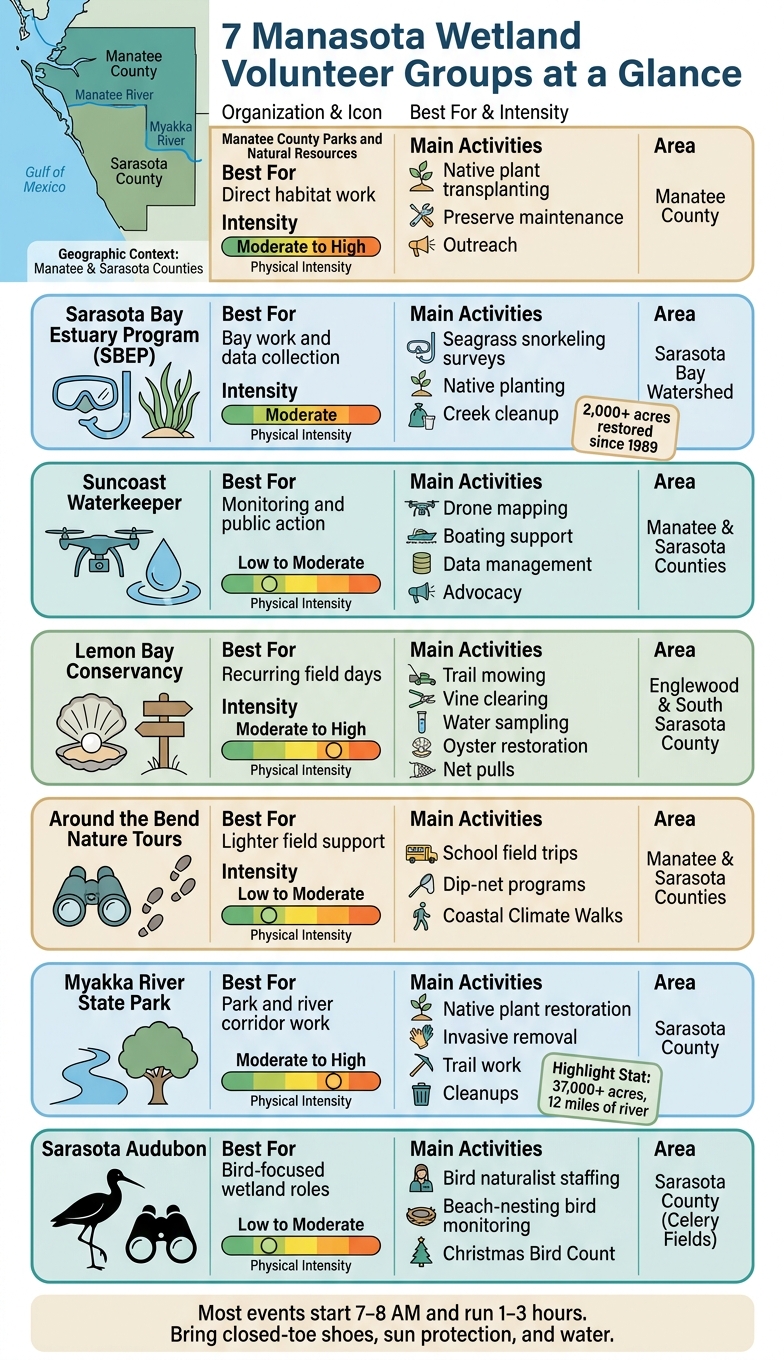
7 Manasota Wetland Volunteer Groups Compared
| Group | Best fit for | Main work | Effort level | Area |
|---|---|---|---|---|
| Manatee County Parks and Natural Resources | People who want direct habitat work | Planting, preserve work, outreach | Moderate to high | Manatee County |
| Sarasota Bay Estuary Program | People who want bay work and data collection | Seagrass surveys, planting, creek cleanup | Moderate | Sarasota Bay watershed |
| Suncoast Waterkeeper | People who prefer monitoring and public action | Drone mapping, boating support, data, reporting | Low to moderate | Manatee and Sarasota |
| Lemon Bay Conservancy | People who want repeat field days | Planting, trail work, water sampling, shell work | Moderate to high | Englewood and south Sarasota County |
| Around the Bend Nature Tours | People who want lighter field support | School trips, dip-net help, climate walks | Low to moderate | Manatee and Sarasota |
| Myakka River State Park | People who want park and river corridor work | Plant work, trail work, cleanup | Moderate to high | Sarasota County |
| Sarasota Audubon | People who want bird-focused wetland roles | Bird support, monitoring, count events | Low to moderate | Sarasota County |
If I were picking fast, I’d choose by location, type of work, and physical effort first. That makes the full article much easier to use.
What to Know Before You Volunteer in Manasota Wetlands
Before you pick a group, it helps to know what a wetland volunteer day usually looks like. In Manatee and Sarasota counties, these events are often hot, muddy, and physical. That can be part of the fun, but it also means you’ll want to choose a group that fits your comfort level.
Typical Conditions at Wetland Volunteer Events
Most events begin between 7:00 and 8:00 AM to avoid the worst of the heat. Even so, you should still expect full sun, heavy humidity, and standing water. In many spots, the ground is uneven, the trails are muddy, and the vegetation hangs low. That’s especially common in mangroves and salt marshes. Most volunteer sessions run 1 to 3 hours.
What to Wear and Bring
Dress for mess. Closed-toe shoes that can get wet and muddy work best, like mud boots or old sneakers. Lightweight long sleeves and long pants can help with sun and bugs, and you’ll also want a hat, sunscreen, and bug spray. Bring work gloves, eye protection if the group asks for it, and a reusable water bottle filled with water.
"This is wet and muddy work, in the hot sun and IN the water. Wear stuff you can get wet, closed toed shoes that can get very muddy, and sun protection." - Damon Moore, Division Manager – Ecological and Marine Resources, Manatee County Parks & NRD
Most groups provide tools on-site.
Age and Activity Expectations
A lot of these events welcome families and students. The Sarasota Bay Estuary Program's Eyes on Seagrass is open to students who need community service hours. But not every event is the same. Some restoration days are easygoing and family-friendly. Others call for kayaking, snorkeling, or harder physical work.
For example, seagrass monitoring includes snorkeling in water 2 to 5 feet deep. Some roles also call for extra skills, gear, or certifications. Before you sign up, check the event page for age minimums and any waiver forms.
With that in mind, the groups below differ a lot in location, workload, and skill level.
1. Manatee County Parks and Natural Resources
If you want the most direct, hands-on wetland work, start here. Manatee County Parks and Natural Resources runs volunteer roles at Robinson Preserve, Emerson Point Preserve, and Perico Preserve. The work focuses on coastal wetlands, mangroves, and tidal marshes.
The main volunteer job is habitat restoration, especially through the RIP Squad (Restoration in Progress). In that role, volunteers transplant native species such as salt marsh cordgrass (Spartina alterniflora) along exposed tidal shorelines. At one Robinson Preserve workday, volunteers transplanted nearly 10,000 native plants across 17.2 acres of restored estuarine habitat. That restored marsh is expected to turn into mangrove forest over time as tides bring in mangrove seeds.
There are other ways to help too. Volunteers also staff the NEST (Mosaic Center for Nature, Exploration, Science and Technology), assist with preserve maintenance, and support outreach.
For one-time workdays or student service hours, email ecoevents@mymanatee.org. No application is required. If you want an ongoing role, you’ll need to apply through Better Impact. Volunteers under 16 must have a parent or guardian present, and paddling programs are limited to people age 16 and up. You can also subscribe to the monthly EcoEvents newsletter to stay up to date.
If habitat work in the field sounds good, this is one of the clearest paths in Manatee County. If you’re more interested in water-quality monitoring and bay-wide restoration, the next group offers a different kind of role.
2. Sarasota Bay Estuary Program
If you want a bay-wide way to help, SBEP is a strong option. The Sarasota Bay Estuary Program works across the Sarasota Bay watershed in Sarasota and Manatee counties, with a focus on restoring wetlands, seagrasses, and water quality. Since it launched in 1989, SBEP has taken part in more than 200 habitat restoration or water quality projects and helped restore over 2,000 acres of intertidal and freshwater wetlands.
SBEP gives volunteers three main ways to get involved.
The first is Bay Guardians, which is the program's main hands-on track. Volunteers help with work like planting native species and cleaning tidal creeks. You don't need any past experience to join. Since 2003, Bay Guardians volunteers have logged more than 7,250 hours of restoration work.
If you'd rather help collect field data, Eyes on Seagrass is the citizen science option. It runs twice a year, in April and July, and asks volunteers to snorkel at set sites to measure seagrass and macroalgae coverage. That information feeds into the Sarasota Bay Ecosystem Health Report Card. For summer 2026, the sampling window runs from July 18 through August 2. You will usually need boat access to reach the sites. SBEP provides the sampling gear, and you bring a mask, snorkel, water shoes, and sun protection.
There's also room for people who want to help through outreach and public input. The Citizens Advisory Committee (CAC) brings together residents from Sarasota and Manatee counties to share community feedback and support bay recovery. SBEP also works with outreach volunteers who staff booths at local events and help spread the word about bay-friendly living.
To keep up with new volunteer dates, subscribe to the SBEP newsletter or call 941-955-8085. One upcoming event is a Bay Walk cleanup at 1500 Ken Thompson Pkwy on July 18, 2026. If you'd like a different kind of wetland project, the next group shifts from bay-wide work to a more local conservation setting.
3. Suncoast Waterkeeper
Suncoast Waterkeeper is a good fit for volunteers who care more about monitoring and public action than planting days. The group protects mangroves and bay wetlands through monitoring, advocacy, and enforcement across Manatee and Sarasota counties. A lot of its work focuses on Sarasota Bay, Palma Sola Bay, the Terra Ceia Aquatic Preserve, and sites like Robinson Preserve and Perico Preserve.
Its most specialized volunteer option is Mangrove Rangers. In this program, volunteers work in four-person teams made up of a licensed drone pilot, a boat owner, a spotter, and a data manager to map the health and extent of at-risk mangrove forests in Sarasota Bay and Palma Sola Bay. Field flights usually take place from May through early June, and volunteers need training before joining.
If you want to get involved in other ways, SCWK also has advocacy and reporting roles. For more hands-on work, the group joins partner planting and cleanup events around the bay.
You can also plug into advocacy through Voices for Water and report pollution through Eyes on the Suncoast. High school students have a path in through Environmental Ambassadors.
Sign up at suncoastwaterkeeper.org/volunteer or email swassmer@suncoastwaterkeeper.org.
4. Lemon Bay Conservancy
Lemon Bay Conservancy is a solid south-county choice if you want recurring field work. The group works to protect Lemon Bay and Gasparilla Sound through habitat restoration, water-quality work, education, and advocacy. Most volunteer activity happens at the 80-acre Lemon Creek Wildflower Preserve in Englewood, a former golf course that was restored into wetlands and uplands. The Conservancy has acquired more than 150 acres through purchases and donations and has also helped preserve more than 400 acres across the area.
There’s a good mix of hands-on outdoor work and seasonal monitoring. The Volunteer Work Crew meets every Tuesday and Thursday at 7:00 a.m. for planting, clearing invasive vines, mowing trails, and caring for butterfly habitat. Other options include Eyes on Seagrass, kayak-based water sampling, and Lemon BayWatch oyster-shell and clam restoration. Volunteers can also join monthly bird surveys and seasonal juvenile tarpon net pulls with FWC scientists from November through April.
To get started, fill out the volunteer form and waiver, or contact the office at 941-830-8922 or Chad Lyman at Chad@LemonBayConservancy.org. For field work, bring mud boots or waders, gloves, sunscreen, bug spray, and water.
5. Around the Bend Nature Tours
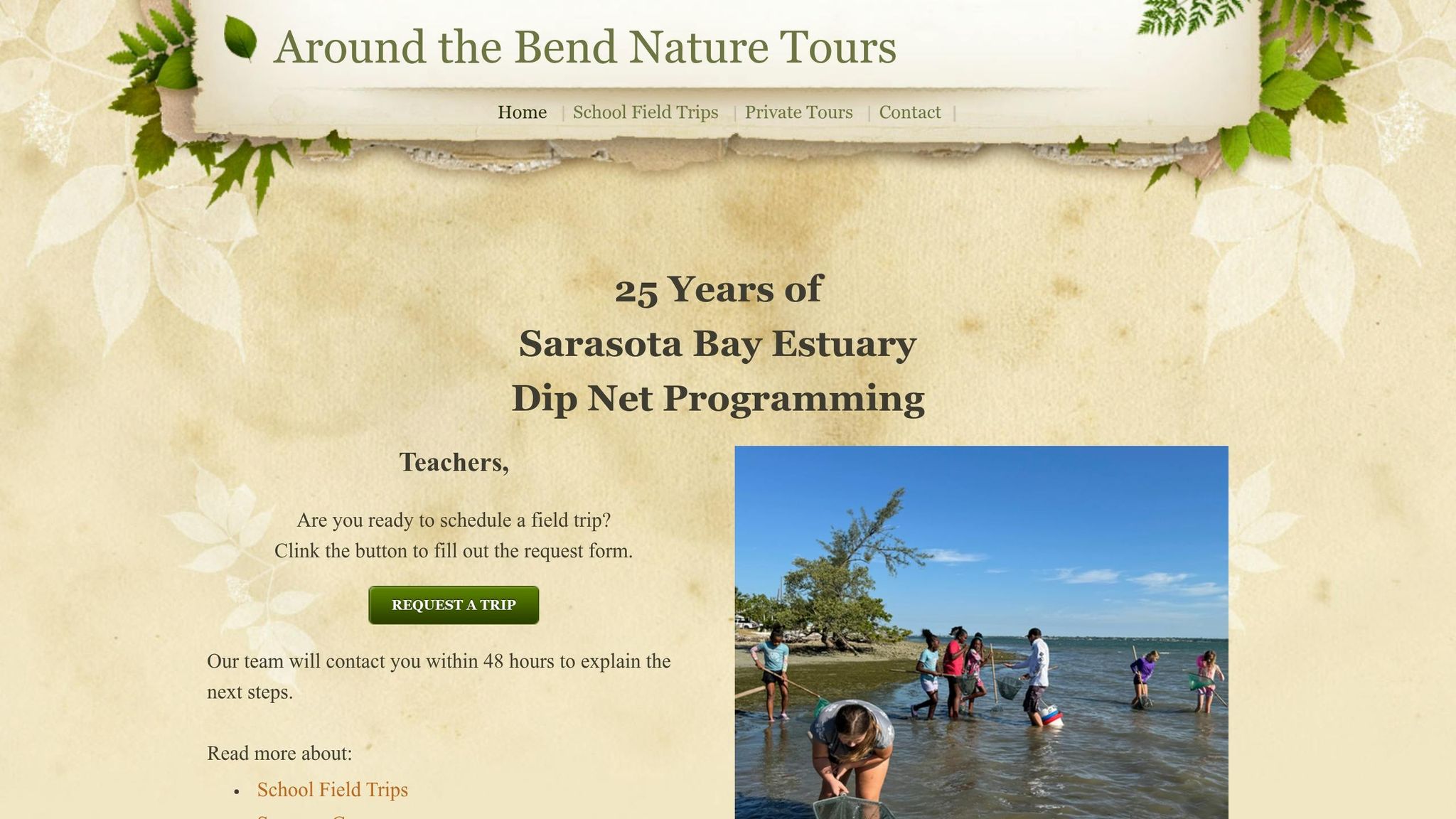
Around the Bend Nature Tours is a good pick if you want a lighter-duty way to help wetlands while learning in the field. The group uses field trips and interpretive programs to build public support for local wetlands in Manatee and Sarasota counties.
Its programs cover Sarasota Bay grass flats, mangroves, seagrass beds, and inland wetlands like The Celery Fields and Red Bug Slough. That local focus also shapes its volunteer work. The Sarasota Bay dip-net program has been running for 25 years. The group also leads Coastal Climate Walks at seven locations, with a focus on sea-level rise, coastal resilience, and watershed health.
Volunteers help with school field trips, dip-net programs, and Coastal Climate Walks. To get involved, contact John at ATBNature@gmail.com or 794-8773. You can also check the website for Coastal Climate Walk dates. Wear walking shoes and clothing that fits the weather.
6. Myakka River State Park
Myakka River State Park covers more than 37,000 acres of wetlands, prairies, hammocks, and pinelands in Sarasota County. It also includes 12 miles of the Myakka River.
The park works with about 100 active volunteers each year, and Friends of Myakka River helps organize much of that effort. The group also provides uniforms and radios for official volunteers.
Volunteer jobs can include native plant restoration near Upper Myakka Lake and the former Down's Dam site, invasive plant removal, trail work, and cleanups. This is hands-on outdoor work. The terrain can be uneven and muddy, and some work sites are remote with no restrooms.
You’ll need closed-toe shoes and long pants, and for full-day shifts you should bring water and lunch.
To get involved, contact the park or email Friends of Myakka River at info@friendsofmyakkariver.org for restoration and park stewardship opportunities.
If you'd rather help in a smaller role with more of a birding angle, the next group may be a better fit.
7. Sarasota Audubon
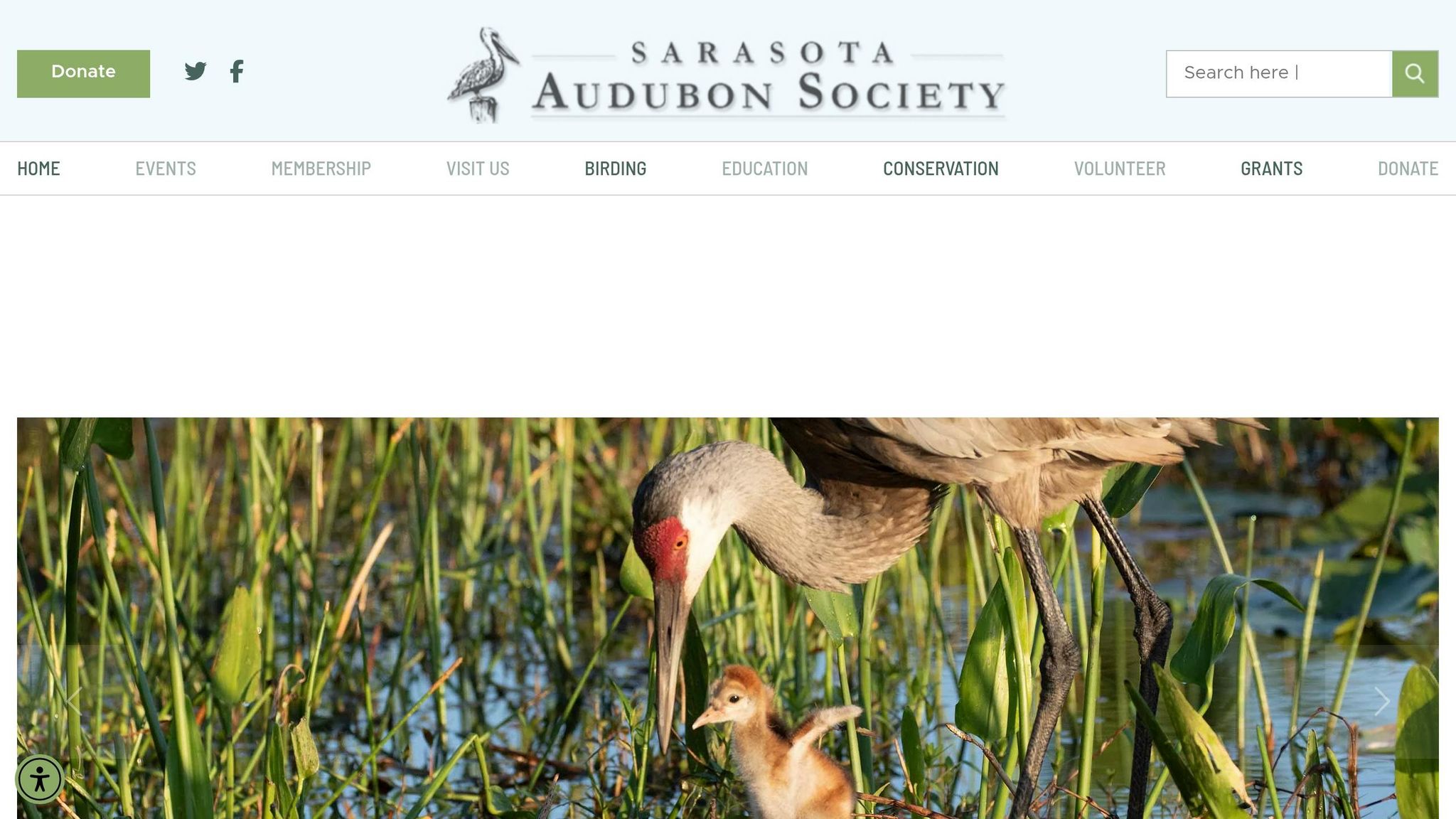
If you want a wetland volunteer role with a strong bird focus, Sarasota Audubon centers much of its work on the Celery Fields. The group works to conserve and restore habitat for birds and other wildlife, and the Celery Fields are its main wetland focus. This restored wetland also helps support water quality and flood protection.
One project now in motion is the Re-Wilding the Quad Parcels initiative. In January 2025, SAS, Big Waters Land Trust, and Sarasota County started turning three parcels at the Celery Fields into habitat for imperiled birds and bats. The plan also includes ADA-compliant paths and a viewing boardwalk.
Volunteer options include helping as a Bird Naturalist at the Celery Fields, monitoring beach-nesting birds, or pitching in with the annual Christmas Bird Count. To get started, contact Volunteer Coordinator Kim Sullivan through the SAS website. Most roles don't require advanced birding knowledge, and training is provided.
Other Wetland and Waterway Groups Worth Watching
If you want narrower, repeat volunteer roles, these smaller groups are worth watching. Some focus on very specific parts of wetland and waterway care that bigger groups don't always handle.
Manatee County Audubon Society and Felts Audubon Preserve
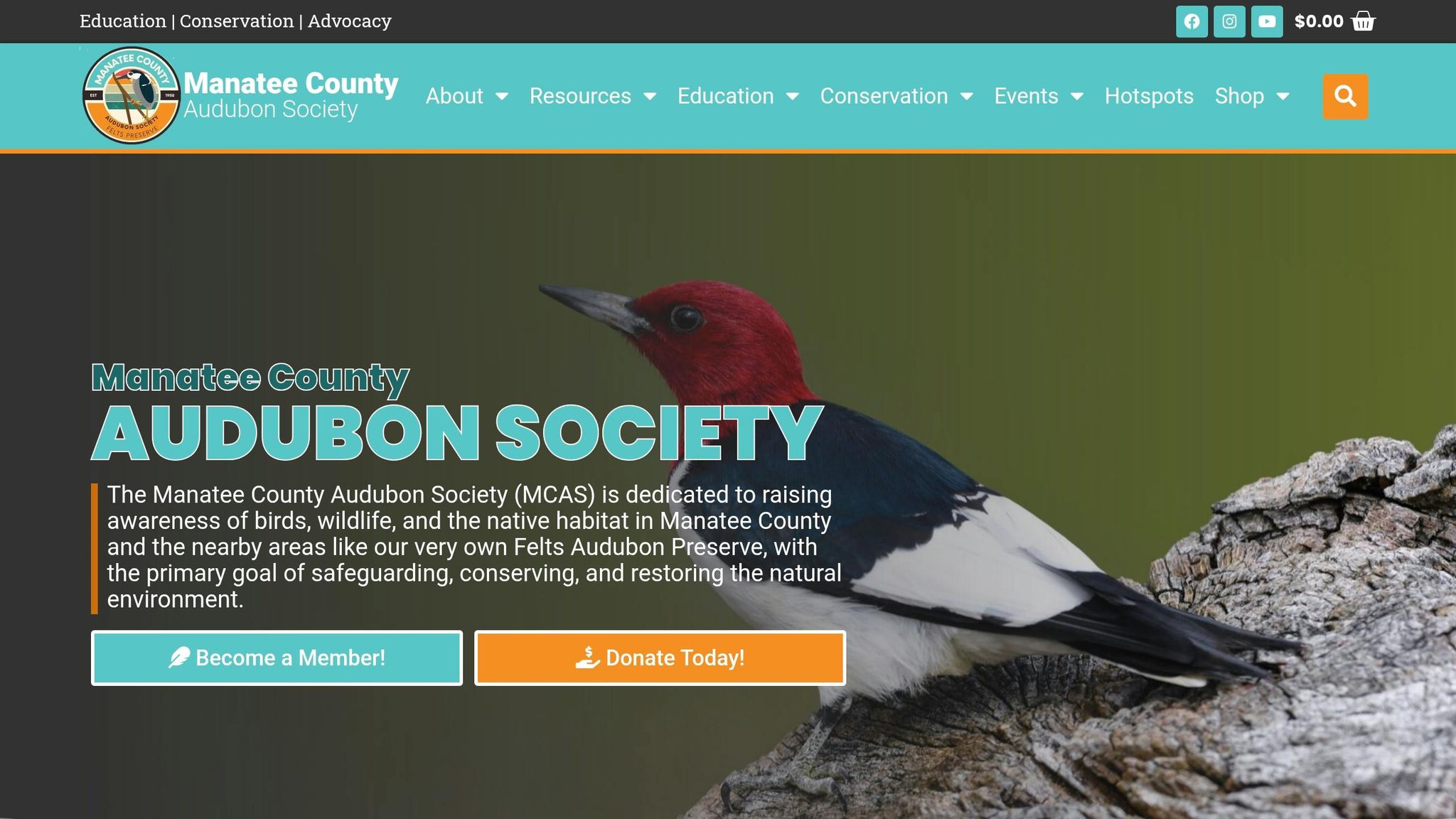
Manatee County Audubon Society stewards Felts Audubon Preserve in Palmetto and hosts monthly Conservation Days for trail work and invasive removal. These Conservation Days take place on the last Saturday of every month from 8:00 a.m. to 11:00 a.m.
"Our mission is to protect, preserve, and restore the natural environment by creating an awareness and appreciation of birds, wildlife, and our native habitat in Manatee County." - Manatee County Audubon Society
Volunteer roles include invasive plant removal, native plant care, and other invasive removal work at Felts Audubon Preserve.
If you want more specialized habitat work, a few regional partners fill in the gaps that larger groups often leave open.
Regional Restoration Partners
Some niche groups focus on shellfish, native plants, and river corridors.
- Sarasota Bay Watch focuses on shellfish restoration, especially native Southern Hard Shell Clams, to help improve water filtration. The group also works on island restoration at sites like Jim Neville Marine Preserve and organizes cleanups with divers and shoreline volunteers.
- The Mangrove Chapter of the Florida Native Plant Society serves southern Sarasota County, with a focus on mangrove forest preservation and native plant education.
- Friends of the Little Manatee River supports the conservation of the Little Manatee River corridor through invasive species removal and wildlife protection.
These groups make the most sense if you have a specific interest and want work that lines up more closely with your location, schedule, and physical comfort.
How to Pick the Right Volunteer Role
With so many groups in Manatee and Sarasota counties, it helps to narrow things down by location, type of work, and schedule. That makes the list a lot less overwhelming. You can zero in on the group that fits your time, energy, and how far you're willing to drive.
Choose by Location and Habitat
If two groups seem close on paper, start with where they work. Pick the habitat first, then line it up with the group that works there.
Manatee County Audubon is a fit for inland preserve work. Sarasota Bay Watch focuses on island restoration. Lemon Bay Conservancy is tied to south-county wetlands. And the Mangrove Chapter serves southern Sarasota and Charlotte County.
That one step can save you a lot of second-guessing. If you already know you want to work in a preserve, on an island, or in wetlands, your shortlist gets much smaller right away.
Choose by Type of Work
Wetland volunteering isn't one-size-fits-all. Some roles are physical and muddy. Others are more about observation, tracking, and reporting.
Hands-on restoration is a fit for volunteers who are okay with kayaking, digging, and planting. Sarasota Bay Watch is the clearest example of that kind of role. If you'd rather collect information than haul gear, monitoring and citizen science may be a better match. Eyes on Seagrass is a good fit for people who prefer citizen science over physical labor.
There are also education and outreach roles. Manatee County Audubon recruits bird walk guides, blog contributors, and volunteers for governmental outreach.
Choose by Schedule and Physical Demand
Some groups work best for people who want a set routine. Recurring weekday crews can give you that. If weekends are easier, Manatee County Audubon holds monthly Saturday conservation work days at Felts Preserve. If you're looking for something short and seasonal, Suncoast Waterkeeper's Mangrove Rangers program runs in May and June.
Before you commit, check the physical side of the role too. A volunteer day can mean anything from planting in the heat to helping with data.
| Organization | Activity | Physical Demand |
|---|---|---|
| Sarasota Bay Watch | Island restoration (kayaking, digging, planting) | High |
| Sarasota Bay Estuary Program | Eyes on Seagrass (snorkeling) | Moderate |
| Suncoast Waterkeeper | Drone spotting, data management | Low |
High-demand roles usually involve kayaking and planting. Lower-demand roles tend to focus on surveys, spotting, and data.
Use the table below to compare the best fit at a glance.
Quick Comparison Table
After the full profiles above, this table makes the differences easier to compare. It gives you a fast way to scan the seven groups by habitat, volunteer work, and effort level.
| Organization | Primary Habitat | Volunteer Activities | Physical Intensity | Area Served |
|---|---|---|---|---|
| Manatee County Parks and Natural Resources | Coastal wetlands and tidal marshes | Native plant transplanting, preserve maintenance, outreach staffing | Moderate to High | Manatee County preserves |
| Sarasota Bay Estuary Program | Seagrass beds and tidal creeks | Seagrass snorkeling surveys, native planting, tidal creek cleanup | Moderate | Sarasota Bay watershed |
| Suncoast Waterkeeper | Mangrove forests | Drone mapping, boating, data management, advocacy | Low to Moderate | Manatee and Sarasota county coastlines |
| Lemon Bay Conservancy | Restored wetlands and estuaries | Trail mowing, vine clearing, water sampling, oyster restoration, net pulls | Moderate to High | Englewood and south Sarasota County |
| Around the Bend Nature Tours | Seagrass beds, mangroves, and inland wetlands | School field trip support, dip-net programs, Coastal Climate Walks | Low to Moderate | Manatee and Sarasota counties |
| Myakka River State Park | Freshwater wetlands, prairies, and river corridor | Native plant restoration, invasive removal, trail work, cleanups | Moderate to High | Sarasota County |
| Sarasota Audubon | Restored freshwater wetlands and bird habitat | Bird naturalist staffing, beach-nesting bird monitoring, Christmas Bird Count | Low to Moderate | Sarasota County, centered on the Celery Fields |
Conclusion
These seven groups show there’s more than one way to help Manasota wetlands.
A good place to start is the group closest to you. From there, look for work that fits your schedule and your physical comfort level. Even small volunteer efforts can make a measurable difference. One morning of work may not seem like much, but those small actions stack up across wetlands, creeks, and preserves.
The easiest next step is simple: choose one group and sign up for a single event. Pick the one that fits your location, schedule, and energy level, then show up once. If it feels like a good fit, come back when you can.
FAQs
Which group is best for beginners?
For beginners, Suncoast Waterkeeper’s Mangrove Rangers is a strong place to start. It welcomes volunteer spotters, and no prior experience is required.
The Mangrove Chapter of the Florida Native Plant Society is also a good fit for newcomers. It offers free monthly meetings and public nature walks, which give people a simple way to learn about local ecosystems.
Do I need my own gear or training?
It depends on the group and the project. Many organizations give volunteers the tools they need, along with on-site planting guidance, so no prior experience is needed.
That said, some roles may ask you to bring your own gear, like mud boots, waders, or gloves. More specialized roles can also call for certain qualifications, while spotter roles often need no experience at all. Check the event details before you arrive.
Are any of these roles family-friendly?
Yes. Several options work well for families and young people.
The Manatee County Audubon Society offers youth programs and family education event roles, and the Sarasota Audubon Society hosts nature walks for both kids and adults.
Some other groups, like Mangrove Rangers or salt marsh restoration projects, may involve more specialized tasks, boating, or muddy physical work.
The Florida Native Plant Society also welcomes the public to meetings and field trips.