Astronomy Nights at The Bishop Museum
Hands-on planetarium shows and free outdoor telescope nights that make stargazing accessible for families and beginners.
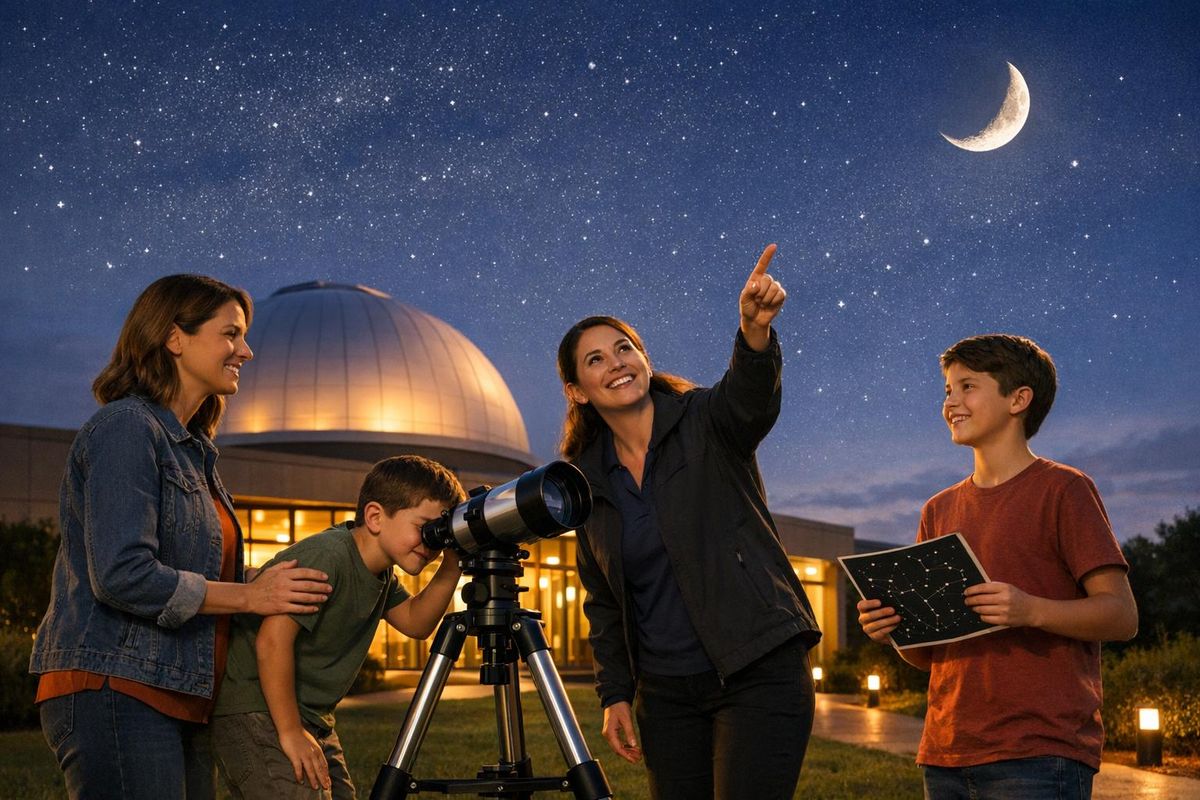
Astronomy Nights at The Bishop Museum offers a chance to experience the wonders of space through planetarium shows, telescope sessions, and celestial events. Located in Bradenton, Florida, the museum provides programs for all ages, combining indoor and outdoor activities to explore stars, planets, and galaxies. Here’s what you can expect:
- Planetarium Programs: The 50-foot full-dome theater hosts shows like Stelliferous (monthly night sky tours) and Eyes on the Sky (current celestial highlights).
- Outdoor Stargazing: Seasonal Sidewalk Astronomy events let you observe the night sky through high-quality telescopes.
- Special Events: Themed nights and celebrations, such as Astronomy Day and celestial phenomena parties, bring extra excitement.
- Affordable Pricing: Many events are free or start at $5, with discounts for museum members.
Whether you’re new to astronomy or a seasoned stargazer, The Bishop Museum offers engaging ways to connect with the cosmos. Check the schedule for upcoming events and plan your visit today!
The Bishop's Planetarium and Night Sky Programs
The Bishop Planetarium: What's Inside
At the heart of The Bishop Museum's astronomy offerings is its 50-foot full-dome theater, an immersive space that brings the night sky to life in extraordinary detail. This isn't just about cutting-edge technology - it's about creating an experience that feels both personal and unforgettable. The theater, with forward-facing seating originally designed by founder Dr. W.D. Sugg in 1966, has been a cornerstone of the museum's programming. Since its 2005 reopening, it has hosted a variety of events, from live guided sky tours to the electrifying Laser Light Nights, which combine laser projections with music and sound for a truly dynamic show.
"The combination of our system and the size of our dome enables us to recreate a breathtaking, dark‑sky environment." - The Bishop Museum of Science and Nature
For those who prefer a more interactive approach, the Eyes on the Sky program offers a unique opportunity. Held on Fridays and Saturdays at 2:30 PM, this session features a Planetarium Educator who guides visitors through celestial objects currently visible in the local night sky. Guests are encouraged to ask questions, making this a highly engaging and educational experience.
But the museum's celestial adventures don't stop at the dome.
Outdoor Stargazing: Sidewalk Astronomy and Telescope Nights
In addition to the planetarium's indoor programs, The Bishop Museum brings astronomy outdoors with telescope sessions held on the Riverside Plaza. These events, organized in collaboration with the Local Group of Deep Sky Observers (LGDSO), provide visitors with the chance to view planets, moons, and other deep-sky wonders through high-quality telescopes. Typically scheduled during the fall, winter, and spring - when Florida's skies are clearest - these sessions are often free, making them a fantastic option for families and anyone curious about the night sky in the Bradenton and Sarasota areas.
Whether you're gazing through a telescope or reclining under the planetarium's dome, The Bishop Museum offers countless ways to connect with the cosmos.
sbb-itb-354efe9
Astronomy Programs at The Bishop
The Bishop Museum offers a variety of astronomy programs that bring the wonders of the cosmos closer to visitors, both indoors and outdoors. These recurring events provide unique opportunities to explore the universe in engaging ways.
'Stelliferous': Monthly Planetarium Nights
One of the museum's standout programs, Stelliferous, takes place on the fourth Wednesday of each month at 7:00 PM in the 50-foot full-dome theater. This immersive event goes beyond typical telescope nights by offering a guided planetarium experience. Each one-hour session combines a live tour of the night sky with updates on the latest astronomical discoveries. Educators lead attendees through seasonal constellations and deep-sky objects, often incorporating stunning visuals, including images from the James Webb Space Telescope, to captivate both newcomers and seasoned stargazers.
Every month, Stelliferous features a specific theme, adding variety to the experience. For example, "Ancient Skies – Maya Astronomy" (November 2025) explored the mythology and astronomical knowledge of the Maya civilization, while "Astronomy in a Galaxy Far, Far Away" (May 2026) used the planetarium’s digital capabilities to simulate alien worlds, delighting fans of science fiction. This event was led by Planetarium Supervisor Hannah Sparkes, who brought a pop-culture twist to the evening.
Doors open at 6:30 PM, and tickets are $15 for adults and $5 for non-members under 17. Museum members enjoy discounted rates of $10 and $3, respectively. Seating is limited, so preregistration is required.
For those who prefer stargazing under the open sky, the museum also hosts outdoor programs.
Sidewalk Astronomy and Telescope Viewing
During the cooler months of fall, winter, and spring, the museum takes astronomy outdoors to Riverside Plaza. These seasonal events allow guests to observe celestial objects like the Moon, planets, star clusters, and nebulae through telescopes. Sessions typically run from 7:00 PM to 11:00 PM and are free to attend.
After enjoying the outdoor telescope views, visitors can head inside for feature shows like Forward! To The Moon or Mars: The Ultimate Voyage. These shows are available for $5 per ticket, though members can attend for free. The addition of hands-on activity tables makes these evenings especially appealing to families looking for an educational and fun night out.
Themed Nights and Celestial Event Parties
The museum also organizes special events to celebrate significant astronomical phenomena. For instance, the "Kōkō a Makaliʻi" event on May 20, 2026, featured a live performance and a planetarium-guided exploration of the Pleiades star cluster. Attendees also learned about traditional celestial navigation from Hōkūleʻa navigator Kaʻiulani Murphy, who introduced the audience to the Kaiwikuamoʻo star line.
"Astronomy Day 2026 is a global celebration dedicated to 'Bringing Astronomy to the People,' inviting communities to experience the wonder of space in engaging and accessible ways." - Hannah Sparkes, Planetarium Supervisor, The Bishop Museum of Science and Nature
Learning Opportunities for All Ages
In addition to its fascinating planetarium shows, The Bishop Museum provides a variety of educational programs designed to engage learners of all ages. Each program aligns with the museum's mission to make astronomy accessible and enjoyable for everyone.
Astronomy for Beginners and Families
One of the standout offerings is The Stars Tonight, a monthly planetarium show held on the third Friday of each month. A live guide walks attendees through the seasonal stars, planets, and other celestial highlights during this hour-long session. During solstice and equinox months, the program includes Trivia Dome, which features a 6:15 PM family-friendly session followed by a 7:30 PM version tailored for astronomy enthusiasts.
After the planetarium shows, attendees can participate in a post-show stargazing session. This hands-on experience allows beginners to use telescopes and ask questions, making it a great introduction to practical astronomy.
"Our daily programs offer a diverse range of activities designed to engage visitors of all ages and interests. Whether you're fascinated by the stars or intrigued by Hawaiian culture, our programs provide enriching experiences." - Bishop Museum
For those eager to learn about celestial navigation and indigenous stargazing traditions, the museum offers advanced programs that delve deeper into these topics.
Deeper Learning for Astronomy Enthusiasts
For more experienced learners, the museum hosts specialized programs that explore advanced topics in astronomy and navigation. The Navigating by the Stars series, held quarterly in February, May, August, and November, provides an in-depth look at celestial navigation and Hawaiian star lines. These sessions are led by expert instructors, including educators from Honolulu Community College Hoʻokele and navigators from Hōkūleʻa.
Another highlight is the full-dome program Wayfinders: Waves, Winds, and Stars. Created in collaboration with the Polynesian Voyaging Society and 1001 Stories, this program dives into the science behind traditional Pacific navigation without instruments. Additionally, select Sidewalk Astronomy events allow participants to observe deep-sky objects through high-powered telescopes, guided by specialists.
Resources for Schools and Homeschoolers
The museum also caters to school groups and homeschoolers with its Museum After Dark program. This initiative offers private planetarium shows and hands-on activities for groups ranging from 10 to 60 participants. These sessions run from 6:00 PM to 9:00 PM on select evenings and can include scavenger hunts designed to reinforce STEM concepts.
For educators and at-home learners, the museum provides downloadable tools like sky maps, moon phase calendars, and sunrise/sunset tables to support astronomy education. Visitors to the J. Watumull Planetarium lobby can also explore interactive tools, such as the Nā Lālani Hōkū sand table and the Kilo Hōkū video display, which teach sky patterns and the Hawaiian Star Compass.
Teachers and students can even reach out directly to the planetarium staff with astronomy or earth science questions by emailing planetarium@bishopmuseum.org. Over the past 60 years, the J. Watumull Planetarium has hosted more than 6,000,000 visitors and now serves approximately 70,000 people annually.
Planning Your Visit to Astronomy Nights
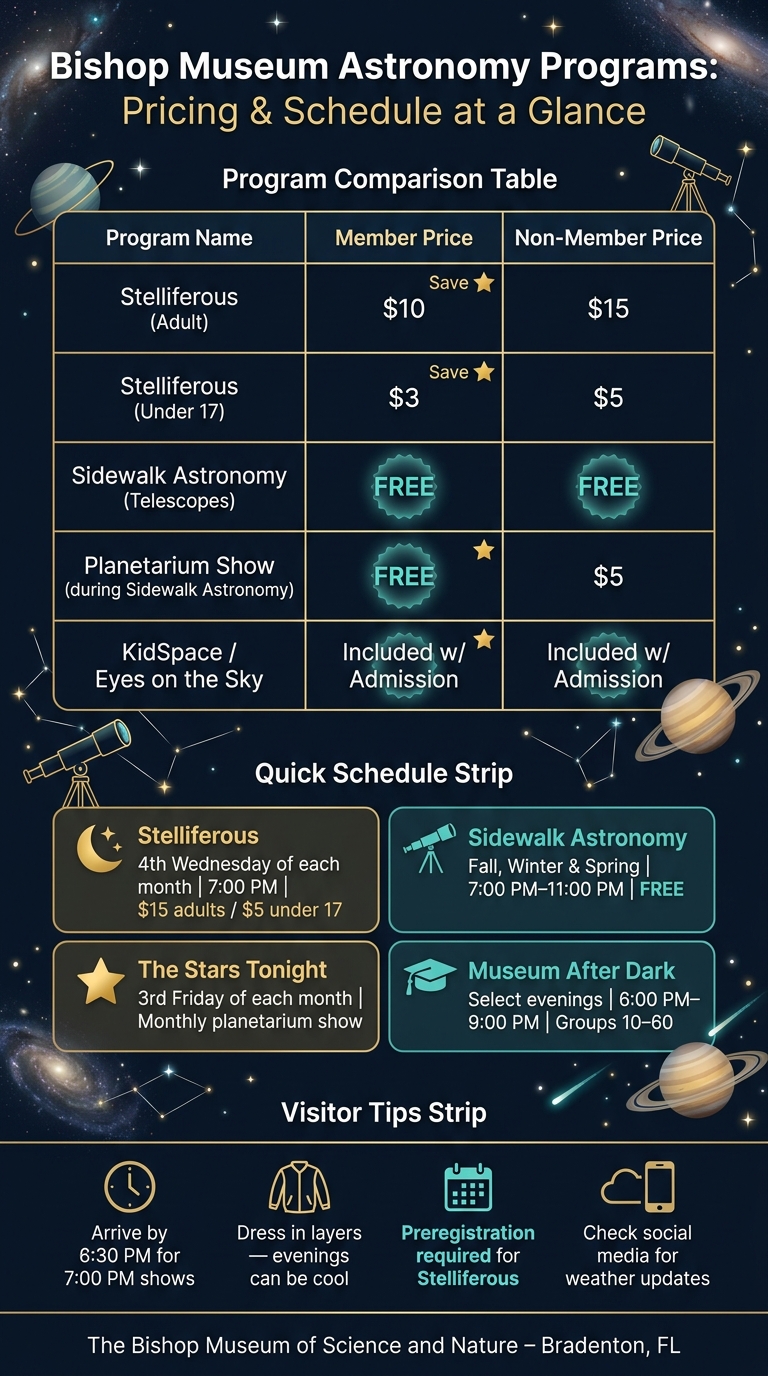
Bishop Museum Astronomy Programs: Pricing & Schedule at a Glance
Best Times to Attend and Seasonal Sky Highlights
The Bishop Museum’s outdoor Sidewalk Astronomy events are scheduled during the fall, winter, and spring months - when the skies are typically clearest. These events run from 6:00 PM to 10:00 PM during the cooler months and extend to 7:00 PM to 11:00 PM in the spring. A standout date to keep in mind is International Astronomy Day in April (e.g., April 25, 2026), which features all-day activities and free planetarium shows included with general admission. Planning around these seasonal highlights ensures you’ll get the best experience.
Tickets, Pricing, and Membership Benefits
Knowing the pricing and membership perks can help you plan ahead. Here’s a breakdown of the costs for various programs:
| Program | Member Price | Non-Member Price |
|---|---|---|
| Stelliferous (Adult) | $10 | $15 |
| Stelliferous (Under 17) | $3 | $5 |
| Sidewalk Astronomy (Telescopes) | Free | Free |
| Planetarium Show (during Sidewalk Astronomy) | Free | $5 |
| KidSpace / Eyes on the Sky | Included with admission | Included with admission |
Museum members enjoy free access to Stelliferous programs, while non-members are charged $5 per ticket. Preregistration is required for Stelliferous, and tickets can be purchased online through the museum’s website. Keep in mind that refund requests must be made at least 48 hours before showtime - refunds or exchanges aren’t available after that.
Tips for a Good Visit
Here are some practical suggestions to make the most of your Astronomy Nights:
- Arrive early: For evening programs, aim to get there by 6:30 PM to secure seating for the 7:00 PM start.
- Dress appropriately: Evenings can be cool and breezy, especially in winter, so dress in layers to stay comfortable.
- Know what’s open: During Sidewalk Astronomy events, the main museum building and the Parker Manatee Rehabilitation Habitat are closed.
- Food and drinks: Local vendors such as FEWD Tent and Edible Cookie Dough Cafe are on-site, and there’s a cash bar offering beer and wine.
- Service animals only: Only service animals are allowed at these events.
- Weather updates: Outdoor viewing may be postponed due to bad weather, so check the museum’s social media channels for updates before heading out.
Conclusion: See the Night Sky at The Bishop Museum
Step into a world of celestial wonders with live planetarium shows and outdoor telescope sessions at The Bishop Museum of Science and Nature. Perfect for beginners, families, or seasoned astronomy fans, the museum brings planets, moons, and deep-sky objects into sharp focus.
The museum’s programs reflect a dedication to making astronomy accessible to everyone. As Planetarium Supervisor Hannah Sparkes says: "Bringing Astronomy to the People." This mission comes alive in events like the free Sidewalk Astronomy sessions at Riverside Plaza and the engaging Stelliferous series, held every fourth Wednesday of the month.
Whether you're a lifelong stargazer or just beginning to explore the cosmos, The Bishop Museum invites everyone to experience the universe up close. If you’re in Bradenton, Sarasota, Lakewood Ranch, or a nearby area, it’s the perfect spot to combine hands-on science with the beauty of the night sky.
Check the schedule for upcoming Sidewalk Astronomy events and follow the museum on social media for updates. The wonders of the universe are waiting for you at The Bishop Museum.
FAQs
What should I bring to a Sidewalk Astronomy night?
You don’t need to bring any special gear to enjoy Sidewalk Astronomy nights at The Bishop Museum of Science and Nature. The Local Group of Deep Sky Observers provides the telescopes, so everything you need to gaze at the stars is already covered. If you’re feeling hungry or thirsty, local vendors will be on-site offering food, drinks, and even wine and beer for purchase - just make sure to bring a payment method. The event is held at Riverside Plaza, making it a convenient and fun outing.
What happens if clouds or rain cancel telescope viewing?
If clouds or rain interfere with telescope viewing, sessions can often be rescheduled to provide the best stargazing experience. Meanwhile, indoor planetarium shows usually continue as planned, no matter the weather. To discover more about science events and community programs in the Manatee and Sarasota area, check out resources that showcase the region's distinctive offerings.
Which program is best for first-time stargazers?
Sidewalk Astronomy at The Bishop Museum of Science and Nature offers an inviting way for first-time stargazers to explore the cosmos. These free, seasonal events - held in fall, winter, and spring - let participants view planets and deep-sky objects through professional telescopes. Operated by the Local Group of Deep Sky Observers, this experience provides a chance to marvel at the night sky while mingling with others in the community.