How to Fish in Englewood: Tips for Beginners
Beginner-friendly shore and inshore fishing tips — gear, bait, best spots, techniques, and local Florida regulations.
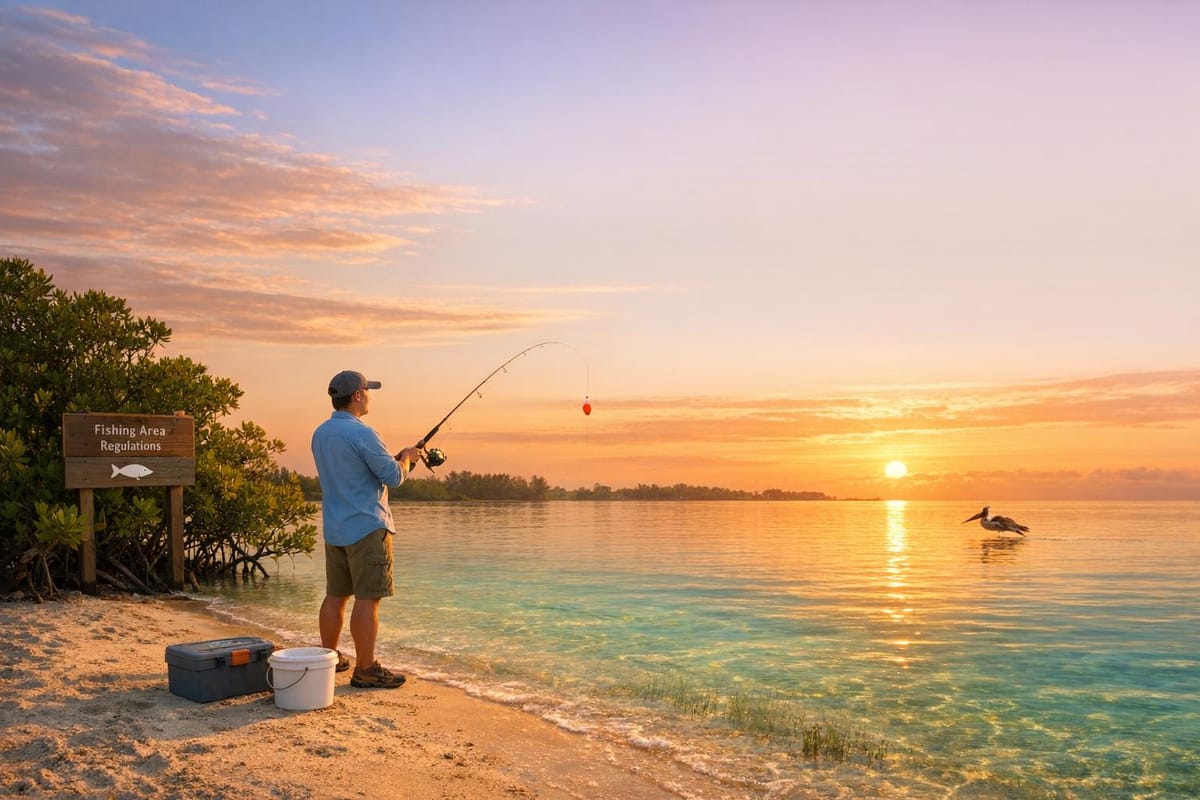
Fishing in Englewood, Florida, offers a perfect starting point for beginners. With accessible spots like Lemon Bay, Ainger Fishing Pier, and Englewood Beach, you don’t need a boat to get started. The area is home to over 250 fish species, including Snook, Redfish, and Spotted Seatrout, with plenty of year-round opportunities.
Here’s what you need to know:
- Gear: Start with a 6–7 ft spinning rod, 2000–4000 size reel, and a 10–20 lb test line. Costs range from $80–$150.
- Bait: Live shrimp works best for most species. Use wire leaders for fish like Spanish mackerel.
- Fishing Spots: Ainger Pier (24/7 access), Englewood Beach, and Lemon Bay offer great options for beginners.
- Techniques: Use live bait for shore fishing or gold spoons for inshore casting. Bottom fishing works well for species like Sheepshead and Grunts.
- Regulations: Get a Florida saltwater fishing license. Follow size and bag limits for species like Redfish (18–27 inches, 1 per person) and Snook (28–33 inches, 1 per person).
Englewood’s fishing community emphasizes ethical angling and proper handling of fish. Always check local rules and seasons before heading out. Whether you’re casting from a pier or wading in Lemon Bay, Englewood’s waters promise a rewarding experience for new anglers.
Fishing Gear for Beginners
Rod and Reel Setup
If you're just starting out, go with a spinning rod and reel combo. It's easier to use and helps minimize tangles, making it perfect for beginners. A 6–7 foot rod with medium power and fast action is a great choice. This type of rod provides the sensitivity needed to detect light bites while still offering enough strength to handle species like Snook, Red Drum, and Spotted Seatrout. Pair it with a spinning reel in the 2000–4000 size range, spooled with a 10–20 lb test line. While a lighter 6–8 lb line works fine in freshwater, Englewood's inshore saltwater species demand something stronger.
Make sure your reel has a smooth drag system. A jerky or sticky drag can snap your line when you're battling larger fish. A solid beginner setup - including the rod, reel, line, and some basic tackle - usually costs between $80 and $150. After each saltwater fishing trip, rinse your gear thoroughly with fresh water to prevent corrosion. Once your rod is ready, you'll need a well-stocked tackle box to complete your setup.
Terminal Tackle Basics
Keep your tackle box simple and practical. Use small hooks (size 6 or smaller) to target fish like mullet and reef species. If you're after Spanish mackerel, don't forget to include wire leaders in your kit - these fish have razor-sharp teeth that can slice through regular monofilament in no time. You’ll also want a few sinkers for bottom fishing and some small bobbers for suspending bait near the surface. When fishing in areas with a hard bottom, make sure to use enough weight to keep your line from snagging.
Local tackle shops in Englewood are a great resource - they're staffed by experienced anglers who can guide you on what works best in the area. Once your tackle is sorted, it’s time to pick the right bait or lure.
Bait and Lure Options
Live shrimp is a go-to bait for nearly every species in the area and is hard to beat for its effectiveness. Small pinfish, whether used whole or cut, are excellent for catching Snook, Red Drum, and Spotted Seatrout. For Spanish mackerel, try casting small silver spoons paired with a wire leader. While artificial lures can be fun, bait often delivers more consistent results, especially for beginners.
One important note: using any part of a Black Bass (Largemouth bass) as bait is against Florida regulations, so steer clear of that. If you're wading in Lemon Bay, it's smart to wear lace-up sneakers. They'll stay on in the mud and protect your feet from stingrays, oysters, and sharp pen shells.
Englewood Inshore Fishing
Where to Fish in Englewood
Englewood offers a variety of fishing spots that cater to beginners, each with its own challenges and fish species. Whether you're casting from a pier, exploring the open beaches, or venturing into the bays, there's plenty to discover.
Fishing Piers and Bridges
Ainger Fishing Pier Park is one of the best spots for beginners in Englewood. Located at 1385 Beach Road, this T-shaped pier is open 24/7 and offers free access, fish-cleaning stations, portable toilets, and limited parking. While you'll need to bring your own seating, the pier provides a great opportunity to target species like snook, redfish, mangrove snapper, and sheepshead. For snook, a 7–8-foot medium-heavy spinning rod is ideal, while a medium-action rod works well for redfish and snapper. Seasonal tips: winter is perfect for sheepshead and black drum, while mangrove snapper are more active during the summer months.
If you’re ready to explore beyond piers, Englewood’s coastal areas offer even more fishing opportunities.
Englewood Beach
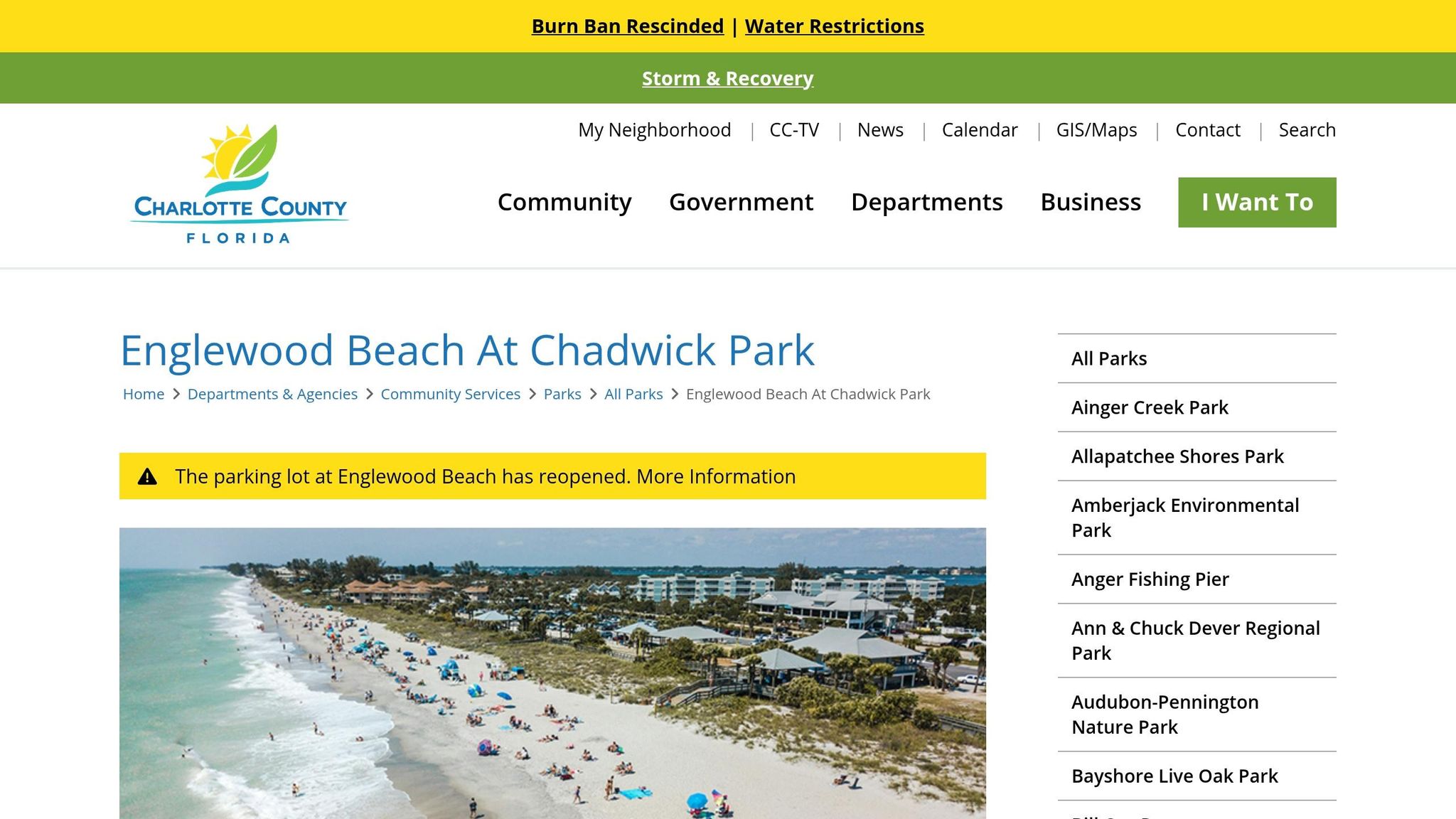
Englewood Beach is another excellent option, offering miles of open coastline for shore fishing. Accessible through Charlotte County Park, Stump Pass State Park, and Blind Pass, this stretch of beach is home to species like kingcroaker, ladyfish, and Spanish mackerel. For pompano, aim for fall through spring, while Spanish mackerel are most active from winter to early summer. If you need bait, tackle, or fuel, Manasota Key Marina at 1450 Beach Road is conveniently located nearby.
Lemon Bay and Nearby Waters
Spanning about 30 miles, Lemon Bay is a hotspot for fishing enthusiasts, hosting over 250 fish species. Rated 4.7/5 by Fishbrain users, it’s a top choice for targeting grass flats, mangrove edges, and oyster beds. These areas are prime for catching snook, redfish, and spotted seatrout. In the Englewood area alone, anglers have reported 6,277 snook catches and 2,926 mangrove snapper catches. For the best results, launch a boat from one of the nearby ramps and focus on fishing during moving tides along mangrove shorelines.
Fishing Techniques for Common Species
Shore Fishing with Live Bait
If you're fishing from Englewood's piers or beaches, live shrimp is your go-to bait. It's a favorite for nearly every species in the area, making it perfect for beginners. Whether you're at Ainger Fishing Pier or along Englewood Beach, a medium-weight spinning rod paired with a 20-pound test line is a simple yet effective setup for most catches.
For snook, try casting live mullet, shrimp, or pilchards near mangrove shorelines or around pier pilings. Redfish, on the other hand, are drawn to live shrimp or small crabs rigged on a jighead. Focus on sandy patches within grass flats for the best results. During winter, if you're after sheepshead, switch to fiddler crabs or barnacles - these bait-stealing fish often ignore regular shrimp.
One important tip: unlike freshwater fishing, don’t jerk the rod when you feel a nibble. Instead, start reeling quickly to secure your catch. This approach works better in saltwater and helps you avoid losing fish. For areas further from the immediate shore, casting techniques can improve your chances of success.
Casting for Inshore Fish
Inshore fishing often means targeting redfish and snook, which tend to gather in "potholes" - sandy patches surrounded by grass flats - as well as near mangrove edges and docks. Keep an eye out for jumping mullet, as these areas often attract redfish and snook. However, avoid casting directly into densely packed schools of fish; instead, aim for the outskirts.
When using artificial lures, gold spoons and soft plastic paddle tails are excellent choices for grass flats. Opt for a 7-foot medium to medium-heavy spinning rod with 10–20 lb braided line, and add a fluorocarbon leader to stay stealthy in clear water. Seatrout are another year-round target and can be caught using live shrimp or soft plastics along grass beds and sand edges. The Englewood Fishing Club sums it up perfectly:
"If you are using artificials you are fishing, if you are using bait you are catching".
For fish that stick close to the seafloor, switching to bottom fishing can be a game-changer.
Bottom Fishing Techniques
Bottom fishing is ideal for species like sheepshead, grunts, and flounder, which feed near the seafloor. Use one or two sinkers placed 6 to 12 inches above your hook to keep your bait anchored. Focus on areas where the bottom changes - like transitions from sand to gravel, rocky structures, or oyster bars - as these spots are magnets for bottom-dwelling fish.
White grunts are plentiful in Englewood, and with a bag limit of 100 fish, they offer great practice for newcomers. If you're targeting larger species like grouper near structures, upgrade to a heavy-action rod with 30–50 lb test line to prevent fish from escaping into the rocks. And if you're wading in Lemon Bay, don't forget to wear lace-up sneakers to protect your feet from stingrays and sharp oysters.
| Species | Recommended Bait | Best Season |
|---|---|---|
| Sheepshead | Fiddler crabs, barnacles, live shrimp | Winter |
| Redfish | Live shrimp, small crabs, finger mullet | Year-round (Peak in Fall) |
| Seatrout | Live shrimp, soft plastics | Year-round |
| White Grunt | Cut bait, shrimp | Year-round |
| Flounder | Live shrimp, mud minnows | Fall–Spring |
Fishing Regulations in Englewood
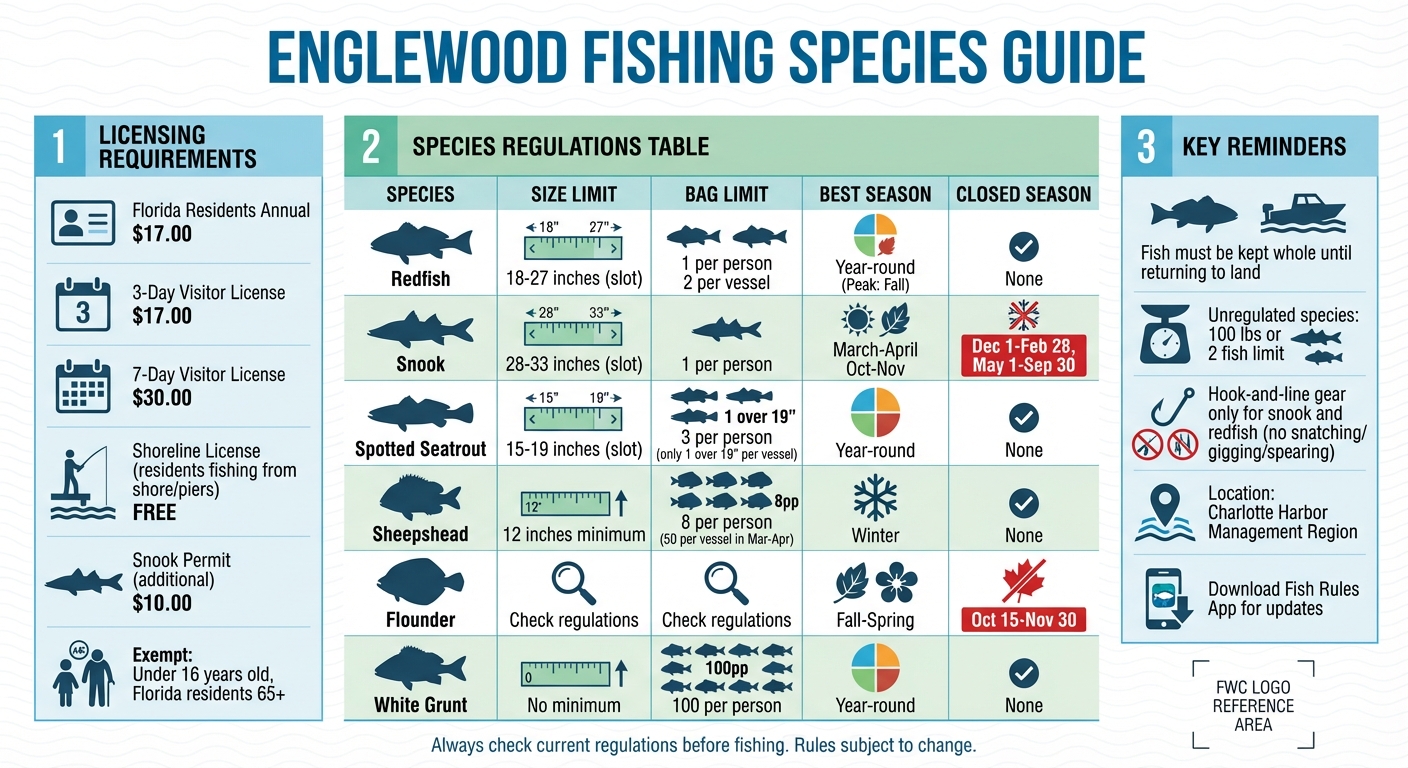
Englewood Florida Fishing Species Guide: Size Limits, Bag Limits, and Best Seasons
Following local fishing rules is just as important as having the right equipment and skills. If you're planning to fish in Englewood, you'll need a Florida saltwater fishing license. You can get one anytime at GoOutdoorsFlorida.com, by calling 1-888-FISH-FLORIDA (347-4356), or by visiting a county tax collector's office or local tackle shop. The simplest method? Download the "Fish | Hunt Florida" app to buy and store your license digitally.
For Florida residents, an annual license costs $17.00. Visitors can choose between a 3-day license for $17.00 or a 7-day license for $30.00. If you're a Florida resident fishing from shore, piers, or bridges - not a boat - you can get a no-cost shoreline license. Additional permits, like the $10.00 snook permit, are required for certain species. Children under 16 and Florida residents aged 65 or older are exempt from licensing fees.
Make sure to also familiarize yourself with local size and bag limits to ensure your fishing stays within the law.
Size and Bag Limits
Englewood's waters are part of the Charlotte Harbor Management Region, which has specific rules for popular fish species. Here's a quick guide to the size and bag limits:
- Redfish: Slot size 18–27 inches; limit of 1 per person and 2 per vessel.
- Snook: Slot size 28–33 inches; daily bag limit of 1 fish.
- Sheepshead: Minimum size of 12 inches; daily bag limit of 8 fish, with a vessel cap of 50 during March and April.
- Spotted seatrout: Slot size 15–19 inches; daily bag limit of 3 fish, with only one fish over 19 inches allowed per vessel.
Most fish must be kept whole until you return to land, although removing gills and guts is allowed. For unregulated species not listed by the Florida Fish and Wildlife Conservation Commission (FWC), the limit is 100 pounds or two fish, whichever is greater.
Knowing these rules ahead of time will make it easier to comply with seasonal closures and other guidelines.
Seasonal Closures and Guidelines
Timing is key when fishing in Englewood. In the Charlotte Harbor region, certain species have seasonal closures:
- Snook: Harvest is closed from December 1 to February 28 and again from May 1 to September 30.
- Flounder: Closed from October 15 to November 30.
If you catch these species during their closed seasons, they must be released immediately.
To stay on top of regulations, download the Fish Rules App and enable location services for real-time, site-specific updates. Since Englewood is near the boundary of management zones at the Venice Municipal Airport, double-check which zone you're in to avoid any mix-ups. Also, remember that snatching, gigging, and spearing are prohibited for snook and redfish - you'll need to use hook-and-line gear only.
Final Tips for Fishing in Englewood
Before you head out, double-check your gear, know your spots, brush up on techniques, and stay updated on local regulations. When handling fish, wet your hands first to protect their slime coat. If a fish has swallowed a hook too deeply, cut the line close to its mouth instead of trying to pull it out. For tired fish, gently move them back and forth in the water to help oxygenated water flow through their gills until they swim off on their own. These small actions can make a big difference in preserving the health of the fish and the ecosystem.
Safety is just as crucial as your fishing skills. Be cautious of Hardhead Catfish spines - they can sting, and if they do, applying heat immediately can help ease the pain. Also, always check behind you before casting to avoid hitting anyone or anything nearby.
Protecting Englewood’s waters is a shared responsibility. Dispose of used fishing lines in designated recycling bins, as stray lines can harm birds and marine life. Never release unused live bait into the water or transfer plants and fish between water bodies - this can introduce harmful invasive species. As the Florida Fish and Wildlife Conservation Commission advises:
"Ethical angling means knowing when to keep and when to release your catch while always handling fish with care".
Using circle hooks with natural bait can help reduce gut-hooking, while a knotless, rubber-coated landing net minimizes damage to fish scales. Keep the Fish Rules app handy for the latest regulation updates. With over 250 species to discover in Lemon Bay and Charlotte Harbor, enjoy the thrill of fishing while respecting the environment and the vibrant marine life that makes Englewood special.
FAQs
What’s the easiest rig to start with for live shrimp?
The simplest rig to use for live shrimp in Englewood is the fish-finder rig or the drop shot rig. These setups are straightforward and great for beginners. All you need is a sliding sinker, a swivel, and a hook designed for live bait. Make sure to hook the shrimp in a way that allows it to move naturally in the water. This motion is key to luring fish like snook, redfish, and trout, which are abundant in the area.
When should I fish the tide in Lemon Bay for best results?
The ideal times to fish in Lemon Bay are during high tide and the beginning of the outgoing tide. These tidal phases tend to draw fish closer to the shore and nearby structures, making them more accessible. To plan your trip effectively, consult the weekly tide forecast. Aim to fish during high tide or as the tide starts to shift from high to low for the best chances of success.
Do I need a snook permit if I’m only catch-and-releasing?
No, you don’t need a snook permit for catch-and-release fishing in Florida. That said, you still need to follow all applicable fishing rules, including size limits and seasonal restrictions, even if you plan to release the fish.