Top 7 Nature Trails for Photos in Manasota
Seven top Manasota trails featuring wetlands, oak hammocks, observation towers and rich birdlife — ideal for landscape and wildlife photography.
Manasota, covering Manatee and Sarasota counties, offers a stunning variety of trails perfect for nature photography. From wetlands and oak hammocks to prairies and mangroves, these trails provide diverse backdrops for wildlife and landscape shots. Whether you're after golden-hour views, rare bird species, or reflective water scenes, you'll find plenty of opportunities here. Below are the top trails to consider:
- Manasota Scrub Preserve: Compact area with scrub-jays, gopher tortoises, and vibrant wildflowers.
- Myakka River State Park: Home to 4,000 alligators, a canopy walkway, and sweeping prairie views.
- Oscar Scherer State Park: Features Lake Osprey, tidal streams, and the Florida scrub-jay.
- Celery Fields: A birding hotspot with 246 species and panoramic wetland views from Observation Hill.
- Nathan Benderson Park: Known for its artificial lake, rowing events, and birdwatching.
- Balmoral Park Trails: Quiet wooded paths with lakes, bridges, and diverse birdlife.
- Robinson Preserve: Offers a 40-foot observation tower, mangrove boardwalks, and sunset views.
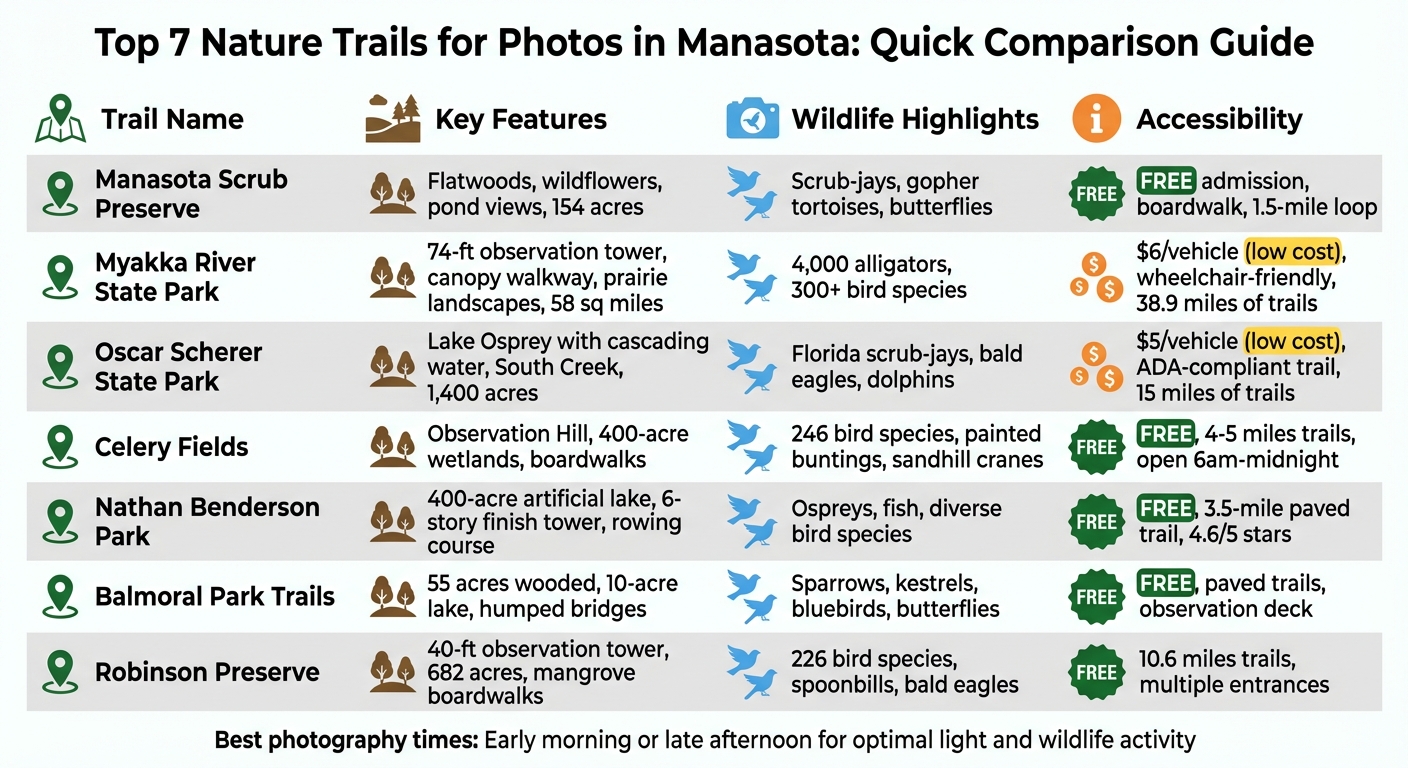
Quick Comparison
| Trail Name | Key Features | Wildlife Highlights | Accessibility |
|---|---|---|---|
| Manasota Scrub Preserve | Flatwoods, wildflowers, pond views | Scrub-jays, gopher tortoises | Free admission, boardwalk |
| Myakka River State Park | Canopy walkway, prairie landscapes | Alligators, 300+ bird species | $6/vehicle, wheelchair-friendly |
| Oscar Scherer State Park | Lake Osprey, tidal streams | Scrub-jays, bald eagles | $5/vehicle, ADA-compliant trail |
| Celery Fields | Wetlands, Observation Hill | 246 bird species | Free, boardwalks, parking |
| Nathan Benderson Park | Artificial lake, rowing course | Ospreys, fish | Free, paved trails |
| Balmoral Park Trails | Lakes, bridges, wooded paths | Sparrows, kestrels, butterflies | Free, paved trails |
| Robinson Preserve | Observation tower, mangrove trails | Spoonbills, bald eagles | Free, multiple trail types |
These trails cater to photographers of all levels. Plan your visits for early mornings or late afternoons for the best light and wildlife activity. Use telephoto lenses for birds and wildlife, and always respect the environment. For more tips, visit Manasota.co.
Manasota Nature Trails Comparison: Features, Wildlife, and Accessibility Guide
1. Manasota Scrub Preserve

Scenic Landscapes
Manasota Scrub Preserve, a 154-acre gem in Englewood, offers a variety of habitats packed into a compact area. At its heart lies a serene flatwoods pond, perfect for capturing reflective shots framed by towering slash pines. Surrounding the pond, the wet prairie bursts with golden-green needlerush and the bright yellow hues of goldenrod, creating a vibrant palette for your photos.
If you visit in March, you'll catch the start of the blooming season. Hatpin flowers and St. John's wort add striking yellow accents to the landscape, while the gradual transition from pine flatwoods to grassy marsh edges provides a rich variety of botanical scenes. Beyond the flora, the preserve is alive with wildlife, offering endless opportunities for photographers.
Wildlife Photography Opportunities
The preserve was established to protect Florida scrub-jays and gopher tortoises, making it a prime location to photograph these species. Gopher tortoises can often be spotted within 50 feet of the entrance, so have your camera ready as soon as you arrive. Early mornings at the pond are ideal for capturing birds like great horned owls and northern quail in the soft, golden light.
For macro enthusiasts, the preserve is a haven. Look for zebra swallowtail butterflies with their striking black-and-white patterns or the vibrant common buckeye butterflies. In the wetlands, dragonflies like the Halloween pennant and eastern pondhawk - each gender boasting distinct colors - offer excellent close-up subjects. The trails west of Bridge Street are off-limits to dogs, ensuring a quieter experience for wildlife photography.
Trail Accessibility and Special Features
Manasota Scrub Preserve offers free admission and features an accessible boardwalk at the trailhead. This gracefully arched boardwalk winds through low-lying areas shaded by slash pines, making it an excellent spot for low-angle shots of the lush understory. Beyond the boardwalk, a 1.5-mile loop of sand and dirt trails provides wide, flat pathways suitable for photographers of all skill levels.
While the preserve lacks observation towers or waterfalls, it compensates with strategically placed benches along the trails. These resting spots are perfect for patiently waiting to capture that perfect wildlife shot. Additional amenities include a picnic area and interpretive markers that provide context for your photos. Don’t forget essentials like water and sunscreen - Florida’s sun can be intense, even during cooler months.
2. Myakka River State Park
Scenic Landscapes
Myakka River State Park spans an impressive 58 square miles of untouched Florida wilderness. At its heart lies the tea-colored Myakka River, designated as Florida's first "Wild and Scenic" river. Its reflective waters beautifully capture the silhouettes of palm trees and live oaks. The park's dry prairies, scattered with low-growing palmettos, evoke the atmosphere of an African savannah. For an unforgettable experience, arrive early - around 8 a.m. - to snag one of the coveted 30 Deep Hole permits. This dramatic sinkhole, surrounded by wildflowers in May, offers a stunning backdrop. Rocky Ford, with its distinctive limestone formations, is another must-see feature. These varied landscapes create an ideal setting for wildlife encounters and photography.
Wildlife Photography Opportunities
With 4,000 alligators calling the park home, photographers will find thrilling opportunities to capture these creatures in their natural habitat. The Bridge on Main Park Road is a favorite spot to see multiple gators at once, while Deep Hole becomes a gathering place for them during the dry season, from November to May. Bird enthusiasts will be delighted with the park’s impressive roster of over 300 bird species. The Birdwalk offers sightings of Roseate Spoonbills, Wood Storks, and Great Blue Herons, while the oak hammocks near the Canopy Walkway are perfect for spotting Red-shouldered Hawks and Bald Eagles. Keep an eye out for white-tailed deer grazing the prairies at sunset, and you might even encounter wild hogs or bobcats along backcountry trails like Mossy Hammock. A telephoto lens is essential for safely capturing these wildlife moments from a respectful distance.
Special Photo Features
One of the park’s standout attractions is its 74-foot observation tower, located at the end of the Canopy Walkway. From the top, you’ll be treated to sweeping views of wetlands, treetops, and the striking transition between prairie and hammock ecosystems. Before reaching the tower, you’ll cross a 100-foot suspension bridge suspended 25 feet above the ground. This bridge provides a unique perspective for top-down shots of the lush hammock below.
"A tower soars 74 feet in the air to present a spectacular view of tree tops, wetlands and the prairie/hammock interface." - Fun 4 Manasota Kids
Be sure to check ahead for any closures, as repairs may occasionally limit access.
Trail Accessibility and Timing
With 38.9 miles of loop hiking trails, the park offers plenty of opportunities for those seeking remote photography spots. Entry fees are $6 per vehicle (for groups of 2–8 people) or $4 for single-occupant vehicles. For those needing accessible options, both The Birdwalk and Upper Myakka Lake areas are wheelchair-friendly. Arriving at 8 a.m. allows you to capture the magical morning mist rising from the river, while staying until sunset rewards you with golden light washing over the prairies - a photographer’s dream.
3. Oscar Scherer State Park
Scenic Landscapes
Oscar Scherer State Park is a treasure trove of diverse landscapes and wildlife, making it a dream spot for photographers. Spanning nearly 1,400 acres, the park showcases Florida's natural beauty with its mix of ecosystems. One standout feature is Lake Osprey, a 3-acre freshwater lake fed by artesian springs. Its cascading waters flowing over rocks are a rare sight in Florida. Photographer Niki Butcher described her experience capturing this unique feature:
"I saw a little stream and climbed through the bushes to get to it. I couldn't resist capturing this rare stream with cascading water."
Another highlight is South Creek, a tidal blackwater stream bordered by overhanging trees that create stunning reflections. This creek transitions seamlessly from freshwater hardwood forests to saltwater mangroves [28, 31]. The park's terrain also includes scrubby flatwoods with sandy trails and shaded oak hammocks along the Yellow Trail, offering a glimpse into Florida's characteristic scrub environment. These varied landscapes provide endless opportunities for nature and wildlife photography.
Wildlife Photography Opportunities
Oscar Scherer State Park is a haven for wildlife enthusiasts, particularly those interested in bird photography. The park is home to the Florida scrub-jay, a species found only in Florida. These birds are often seen along the Blue Trail and the 0.5-mile Florida Scrub-Jay Trail, especially during early morning hours. Winter visitors can also spot nesting Bald Eagles along the Green Trail, though parts of the Red and Green trails may close starting in October to protect these nesting sites. Other frequent subjects include Sandhill Cranes, Ospreys, Great Blue Herons, and even gopher tortoises.
For a chance to photograph marine life, head to where South Creek meets the Intracoastal Waterway - you might catch dolphins leaping out of the water. The park's 15 miles of trails also offer encounters with North American river otters, bobcats, and foxes, making every visit an adventure.
Trail Accessibility and Timing
Access to the park is affordable, with entry fees set at $5 per vehicle (up to eight people) or $4 for single drivers. For photographers with mobility needs, the Lester Finley Barrier-Free Nature Trail is ADA-compliant and designed for easy access. The Lake Osprey Trail also provides a well-graded path around the lake. A fishing pier extending into Lake Osprey offers a stable platform for water photography, while kayak rentals, priced at $15 per hour or $60 for a full day, allow photographers to explore South Creek from a unique perspective.
For the best experience, plan your visit during the fall or winter months. The cooler temperatures and lower humidity make for comfortable shooting conditions, and the morning and evening hours are perfect for capturing nesting eagles.
Special Photo Features
The park also boasts some unique features that add to its photographic charm. The historic Legacy Trail railroad trestle crossing South Creek is a striking architectural element, visible from both the paved Legacy Trail and the Orange Trail underpass. From December through March, weekly tram tours along the Green Trail provide easy access for photographers carrying heavier gear.
The Nature Center, open on weekends from 10 a.m. to 2 p.m., offers interactive wildlife displays and serves as a great starting point for learning about the park's biodiversity. Visitors frequently praise the park's well-maintained trails and tranquil atmosphere, as reflected in its 4.3 out of 5-star rating on AllTrails, based on 1,281 reviews. Sandra Friend and John Keatley summed it up best:
"Oscar Scherer State Park is an important island of biodiversity in an increasingly overdeveloped region".
4. Celery Fields Nature Trails

Scenic Landscapes
Spanning 400 acres of public wetland, Celery Fields offers a treasure trove of photographic opportunities. One standout feature is Observation Hill, a manmade hill with hiking trails that provides sweeping views of the park's marshlands. From this elevated spot, you can capture stunning wide-angle shots of open wetlands, serene ponds, and reflective pools.
In the southern section, 100 acres of wetlands were restored in 2011, with over 200,000 aquatic plants and trees planted to enhance the area’s natural beauty. The eastern and southern edges are bordered by lush stands of oaks, willows, and pines, creating natural frames for your photos. Adding to its charm, a growing micro-forest on-site provides an intriguing botanical backdrop.
The park’s varied terrain is not just visually appealing - it also attracts a wealth of wildlife, making it a haven for bird photographers.
Wildlife Photography Opportunities
Celery Fields boasts an impressive record of 246 bird species, solidifying its reputation as a birding hotspot. The Nature Center garden is a favorite spot for photographing Painted Buntings, Nanday Parakeets, and blackbirds, especially after a rainfall.
For closer encounters, the boardwalk along Raymond Road is ideal. With lower water levels, it brings photographers closer to species like Least Bitterns, Gray-headed Swamphens, and Northern Harriers. During the winter months, migratory birds such as Sora, Virginia Rails, and various sparrows add seasonal variety. To capture distant raptors or marsh birds, a telephoto lens (around 800mm) is highly recommended. Meanwhile, Sandhill Cranes often venture close enough for intimate shots.
Travel photographer Beth Bankhead shared her experience, saying:
"The hill was home to lots of rabbits... on a nice day it would be a lovely place to take in the view and watch the birds while relaxing on one of the benches."
Trail Accessibility and Special Features
Celery Fields welcomes visitors daily from 6 a.m. to midnight, with free admission. The park features 4–5 miles of multi-use trails suitable for walking, jogging, and biking. Convenient amenities include free parking and public restrooms located at the Sarasota Audubon Nature Center off Palmer Boulevard.
Two main boardwalks - one on Palmer Boulevard and another on Raymond Road - provide stable platforms perfect for photographing wading birds and waterfowl. A gazebo along the boardwalk offers a shaded spot for setting up a tripod. For those seeking a more elevated perspective, a one-mile loop trail leads to the top of Observation Hill, a prime location for landscape shots. Sunset visits are particularly rewarding, as the golden hour light beautifully illuminates Nelson's sparrows flitting across the fields.
Celery Fields blends natural beauty with countless opportunities for breathtaking photography, making it a must-visit destination for nature enthusiasts and photographers alike.
5. Nathan Benderson Park
Scenic Landscapes
Nathan Benderson Park is a standout spot in the Manasota area, blending natural beauty with exciting photo opportunities. At the center of this 600-acre community park is a 400-acre artificial lake, which holds the distinction of being North America's only FISA Class A-certified rowing course. The lake's surface transforms into a mirror during rowing events and sunsets, creating stunning visuals. Adding to the charm is the six-story Finish Tower, a striking structure at the end of the rowing course that serves as an eye-catching feature for photographers.
The 3.5-mile paved trail surrounding the park offers multiple viewpoints of the lake and its lush surroundings. For a more immersive perspective, head to Regatta Island, a 28-acre island situated within the lake. From here, you can enjoy panoramic views of the water and the 2,000-meter regatta course. These diverse views naturally lead to encounters with the park’s vibrant wildlife.
Wildlife Photography Opportunities
Nathan Benderson Park is a haven for bird enthusiasts, attracting a wide range of bird species that make it an ideal spot for wildlife photography. Be prepared with your telephoto lens to capture ospreys, local birds, and even fish leaping out of the water. The 15-foot-wide trail ensures ample space for setting up photography gear without disrupting other visitors.
As described on the park's website:
"The choices are virtually endless and every moment takes place amid the sights and sounds of Florida's pristine natural beauty – with the possibility of seeing an osprey, splashing fish or blooming flowers along the way".
Trail Accessibility and Special Features
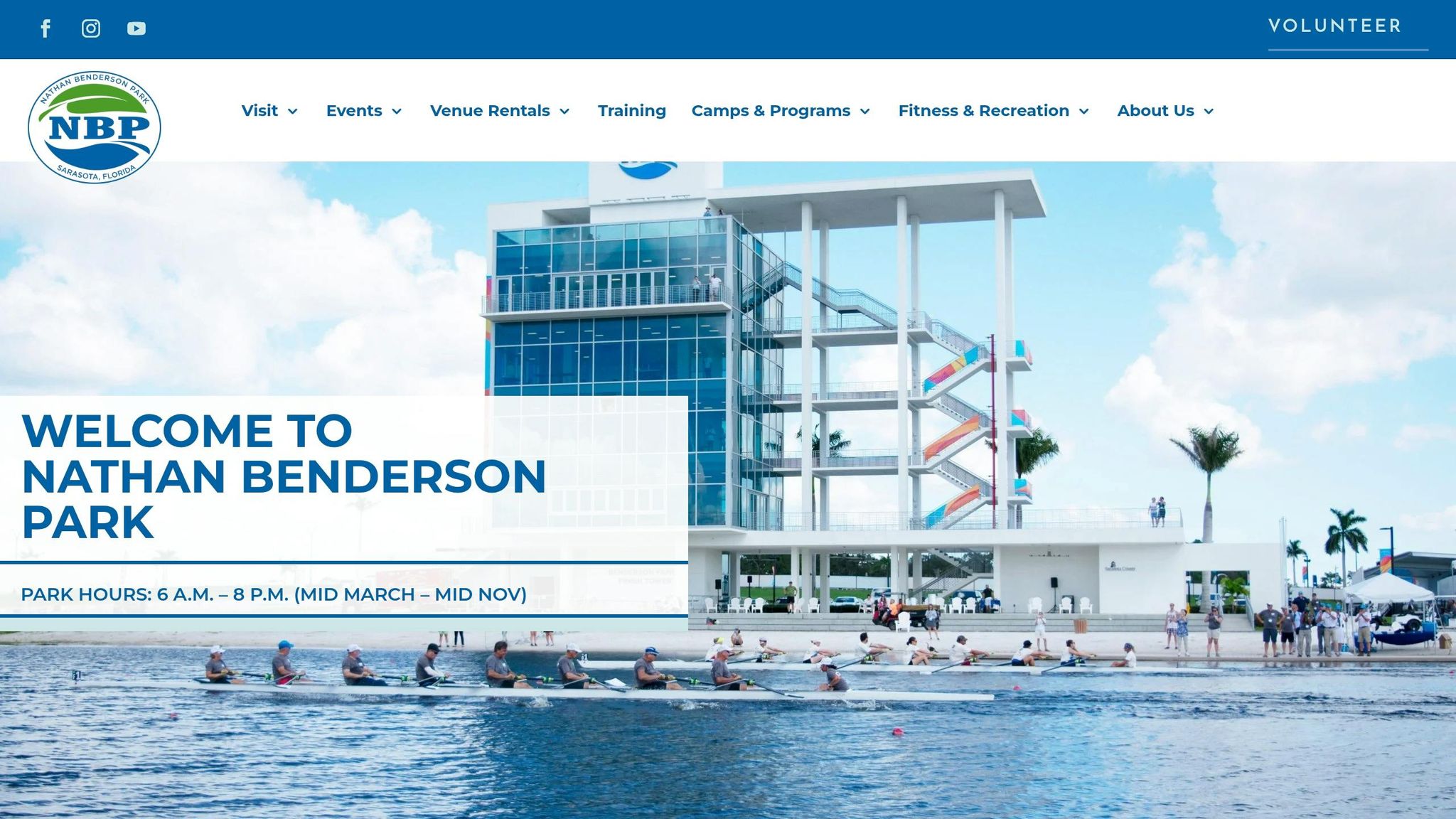
For photographers, the park offers more than just scenic views and wildlife - it’s also incredibly accessible. Open daily from 6 a.m. to 6 p.m. (November to mid-March) and 6 a.m. to 8 p.m. (mid-March to October), Nathan Benderson Park ensures flexibility for capturing the perfect shot. Even better, admission and parking are free, except during select special events.
The park’s trails are praised for their smooth, paved surfaces. Rated 4.6/5 stars on AllTrails from 796 reviews, visitors frequently highlight the "beautiful views" and "well-maintained paths". The trail, averaging 10 feet in width with a gentle 3% grade, is ideal for transporting heavy photography equipment. Additionally, eight accessible parking spaces are available near the trailhead.
Photographers can take advantage of the early morning calm, when the lake is like glass and rowers glide across the water, or visit in the late afternoon for golden light and perfect reflections. For action-packed shots, check the event calendar for dragon boat races or rowing regattas, which bring energy and excitement to the park’s serene backdrop.
6. Balmoral Park Trails
Scenic Landscapes
Balmoral Park is a gem for anyone exploring Manasota's lesser-known trails. This 55-acre wooded area is a haven for photographers, offering winding paths under dense tree canopies. At the heart of the park lies a picturesque 10-acre lake, complete with an observation deck perfect for capturing serene water views. Along the paved trail, you'll find two charming humped bridges that provide elevated perspectives of the surrounding canopy and water. For those seeking a quieter spot, a second, more secluded lake awaits further down the trail.
Wildlife Photography Opportunities
The variety of habitats in Balmoral Park makes it a hotspot for wildlife enthusiasts. From sand pine scrub to pine flatwoods and oak hammocks, these ecosystems are home to an impressive range of species. Bird photographers might spot Bachman's Sparrows, Northern Bobwhites, Southeastern American Kestrels, and Eastern Bluebirds. The humped bridges serve as excellent viewpoints for snapping photos of tanagers and warblers. And if butterflies are your focus, you might be lucky enough to photograph the striking great purple hairstreak.
7. Robinson Preserve
Scenic Landscapes
Robinson Preserve is a treasure trove for photographers in Manasota, offering breathtaking views that are hard to match. At the heart of the preserve, a 40–50-foot timber observation tower provides a panoramic perspective of Lower Tampa Bay, the Sunshine Skyway Bridge, Anna Maria Island, and Egmont Key. As John McCarthy of Sarasota Magazine aptly described:
"Perched this high, there are jaw-dropping views in all directions".
Spanning 682 to 705 acres, the preserve showcases restored salt marshes, coastal grasslands, and mangrove-lined boardwalks, particularly along the Osprey Loop. Mead Point, where Sarasota Bay meets Tampa Bay, is a favorite spot for sunset photography, offering expansive waterfront views. For a unique experience, the South Entrance takes visitors to the NEST and Canopy Zone, where elevated boardwalks weave through the treetops, providing fresh angles for capturing nature.
Wildlife Photography Opportunities
The preserve's stunning scenery is matched by its vibrant wildlife, making it a hotspot for nature photography. With 226 recorded bird species, Robinson Preserve is a haven for capturing shots of Roseate Spoonbills, Wood Storks, Bald Eagles, and Ospreys in their natural habitats. The newly expanded areas near the NEST are particularly rewarding for photographing ducks and woodpeckers. For best results, a telephoto lens of 400mm or longer is ideal for photographing wading birds from boardwalks and overlooks. Early mornings at sunrise are perfect for catching both the best light and peak wildlife activity.
Trail Accessibility
Robinson Preserve is designed with photographers in mind, offering 10.6 miles of trails with surfaces like asphalt, boardwalks, and recycled rubber that make transporting heavy gear a breeze. The North Entrance at 1704 99th St NW provides easy access to the observation tower and the historic Valentine House, while the South Entrance at 10299 9th Ave NW leads to the NEST and Canopy Zone. Admission is completely free, adding to the preserve's appeal. Keep in mind that the white shell pathways reflect sunlight intensely, so polarized filters and sun protection are must-haves.
Conclusion
Manasota's nature trails provide endless opportunities for photographers, offering everything from rare bird species to sweeping landscapes. Each trail offers its own unique charm, whether you're drawn to capturing wildlife, expansive views, or tranquil water reflections.
The area also boasts a variety of striking landscapes. Coastal wetlands, towering live oaks draped in Spanish moss, elevated canopy walkways, and observation towers overlooking Tampa Bay all serve as stunning settings for landscape photography.
With most trails requiring little to no admission fees, they’re accessible to photographers of all levels.
While exploring, remember to stick to designated paths, use telephoto lenses for wildlife shots, and always respect the environment. As the Myakka River State Park brochure wisely states:
"Do not approach, tease, frighten, touch or feed" wildlife.
Pack your camera, stay hydrated, protect yourself from the sun, and aim to shoot during sunrise or golden hour for the best lighting. By doing so, you’ll not only capture breathtaking images but also contribute to preserving the beauty of Manasota’s natural wonders. For more tips and insights on local photography, check out Manasota.co.
FAQs
What’s the best trail for sunrise photos?
The Fred Duisberg Nature Trail at Lemon Bay Aquatic Preserve offers a fantastic spot for sunrise photography. With its picturesque mangrove forest and serene waterfront views, it sets the stage for capturing the soft, golden hues of the morning light.
What camera lens should I bring for wildlife?
For capturing wildlife, telephoto lenses like the 70-200mm or 100-400mm are excellent choices. These lenses allow you to take detailed shots of animals - like alligators or birds - while maintaining a safe distance. This ensures you can photograph them without interfering with their natural behavior.
When is the best season for bird photography here?
Spring and fall provide prime conditions for bird photography in the Manasota area. These seasons see Neotropical migrants at their most active, with bird activity reaching its height in spots like Leffis Key Preserve and Robinson Preserve. It’s the perfect time to snap incredible wildlife shots.